



Expanding Our Global ZIGsight into Freshwater Ecology
The Zooplankton International Geospatial (ZIG) dataset is a global, harmonized collection of freshwater zooplankton records paired with water chemistry data, built through a multi‑year community effort. It includes information from 311 lakes across 37 countries, providing extensive long‑term observations that help researchers analyze ecological change.
The Zooplankton International Geospatial (ZIG) dataset is one of the most extensive harmonized collections of freshwater invertebrate records paired with water chemistry time series ever assembled. Built through a years-long community synthesis effort, it now brings together a wealth of biological and environmental data to support scientists, resource managers, and global change researchers.
The dataset began taking shape during the 2019 All Hands Meeting for the Global Lake Ecological Observatory Network with a small international group of collaborators. Further workshops at the USGS Powell Center, the French Center for Environmental Synthesis and Analysis of Biodiversity, and NSF’s Environmental Data Science Innovation and Impact Laboratory refined the vision for an integrated, global-scale compilation of zooplankton and environmental data. More than one hundred contributors submitted datasets from lakes across the world, and a dedicated team worked for over four years to harmonize formats, resolve inconsistencies, and combine all contributions into a single resource.
ZIG By the Numbers
Today the ZIG dataset includes information from 311 lakes in 37 countries.
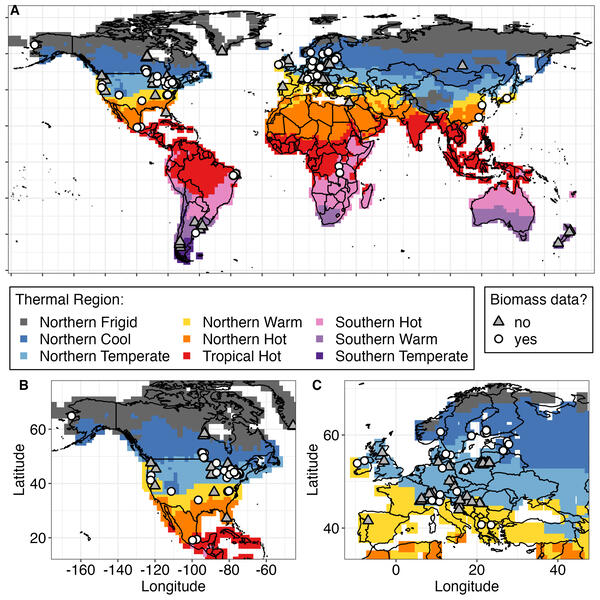
These lakes span equatorial regions, temperate zones, and high latitudes. Despite covering diverse climates and geographies, the distribution of lakes mirrors major global lake datasets and includes representation across all nine recognized thermal lake regions. The dataset is also structured in a manner that can accommodate new data and lakes as those data become available.
More than seventy percent of lakes in the dataset include at least monthly time steps. One hundred sixteen lakes contain ten or more years of zooplankton density or biomass records paired with concurrent water chemistry measurements. This depth and breadth of information allows researchers to examine long-term ecological changes and explore how biological communities interact with shifting environmental conditions across a wide range of lake types.
Advancing Global Ecological Synthesis
Completion of the dataset marks an important milestone for freshwater research. Its harmonized structure allows scientists to compare trends across continents, evaluate ecological responses to warming, and investigate nutrient dynamics at a global scale. It also provides a foundation for developing advanced analytical approaches, including machine learning methods designed to predict ecosystem transitions or identify early indicators of ecological change.
As global environmental change continues to affect aquatic ecosystems, the ZIG dataset provides scientists and decision makers with long-term, high-quality data needed to understand, anticipate, and respond to ecological shifts. With its combination of biological observations, water chemistry records, and global reach, it is poised to shape freshwater science for many years to come.
This work was supported by several synthesis centers that helped coordinate the community effort and provide essential infrastructure.