



The curious case of Kelseyville’s Gas Hill
Before Kelseyville, CA had electric lights, it had something even more unusual: a hill that made its own natural gas.
The California Volcano Monitor is a weekly column written by scientists and collaborators of the California Volcano Observatory. This week's contribution is from Jennifer Lewicki, geochemist with the U.S. Geological Survey.
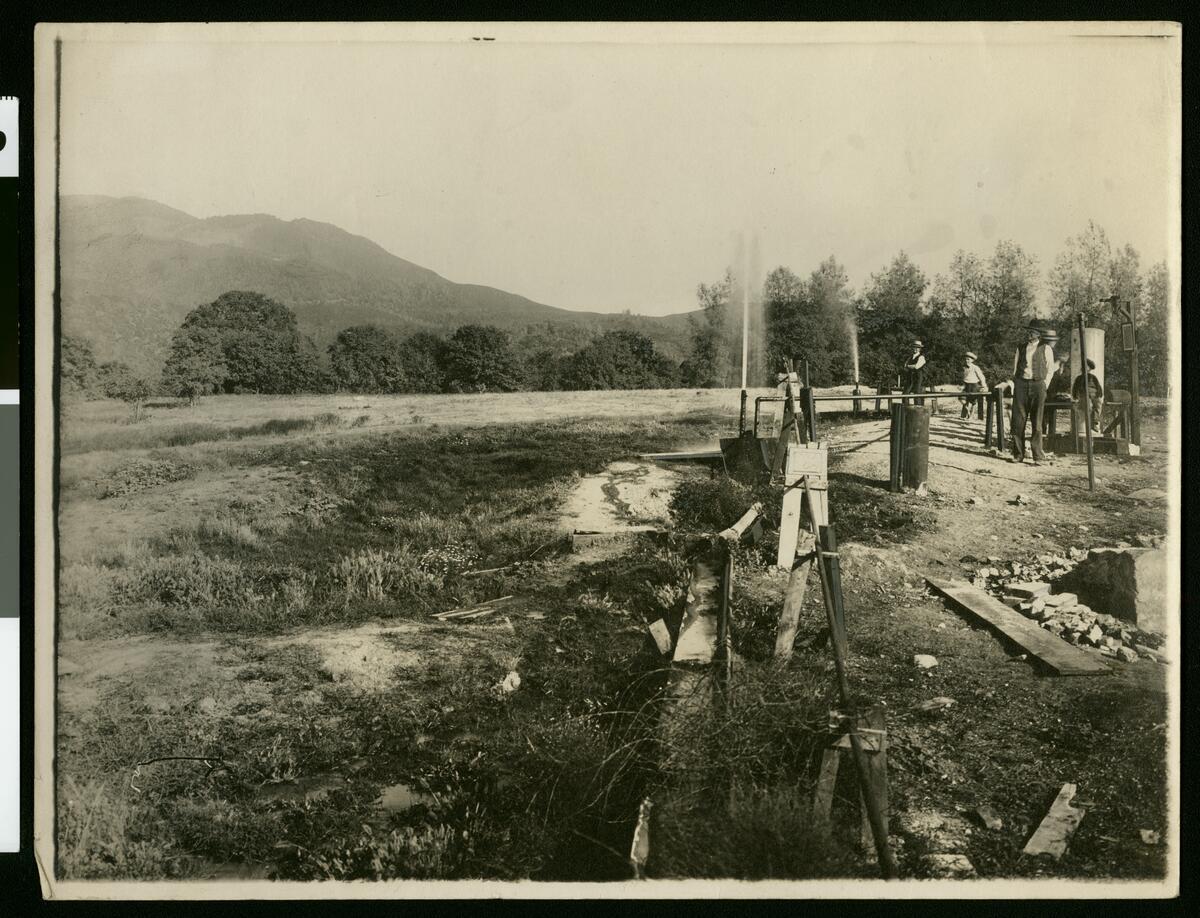
In the late 1800s, workers drilled a cluster of shallow wells on a low mound on the eastern edge of town, a spot now known as "Gas Hill", and struck a remarkable find: warm, carbonated, artesian water flowing up alongside methane-rich gas. Several entrepreneurs attempted – unsuccessfully – to run a chicken hatchery, experimental steam engine, and bathhouse using the gas before piping it directly to homes and businesses in Kelseyville to power lamps and heat buildings. The water itself was just as unusual, emerging at about 76°F (24°C), saline, and loaded with iron, aluminum, and silica, according to an 1889 chemical analysis by Winslow Anderson. The wells were eventually abandoned, but Gas Hill still seeps today. Visitors can detect a faint smell of sulfur and organics near the old well heads, and gas measurements show the discharge is roughly 64% carbon dioxide and 27% methane.
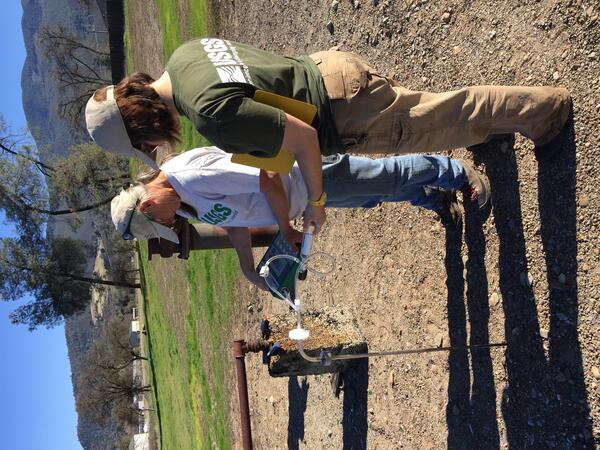
So where does all that gas come from? The answer connects Gas Hill to the Clear Lake Volcanic Field, one of eight volcanic areas that USGS California Volcano Observatory monitors in California. The hill sits on a block of ancient lake and river sediments: layers of mud, silt, sand, and organic material deposited in the Clear Lake basin over the past 600,000 years, then uplifted by a fault. As those organic-rich layers were buried and slowly heated by the volcanic system below, they broke down and released methane and carbon dioxide. The result is a quiet, persistent seep that once lit a town, and still reminds us that the Clear Lake area is geologically very much alive. USGS scientists continue to visit Gas Hill to monitor these emissions as part of ongoing work in the Clear Lake Volcanic Field. Learn more at: https://www.usgs.gov/volcanoes/clear-lake-volcanic-field.