



Sharing science at the Pacific Islanders Encouraging Fun, Science & Technology (PIEFEST) festival
P.I.E.F.E.S.T. – what’s that?? It stands for Pacific Islanders Encouraging Fun, Engineering, Science, and Technology, and the 5th Annual P.I.E.F.E.S.T. in San Mateo, CA was where California Volcano Observatory Scientists spent their Saturday on April 11.
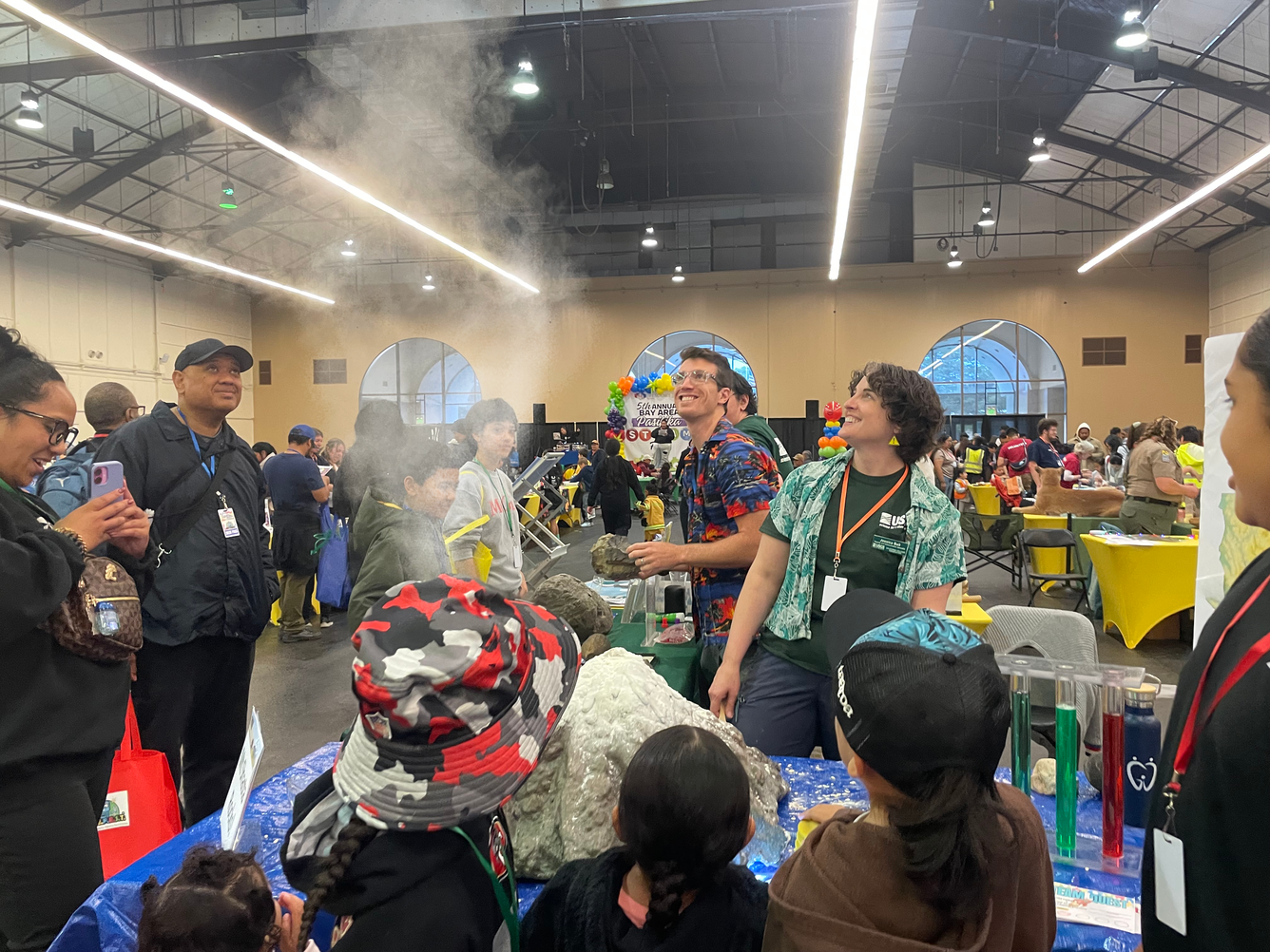
Together with a trusty erupting model of Mount Shasta, a box full of lava bombs, and the finest silver volcanologist suit, we shared knowledge through hands-on learning about volcanic hazards, rocks, and eruptions. Our audience included families from the many Pacific Islander groups represented in California, including folks with heritage from Hawai’i, Fiji, Tonga, Samoa, New Zealand, Tahiti, and elsewhere. More than 350,000 Pacific Islanders live in California, more than any state other than Hawai’i, and 1 in 5 live in the Bay Area.
Many Pacific Islands are volcanic, giving us the opportunity to talk about Hawaiian and American Samoan volcanoes as well as the ones we have right here in California! Participants also enthusiastically helped scientists make the volcano “erupt” with rice cereal and corn flour many times. Afterward, they had the opportunity to inspect real volcanic rocks, match up volcanic hazards with their eruption settings, and even take photos in our lava sampling suit.
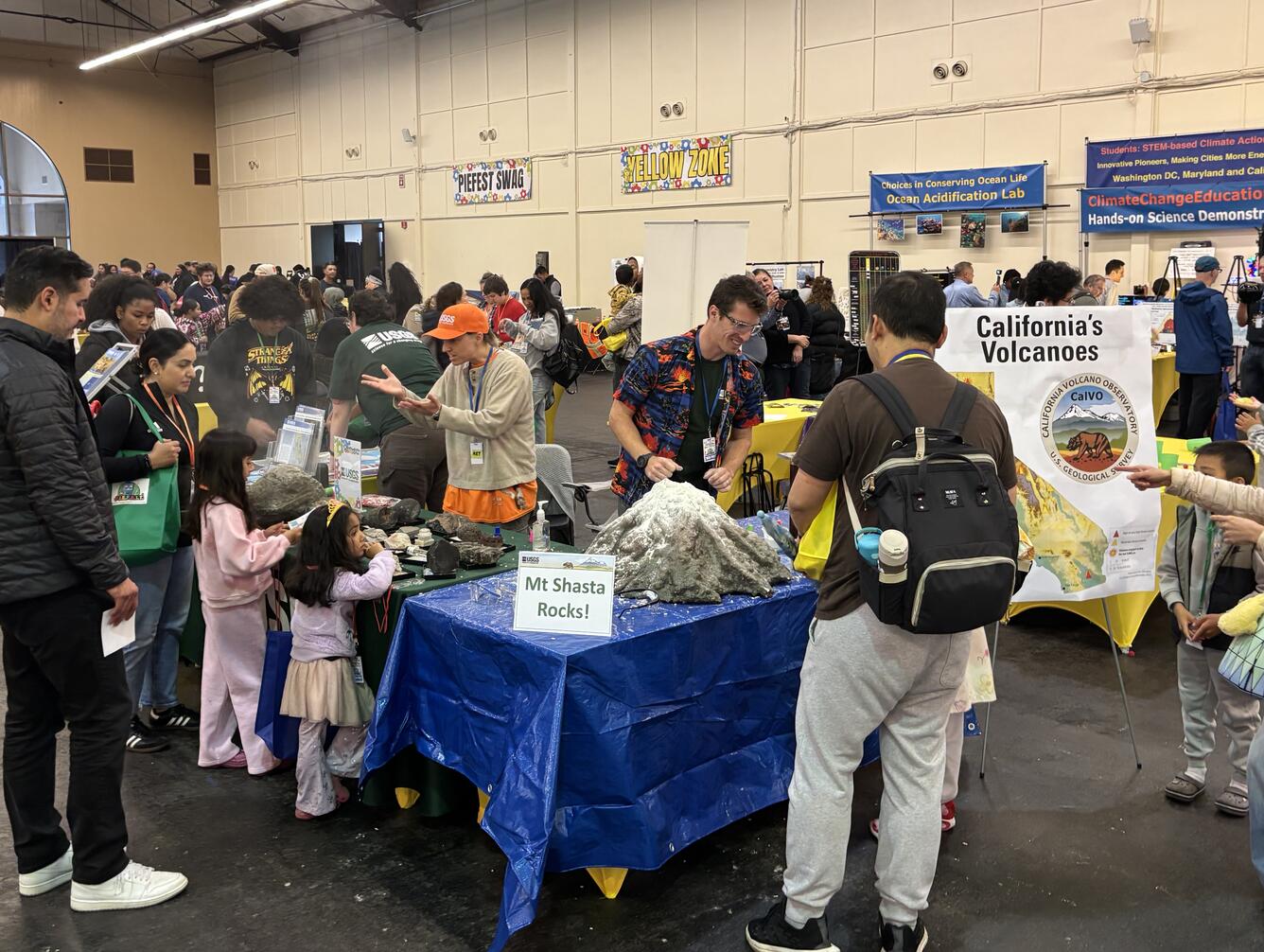
Outreach events like this are a chance for scientists to interact directly with the communities we serve, both to help share our knowledge about volcanoes and to help people prepare for the next volcanic eruption in California. Because eruptions are a low-probability, high-impact event, we want people to be comfortable with the possibility of experiencing volcanic hazards while still appreciating the beautiful places they create – whether on the Mainland or across the ocean!