



When it comes to analyzing rocks, only the freshest samples will do!
Why are geologists so picky about rock samples? If you've ever watched one at work, you might notice that some rocks pass inspection, but others get discarded. Obviously a rock can't spoil like a piece a fruit, so what's going on?
The California Volcano Monitor is a weekly column written by scientists and collaborators of the California Volcano Observatory. This week's contribution is from Jessica Ball, volcanologist with the U.S. Geological Survey.
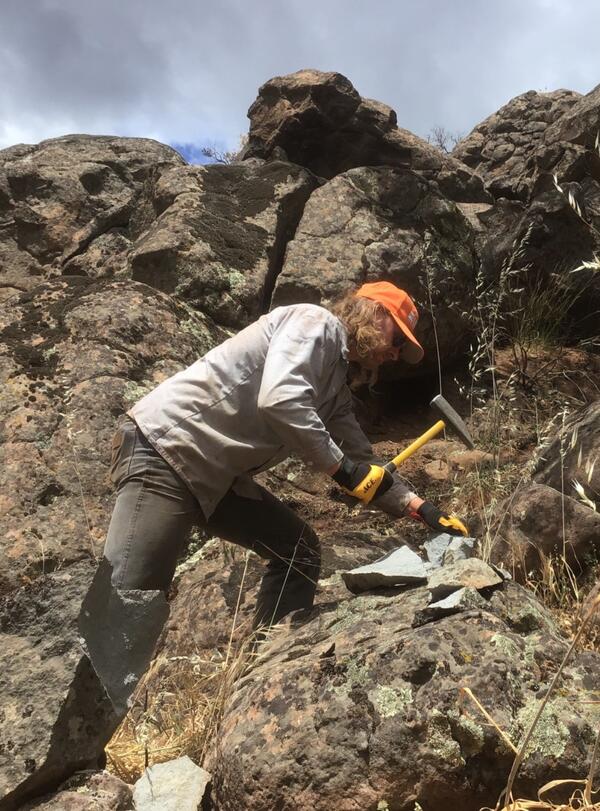
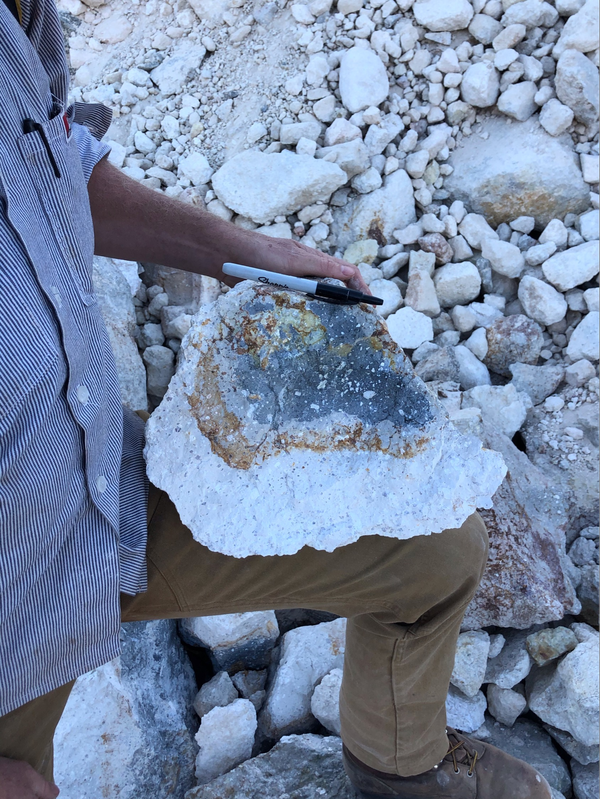
In the case of these lavas from the Clear Lake Volcanic Field in California, the rock that was erupted is not the same as the rock that we can see today. The first photo shows weathered boulders of lava revealing lighter, cleaner-looking interiors when broken. In the second photo, differences in color from the center to the edges of a chunk of lava reveal the effects of weathering and mineral alteration. Typically, these changes involve water, gas, heat, pressure, or some combination of the three. In the case of the lava in the second photo, hydrothermal alteration (hot, acidic water cooking the rock) removed iron and magnesium and left behind mostly silica. That's why the outside rind is lighter and looks powdery, while the core of the rock looks darker.
Because of these changes, altered rocks don't have the same characteristics they started with. If we want to learn about their age, what kind of eruption formed them, or where it came from below the Earth's surface, we can't use those parts of the rocks. We have to remove the "rotten" bits and take only the "fresh" rock inside, a bit like you might cut away the bruised parts of an apple. As with fruit, fresh is best!