



Volcano Watch — Hau’oli Makahiki Hou: a round-up of fireworks from Kīlauea’s fountains
Kīlauea has been providing “fireworks” all year long on the Island of Hawaiʻi, and today we present a summary in commemoration of the New Year.
Volcano Watch is a weekly article and activity update written by U.S. Geological Survey Hawaiian Volcano Observatory scientists and affiliates. Today’s article is by HVO research geophysicist Ingrid Johanson.
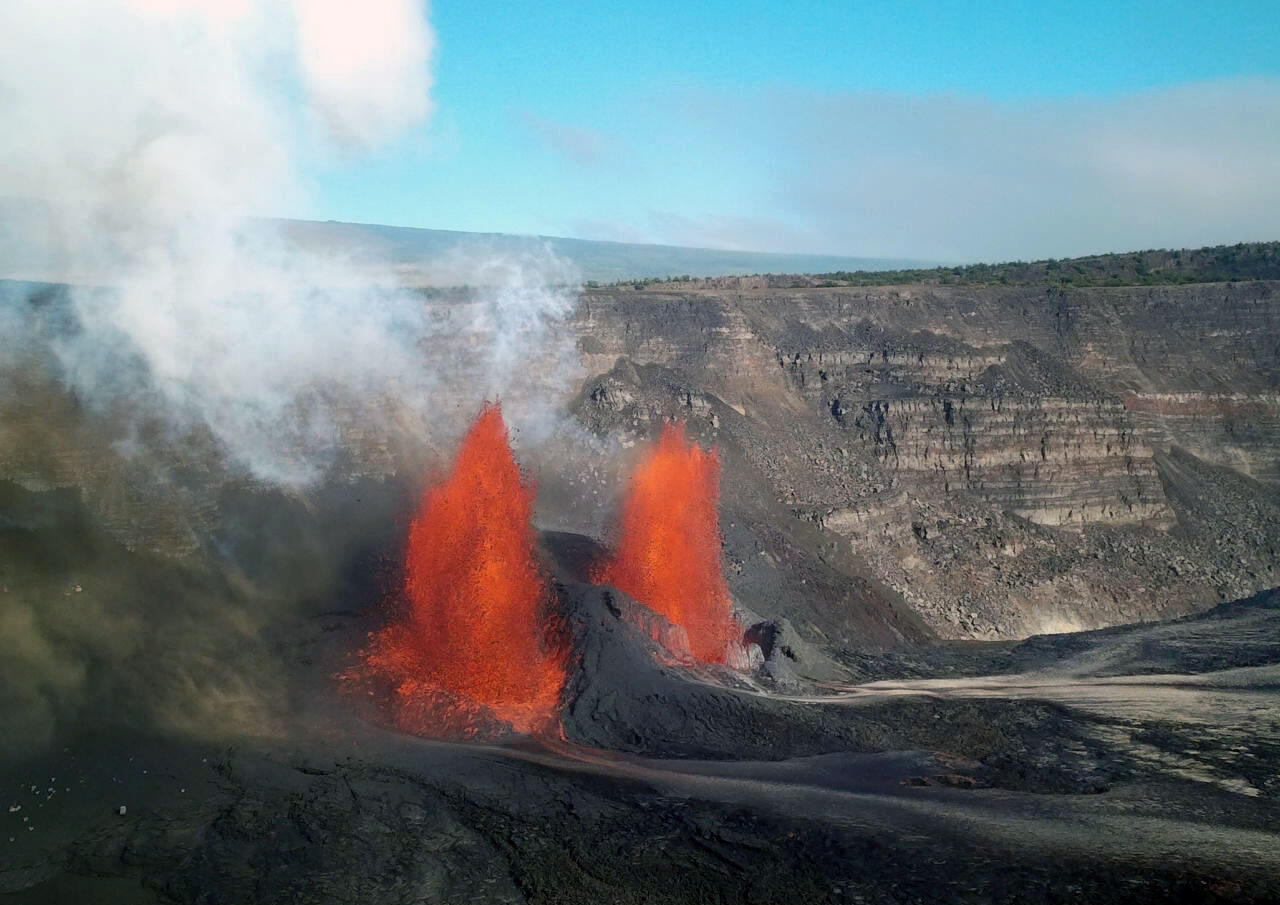
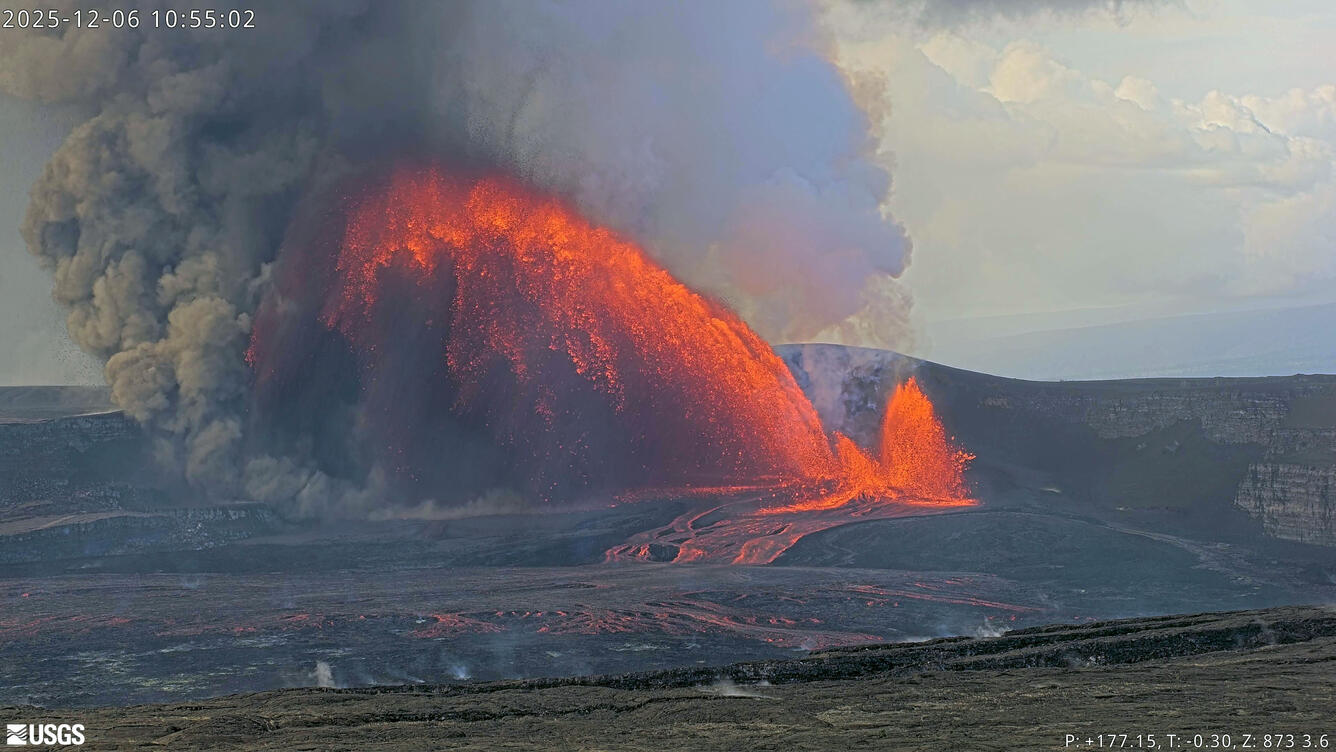
Since December 23, 2024, the north and south vents within Halemaʻumaʻu crater, within Kaluapele (the summit caldera), have erupted in 39 lava fountaining episodes (episodes 13, 24, 28, 34, and 38 are highlighted in the photos accompanying this article).
Though it didn’t seem like it at the time, lava fountaining episodes began modestly, with heights below 650 feet (198 m) through January and February. Episode 15 on March 25–26 marked a transition, with a maximum fountain height from the south vent that jumped up to 1050 feet (320 m). Since then, fountain heights have often been in the range of 1050-1250 feet (320–381 m), except for a episodes 29–32 (July 20–September 2), when fountains occurred at a steep angle that limited their height. New record fountain heights occurred steadily through the year, with the current record dating from episode 35 on October 17 when the fountain from the south vent reached a height of 1574 feet (480 m).
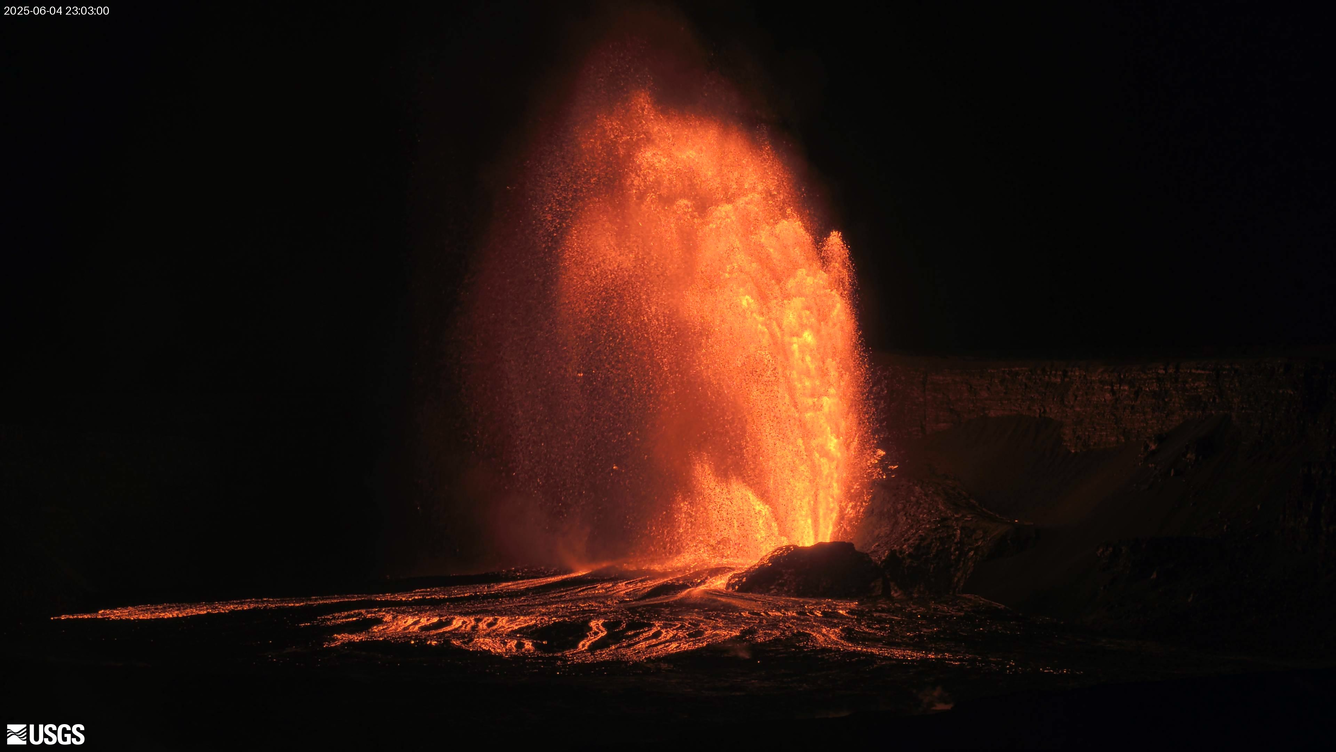
While fountaining slowly reached higher heights during the year, the crater floor was also incrementally being raised by lava flows. Nearly 200 million cubic meters (300 million cubic yards) of lava has been erupted since the eruption began just over one year ago. This is more than twice the amount that erupted from Puʻuʻōʻō in an average year from 1983 to 2018. Lava flows have raised the floor of the crater by an average of 225 feet (69 m), while the bases of the vents themselves have risen nearly 450 feet (137 m).
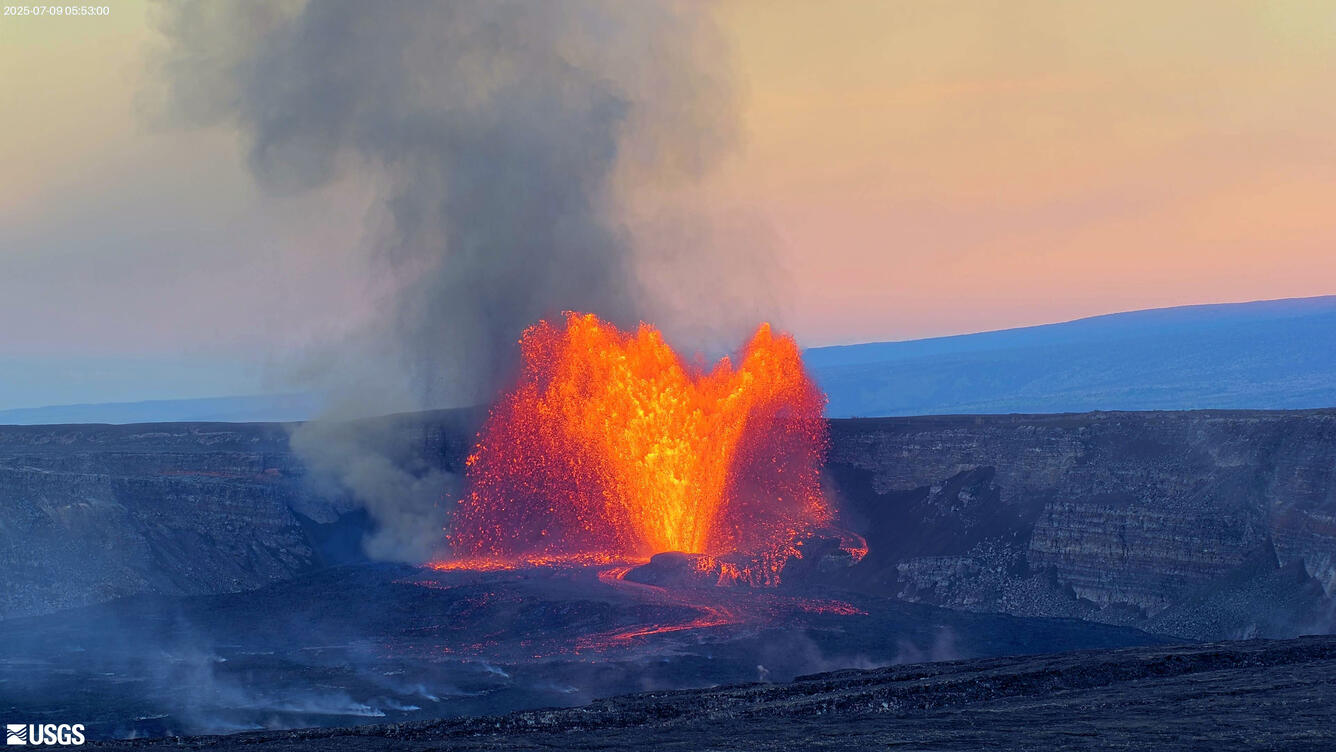
With the rise in the vent elevations, even if the fountains stay the same height, their peaks are now reaching higher elevations in the air. In fact, the elevations of the two vents are now higher than the tops of the fountains were in January-February of 2025! This has contributed to the increase in the amount of tephra (lava particles from the fountains) reaching over the caldera rim and becoming entrained in winds. Most larger pieces fall in the closed area of Hawaiʻi Volcanoes National Park, adding to the growing puʻu (hill) on the caldera rim, but smallest pieces (ash and pele’s hair) can be blown farther distances across the island.
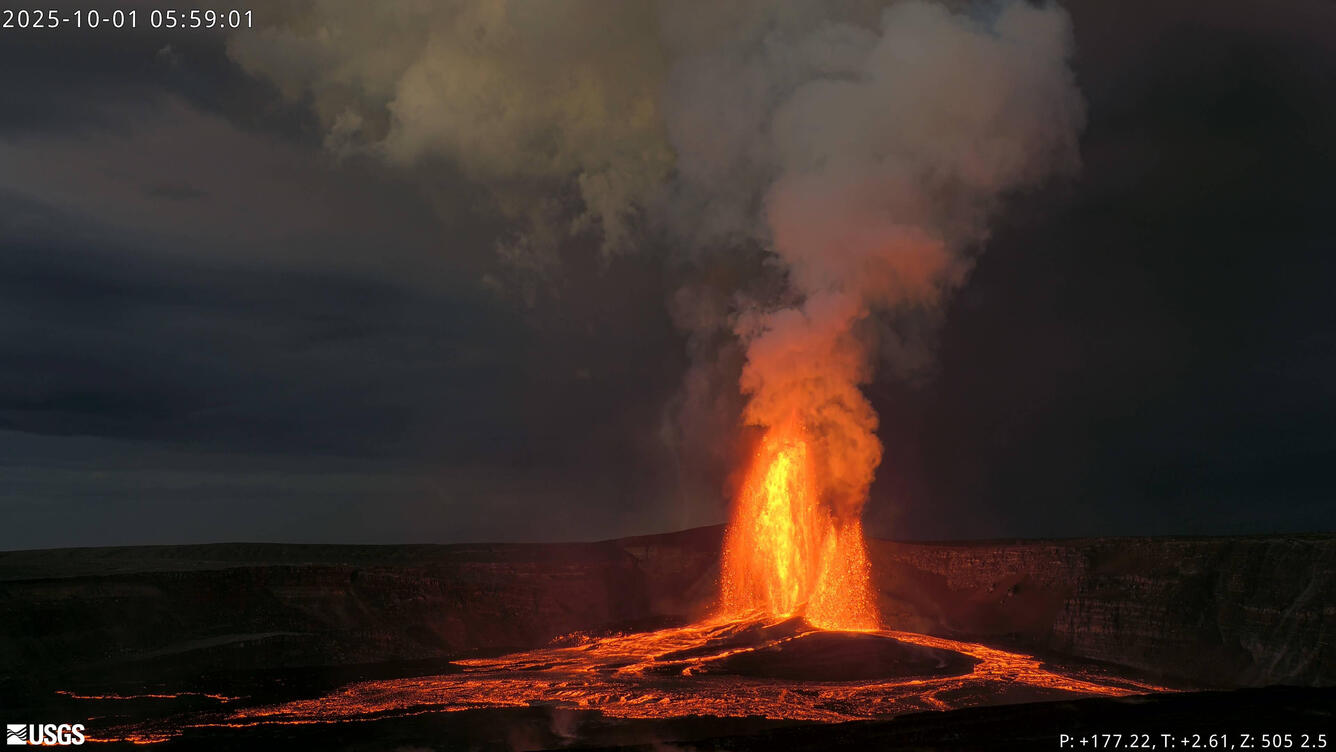
Much like the fountain height records, the volcano continued to set new lava volume records through 2025. Episode 3 (December 26, 2024–January 3, 2025) is still currently the record holder for most lava erupted during an episode at a volume of 13 million cubic meters (17 million cubic yards). However, episode 3 occurred over 8 days, giving it an advantage over shorter episodes. Close behind this is episode 38 on December 6, 2025, which erupted 12.1 million cubic meters (15.8 million cubic yards) in 12 hours.
It has been an amazing year to be present at Kīlauea and observe these events. The episodic nature of the fountaining events have allowed their onsets to be forecast, providing some sense of what the future will hold. However, the USGS Hawaiian Volcano Observatory is mindful that changes can occur to the eruption pattern, style, or location. So far, there are no signs of an imminent change, but these signs could arise quickly. The current eruption is occurring entirely within Hawaiʻi Volcanoes National Park, and our wish for the new year is that we can all continue to safely enjoy the show that Kīlauea is putting on.
Volcano Activity Updates
Kīlauea has been erupting episodically within the summit caldera since December 23, 2024. Its USGS Volcano Alert level is WATCH.
Episode 39 lava fountaining happened for 6 hours on December 23–24. Lava fountains erupted from both the north and south vents, with maximum heights of approximately 1400 feet (425 m). The summit is reinflating and another fountaining episode is likely between January 8 and 14. No unusual activity has been noted along Kīlauea’s East Rift Zone or Southwest Rift Zone.
Mauna Loa is not erupting. Its USGS Volcano Alert Level is at NORMAL.
No earthquakes were reported felt in the Hawaiian Islands during the past week.
HVO continues to closely monitor Kīlauea and Mauna Loa.
Please visit HVO’s website for past Volcano Watch articles, Kīlauea and Mauna Loa updates, volcano photos, maps, recent earthquake information, and more. Email questions to askHVO@usgs.gov.