



Caps, trash, and other hydrothermal funky finds: 2026 edition
Hold onto your hats and sunglasses—and your trash! Yellowstone National Park’s Geology team collects anything lost or left behind by visitors in the park’s hydrothermal areas, leading to some pretty interesting finds...
Yellowstone Caldera Chronicles is a weekly column written by scientists and collaborators of the Yellowstone Volcano Observatory. This week's contribution is from Margery Price, Physical Science Technician with the Yellowstone National Park Geology Program.
With more than 4.5 million visitors every year, it is not a surprise that Yellowstone National Park staff have to work constantly to remove litter from the park’s hydrothermal areas. Whether intentional (like discarded orange peels or sunflower seed shells) or unintentional (like items dropped accidentally off a boardwalk), debris often builds up in high-visitation hydrothermal areas like Midway Geyser Basin (home of Grand Prismatic Spring) and the Old Faithful area. The issue is made worse by the park’s high winds: unexpected gusts easily blow away tissues, maps, food wrappers, and even heavier items like sunglasses and hats!
No matter the type of debris, it needs to be removed. Foreign material of any kind can damage or permanently alter a hydrothermal feature, whether from clogging its water supply, blocking or diverting its runoff channel, or polluting it with chemicals and sediment. Morning Glory Pool, in Upper Geyser Basin, famously changed its color in the twentieth century as a result of trash and items thrown in by visitors.
Over the decades, Yellowstone National Park staff have employed many methods for removing visitor debris from hydrothermal features, going so far as to partly drain Morning Glory to make it easier to pull out trash! Today, the park’s Geology Program staff, trained in safe hydrothermal navigation, do the bulk of this removal work, roving the park’s hydrothermal areas to take out trash, hats, rocks, sticks, and anything else that doesn’t belong—all in addition to their other work of chemical and temperature monitoring, hydrothermal area incident assessment, and public education!
As of early September 2026, Yellowstone’s Geology team has removed more than 20,100 pieces of trash, 5,600 rocks and sticks, and over 280 hats from hydrothermal areas around the park—a record-setting year so far! Among all that debris have been a lot of interesting items, some wacky, some yucky, and others... puzzling? Here are the 2026 hydrothermal debris highlights:
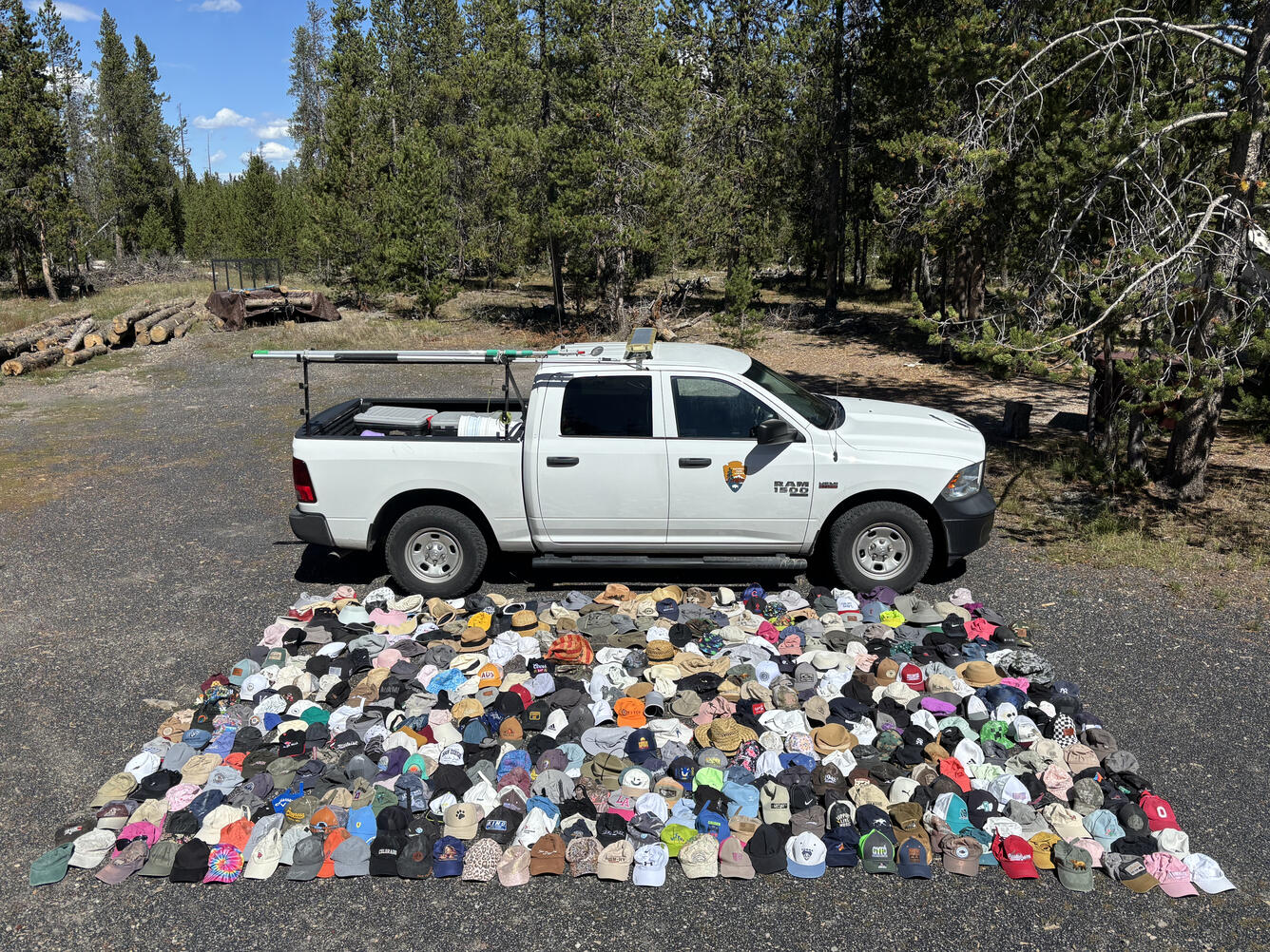
Hats: With more than 280 hats collected from hydrothermal areas this season, there are a lot of cool caps to choose from! Favorites this year include a FIFA 2026 Men’s World Cup hat, a baseball cap with “COWBOY HAT” on it, and a Roblox bucket hat from St. Kitts and Nevis. After the 2026 season is over, any rewearable hats will be washed and donated to local organizations.
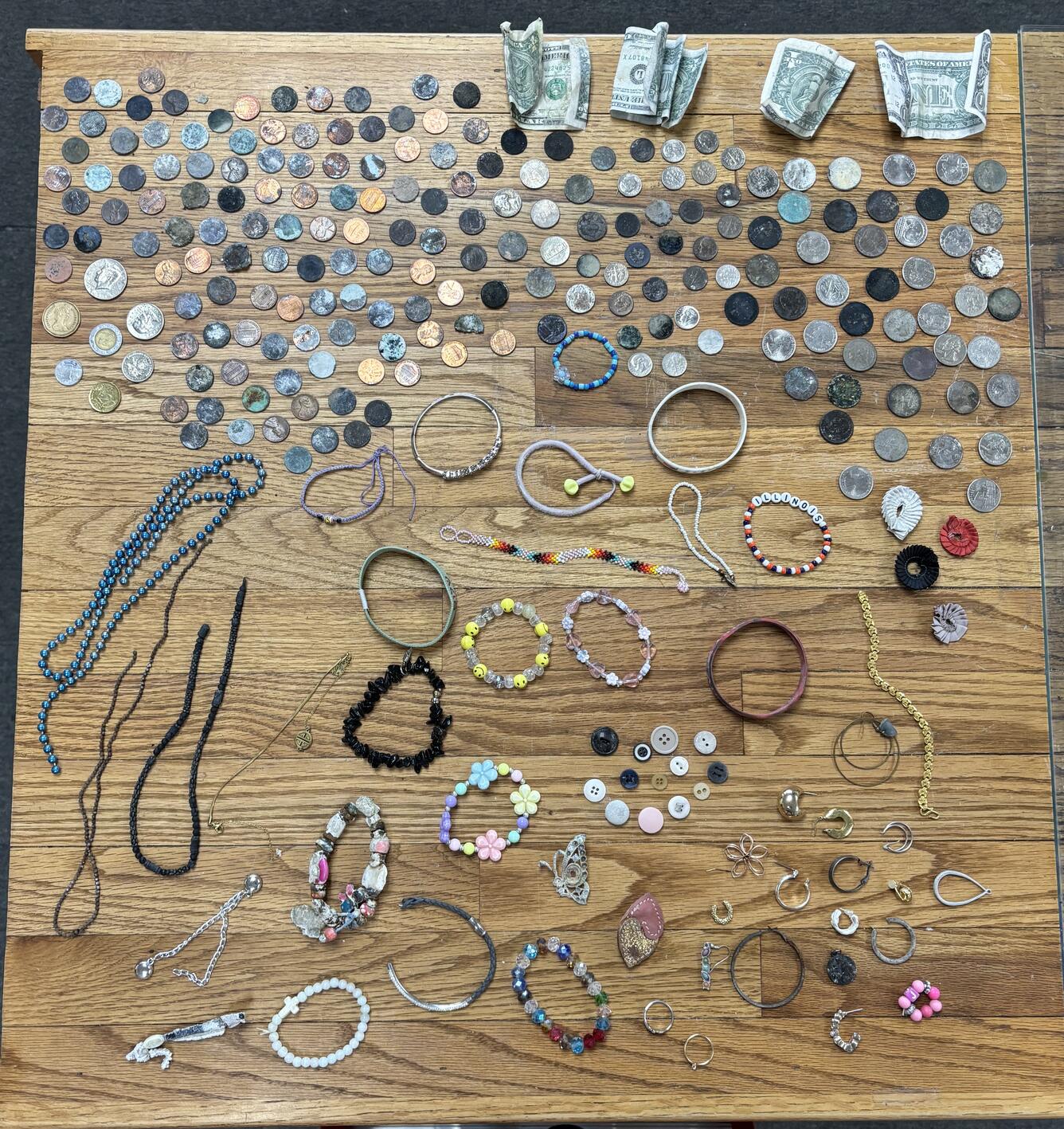
Coins: Contrary to (apparently) popular belief, hot springs are not wishing wells! In addition to clogging hydrothermal feature vents, throwing in coins can harm bacterial and algal formations in hydrothermal areas—damage that can take months to years to undo. The Yellowstone Geology team has collected more than \$18.00 in coins during summer 2026, most of which were thrown into hot springs or geysers or accidentally dropped between boardwalk planks. The coins are not limited to US denominations, but also include pesos, yen, euros, and Canadian dollars!
Most head-scratching: Some of the more bizarre things to find in a hydrothermal area: 5 Airpods, 3 Delta Flight Pins, an inhaler, 3 golf tees, and an Uno card.
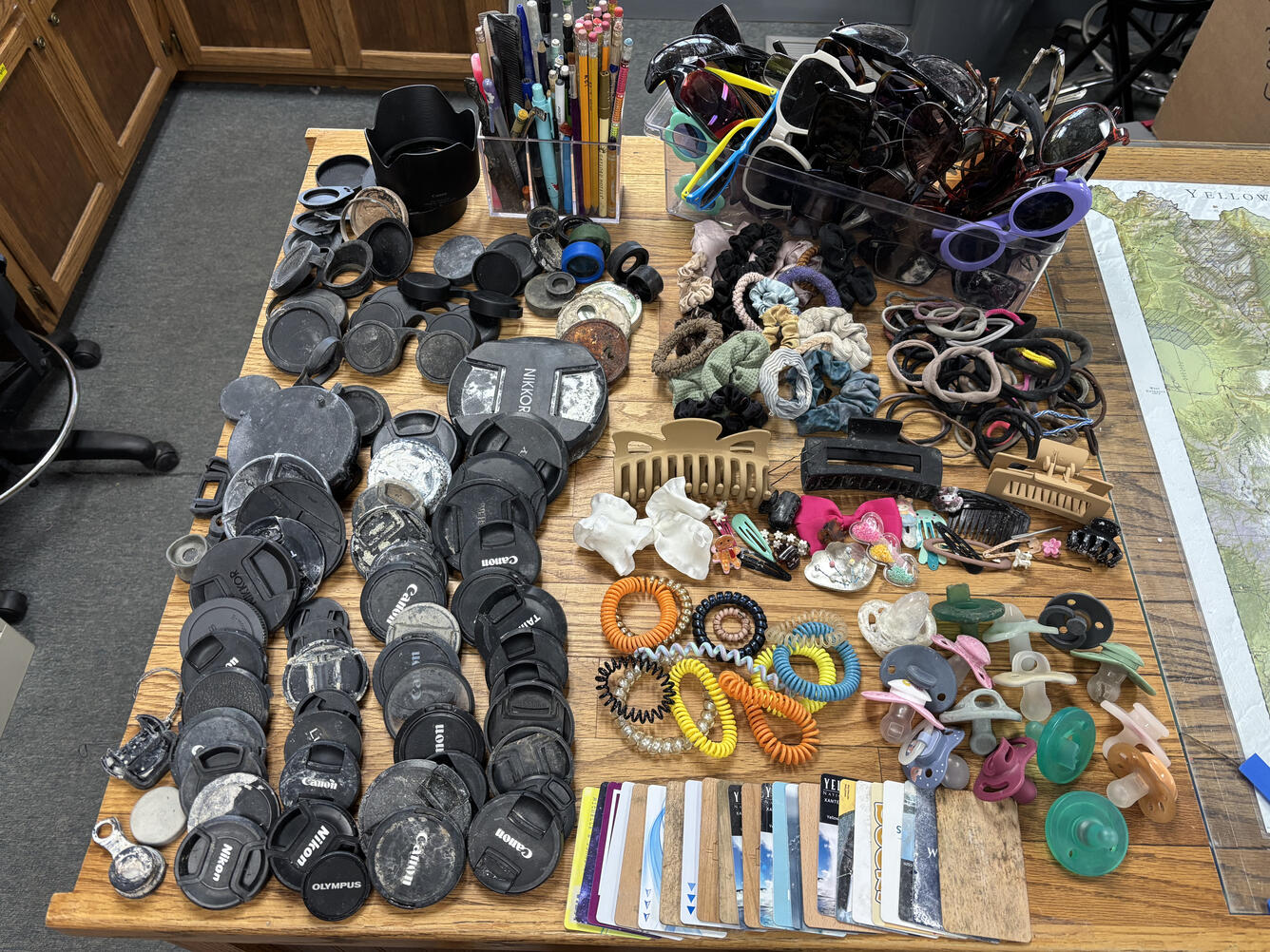
Most common: Besides the abundant plastic and paper trash collected by the team, the most common items found in hydrothermal areas are camera lens caps (54), hair ties (47), binkies (17), hotel key cards (20), pencils (42), and sunglasses (36)!
Grossest: In 2026, the Geology team found 6 (!) Invisalign retainers, 15 fake nails, numerous floss picks, and one lump of glittery pink children’s slime stuck to a handful of geyserite sinter pieces.
Children’s Toys: From mini race cars (8) and bouncy balls (3) to assorted figurines (22) and even Junior Ranger badges (6), it’s not uncommon for fun toys and trinkets from the little ones to get accidentally dropped off boardwalk into hydrothermal areas. Other highlights include a rainbow tie-dye fidget spinner, two rubber ducks, and a McDonald’s toy from 2010.

Team favorites: Of all the items found this season, Geology staff highlights include 7 instant/Polaroid pictures (including several depicting the hydrothermal features they were found in!), the 6 Yellowstone pressed pennies, 4 Pokemon cards and figurines, and a tiny (2 inch) copy of The Vampire Diaries!
Curious how you can help? If you’re traveling through Yellowstone National Park, especially in hydrothermal areas, make sure to “stash your trash”—put wrappers, tissues, and other easily windblown items deep in your pockets, a bag, or, even better, a trash can! If you’re adventuring in a windy area, consider tightening or taking off your hat. And remember, trails and boardwalks keep you safe, so stay on the path!