



Could earthquakes sustain Yellowstone’s underground life?
Although earthquakes present a major geologic hazard for humans, they may be key in the long-term survival of subsurface microbial communities.
Yellowstone Caldera Chronicles is a weekly column written by scientists and collaborators of the Yellowstone Volcano Observatory. This week's contribution is from Kat Plaza, Science Communication Intern with EarthScope Consortium.
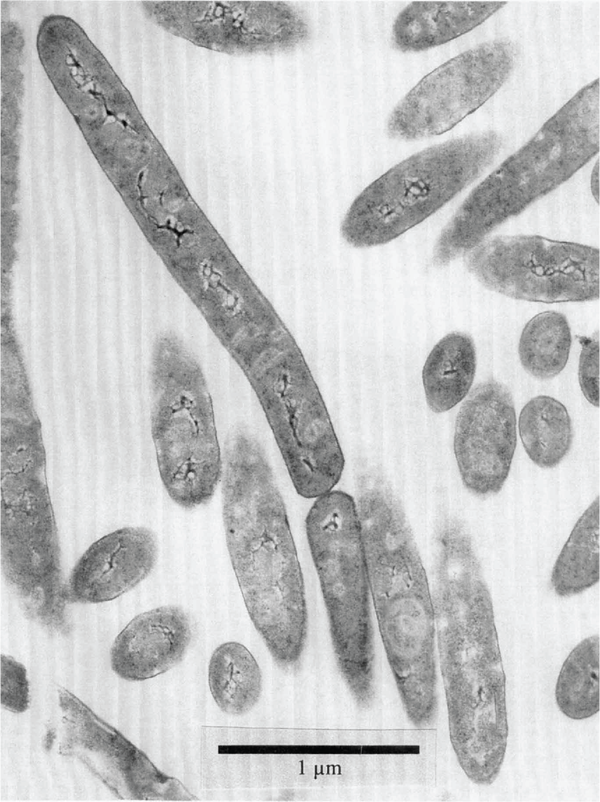
When you think of earthquakes, “life-sustaining” might not be the phrase that immediately jumps to mind. If you haven’t experienced the destruction of an earthquake yourself, you’ve certainly seen images of devastation on the news or heard stories of violent shaking in cities around the world. But for our distant downstairs neighbors—subsurface microbes—this same seismicity could be key in their long-term survival.
Although the idea of life existing far beneath Earth’s sunny, oxygen-rich exterior might seem surprising, the subsurface is home to a vibrant microbial ecosystem. Miles beneath our feet, many of these underground microbes persist in a state of complete isolation from Earth’s surface. But how do these microbes—called “lithoautotrophs”—get their energy?
At its core, it’s not too different from the central respiration reaction inside our bodies. During this reaction between oxygen and glucose (a sugar produced via Sun-driven photosynthesis), energy is released that gets harnessed by our cells. Without glucose or oxygen to draw from, lithoautotrophic microbes simply swap out the ingredients: they instead get their raw materials from inorganic molecules like hydrogen, ammonium, and sulfate that are present in the deep subsurface. The reactions between pairs of these molecules generate energy that powers microbial communities.
But as impressive as this power source is, it isn’t infinite. As microbes consume energy from these reactions, the supply of these molecules should eventually become depleted (like any non-renewable resource). How is it possible, then, that these subsurface communities have persisted over many millions of years? A recent research study (https://doi.org/10.1093/pnasnexus/pgaf344) focused on Yellowstone’s subsurface microbes proposes an unconventional solution: earthquakes.
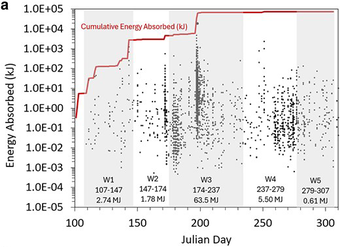
On average, Yellowstone experiences 1,500 to 2,500 earthquakes per year, some as isolated events and some clustered in localized earthquake swarms. Seismic activity crushes and moves rock, potentially shaking up new “ingredients” for microbial life. Could this process be a kind of renewable energy source? Is seismicity the piece that this strange lithoautotrophic puzzle is missing?
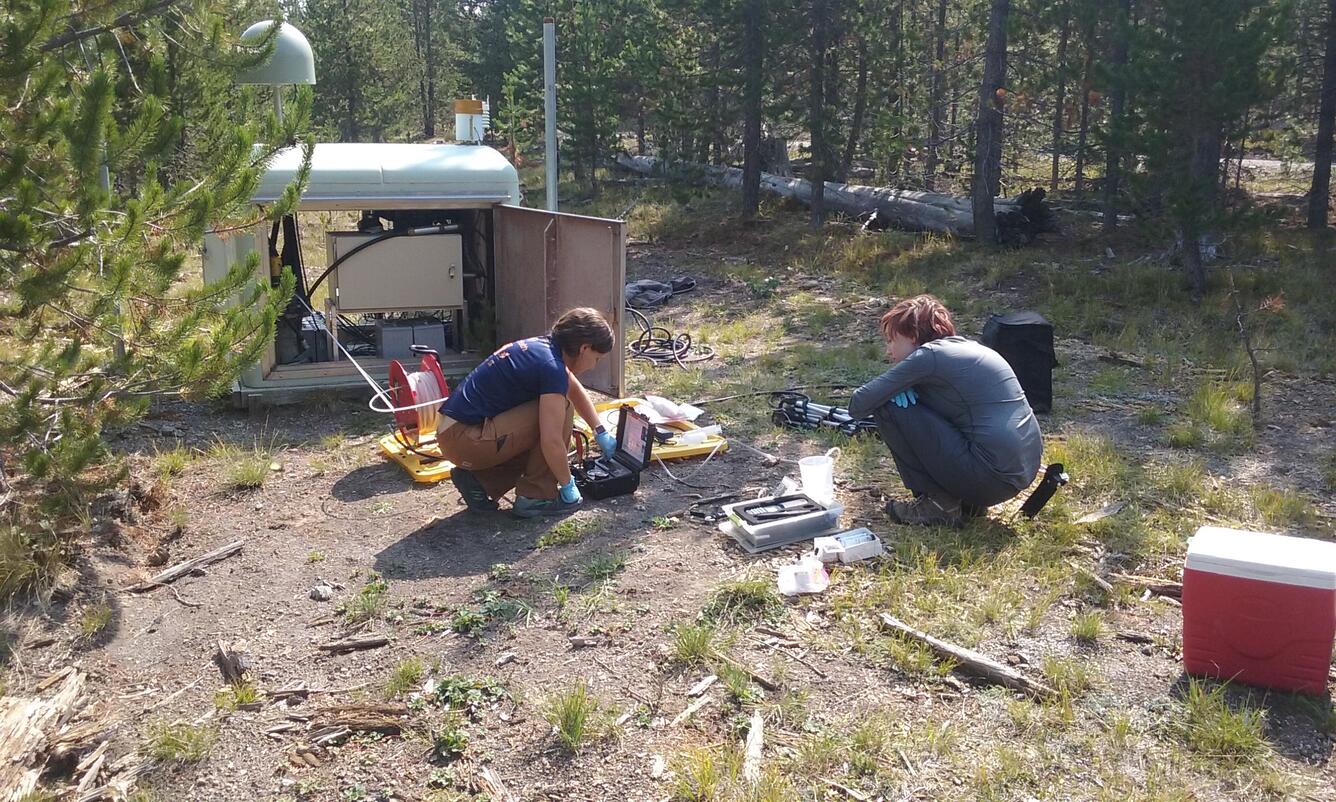
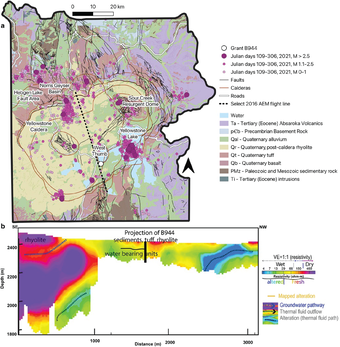
The study’s researchers, led by Dr. Eric Boyd of Montana State University, hypothesized that seismic activity would generate changes in Yellowstone’s subsurface chemistry, therefore impacting its chemistry-dependent microbes. To begin investigating this hypothesis, the team had to catch subterranean microbes in their natural habitat. Across Yellowstone, drilled boreholes host geophysical instruments to measure strain in Earth’s crust. For microbiologists, these holes also provide a portal to the subsurface home of Yellowstone’s microbial communities. The borehole used in this work is located just south of the West Thumb of Yellowstone Lake and intersects an underground aquifer (a subsurface layer of water) hosted in rhyolite, which is the most common type of rock underlying Yellowstone.
Five times throughout a six-month period (May to November 2021), the scientists used a powerful pump to suck up the borehole’s aquifer fluids and their resident microbes from a depth of nearly 100 meters below the surface.
They then examined how the chemistry and microbial content of these samples changed between periods rich with earthquakes and times that were relatively quiet. There were around 2,000 earthquakes throughout the six-month study period, with many of the strongest earthquakes focused in two swarms, in May–June and in July. Following the swarms, seismic activity began to decrease and had significantly diminished by the end of the period.
The team found that the aquifer fluids’ chemical makeup fluctuated in tune with these earthquakes. As seismicity increased, the concentrations of three molecules intertwined with microbial activity—hydrogen, sulfide, and dissolved organic carbon (DOC)—rose sharply. The DOC and hydrogen concentrations were among the highest ever found in Yellowstone, with hydrogen concentrations ranging from around ten to twenty times the maximum ever recorded in the area. After seismic activity decreased significantly near the end of the sampling period, the levels of these important molecules began to return to their normal levels.
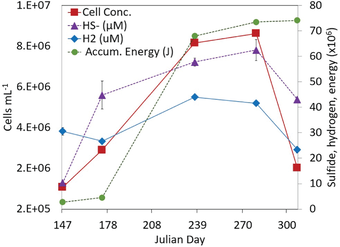
The researchers also observed a microbial bloom (or an increase in the number of cells) in response to the earthquake swarms. This trend was particularly strong for lithoautotrophic microbes that use hydrogen as an energy source, suggesting that the observed increase in hydrogen spurred their growth. At the peak of seismic activity, total cell concentrations had grown to over 6.5 times their original starting level. Like the fluid chemistry, cell concentrations dropped off steeply as seismicity decreased near the end of the sampling period.
So the measurements suggested that earthquakes were linked to changes in the chemistry and microbial communities of this Yellowstone aquifer—but how, exactly? One potential explanation is that the seismic shaking changed the fluids’ pathways as they flowed through the subsurface. It’s also possible that the intense seismic rock crushing and shearing, even from relatively small earthquakes, released previously trapped molecules or exposed fresh mineral surfaces—new sources of “raw materials” that microbes could use for their energy-generating reactions.
Though there are still more pieces needed to fully solve the puzzle of microbial persistence, this Yellowstone study suggests that earthquakes could be a key factor. If seismicity does indeed sustain subsurface microbes, it could help explain how these communities have been able to persist so long on our planet.
But this relation between seismicity and microbial life need not be restricted to Earth—it could extend to other rocky planets that experience their own earthquakes. Mars is one such planet, with abundant seismicity as well as a reservoir of liquid water in its subsurface. Could Mars-quakes help sustain microbial life in the Martian subsurface? Rovers haven’t been able to dig down deep enough to check—yet. When they do, perhaps they’ll find a vibrant microbial ecosystem, flourishing in their shaking, quaking home.