



Yellowstone Volcano Observatory…in Arizona?!
The Yellowstone Volcano Observatory is not only responsible for monitoring and studying Yellowstone, but also volcanic systems throughout southwestern United States. Arizona hosts multiple volcanic fields, and new research suggests there may be more young volcanism in the state than previously thought.
Yellowstone Caldera Chronicles is a weekly column written by scientists and collaborators of the Yellowstone Volcano Observatory. This week's contribution is from Mark Stelten, research geologist with the U.S. Geological Survey and deputy Scientist-in-Charge of the Yellowstone Volcano Observatory.
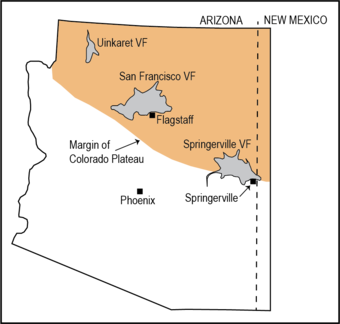
Despite being hundreds of miles south of Yellowstone Caldera, Arizona volcanism is the responsibility of the Yellowstone Volcano Observatory, along with volcanism in the other Four Corners states of the southwestern USA. When you think of Arizona, you probably don’t immediately think of volcanoes. But as it turns out, Arizona hosts numerous volcanic fields, some of which are still active today. Geologists working with the Yellowstone Volcano Observatory are actively studying volcanic fields in Arizona to assess how frequently they erupt and what types of eruptions they have produced in the past. This information is essential for assessing how threatening these volcanic fields are to populations and infrastructure in Arizona, and for evaluating how to best monitor volcanic fields in the region.
Of all the volcanic fields in Arizona, two are known to have very recent eruptions that occurred less than 1000 years ago. This includes the San Francisco volcanic field, located adjacent to the city of Flagstaff, and the Uinkaret volcanic field, located in northwestern Arizona adjacent to the Colorado River. Both of these volcanic fields lie along the southern margin of the Colorado Plateau, which is a region of the Four Corners area that is geologically distinct from the surroundings and made up of high-elevation desert terrane. Due to the young age of its most recent eruption—about 940 years ago—and its proximity to Flagstaff, the San Francisco volcanic field was designated a moderate threat in the most recent USGS threat assessment for US volcanoes. Despite having a similarly young eruption, the Uinkaret volcanic field is considered a very low threat because it is not located near any major population centers or major infrastructure. Both volcanic fields are considered distributed volcanic fields because they contain many, typically small volcanoes scattered over a large area instead of a single central-vent volcano. While we have a good understanding of when the last eruption was, work is ongoing at the San Francisco volcanic field to develop a more complete record of its eruptive history over the last several hundred thousand years. This information will help determine how frequently eruptions occur in this area—and important factor when determining how likely future eruptions are.
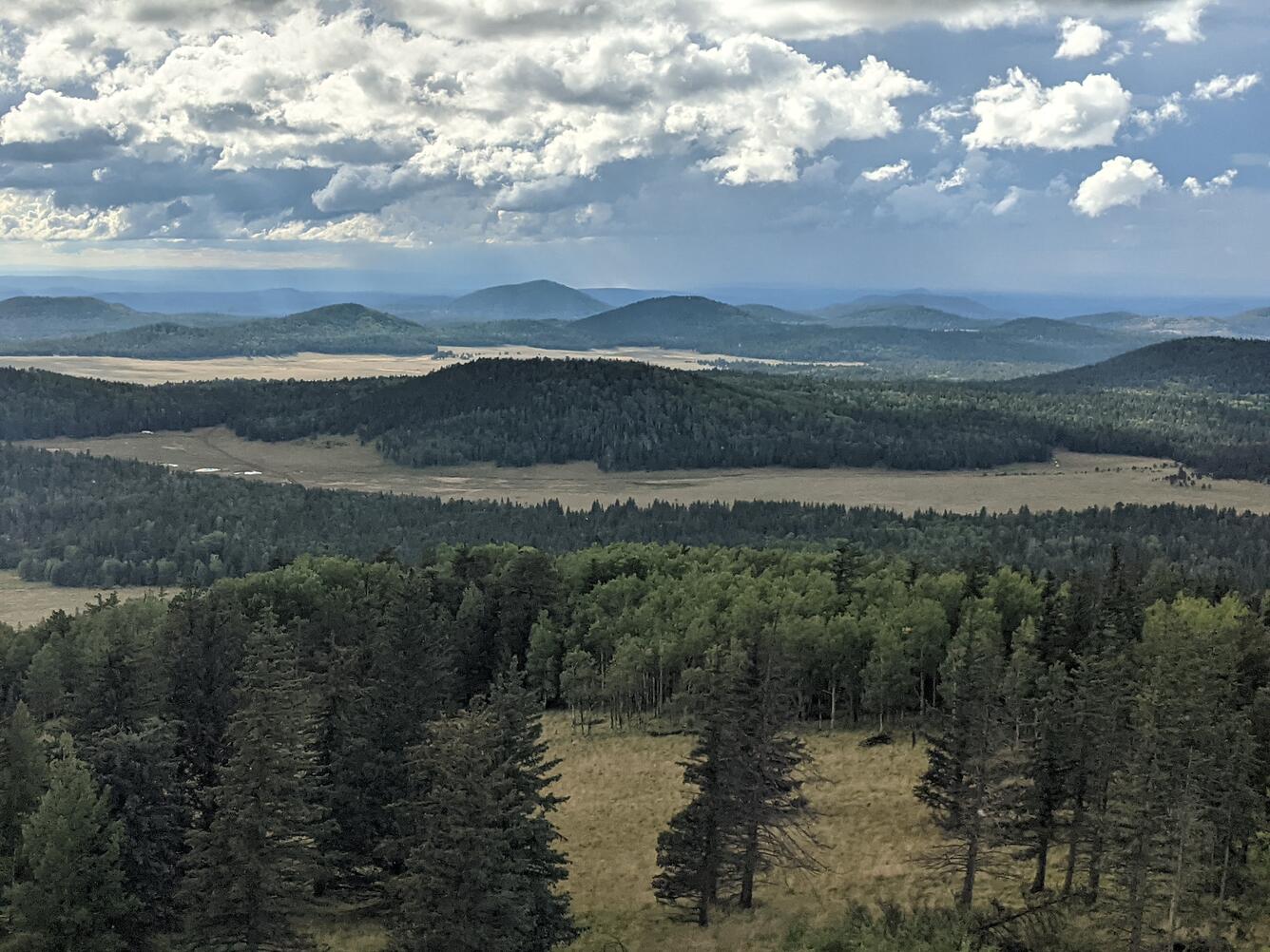
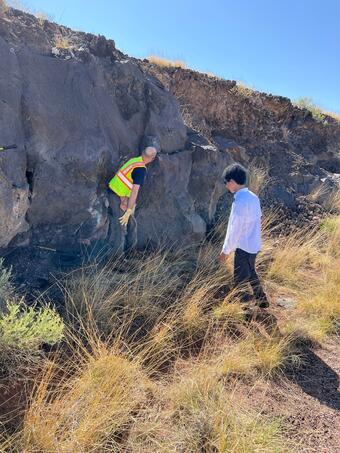
While the youthfulness of volcanism in the San Francisco and Uinkaret volcanic fields is well known, this may not be the whole story in Arizona. Since 2023, scientists from the USGS along with researchers from Sonoma State University and the University of Massachusetts Amherst have been reevaluating the age of the Springerville volcanic field. This area of distributed volcanism lies along the southern margin of the Colorado Plateau in eastern Arizona between the communities of Show Low and Springerville. Volcanism was thought to have ceased in the Springerville volcanic field around 300,000 years ago based on prior studies, but recent argon dating performed on volcanic rocks erupted along the eastern margin of the volcanic field, approximately 8.5 miles northwest of Springerville, show that eruptions occurred as recently as 50,000 years ago. These new data show that the Springerville volcanic field is much younger than previously though and may still be active today.
Interestingly, just outside of the eastern margin of the volcanic field, near the location of the newly recognized 50,000-year-old eruption, lies the St. Johns CO2 gas field, which hosts a large subsurface CO2 reservoir and numerous travertine deposits. The CO2 that is in the reservoir and feeding the travertine deposits is thought to be sourced from magmas related to the Springerville volcanic field. A period of travertine formation is known to have occurred around 50,000 years ago, suggesting a correlation between the newly recognized recent Springerville volcanism and travertine deposition at the St. Johns CO2 gas field that could be important for understanding linkage between these two systems. More work is needed to assess how heat and gasses from the volcanic field are linked to the St. Johns CO2 gas field, but this connection highlights how young volcanism may be associated with more than just lava flows.
There is much more work to do when it comes to understanding the geologic history and hazards associated with volcanism in Arizona, but one thing is clear: don’t forget about Arizona when you think of states with interesting volcanoes!