



Nebraska Cooperative Fish and Wildlife Research Unit
The Nebraska Cooperative Fish and Wildlife Research Unit (est. 1936) is a partnership among the Nebraska Game and Parks Commission, University of Nebraska-Lincoln, the U.S. Geological Survey, the U.S. Fish and Wildlife Service, and the Wildlife Management Institute.
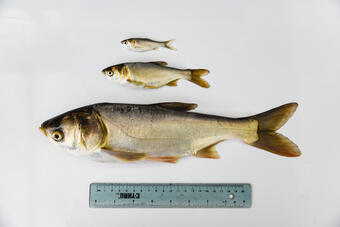
The name "Nebraska" is based on an Oto Indian word Nebrathka meaning "flat water," after the Platte River that flows through the state. Nebraska is home to the Sandhills and the Rainwater Basin, abundant fisheries and wildlife resources, and enthusiastic sportspersons. The diversity of landscapes and subsequent diverse fish-and-wildlife resources in Nebraska requires NECFWRU to champion a broad focus for graduate education, applied research, and technical assistance.
The NECFWRU is committed to developing future natural-resource managers and researchers through graduate education, doing innovative and novel research that is interdisciplinary and cross-boundary in support of the North American Model of Wildlife Conservation, and enhancing cooperator capabilities through technical assistance on state-of-the-art science practices. Fishery and wildlife management, landscape ecology, and social and ecological resilience will be emphasized, with intent of complementing and strengthening existing foci of land-grant universities, state and federal natural-resource agencies, and non-government organizations centered on natural resources.
Research within NECFWRU addresses the expressed information needs of the citizens of Nebraska and the United States of America, especially to better understand natural systems and how socioecological processes are altered by disturbances and management actions. Teaching within NECRWRU includes formal classes, small groups, and one-on-one interactions, and emphasizes active-learning approaches that empower students to take responsibility for their life-long educational journey.
Assistance within NECFWRU occurs frequently in both informal and formal settings, and is meant to provide advice and training on cooperator needs including discussions of their science questions, study-design considerations, and training.
The Nebraska Cooperative Fish and Wildlife Research Unit (est. 1936) is a partnership among the Nebraska Game and Parks Commission, University of Nebraska-Lincoln, the U.S. Geological Survey, the U.S. Fish and Wildlife Service, and the Wildlife Management Institute.
The name "Nebraska" is based on an Oto Indian word Nebrathka meaning "flat water," after the Platte River that flows through the state. Nebraska is home to the Sandhills and the Rainwater Basin, abundant fisheries and wildlife resources, and enthusiastic sportspersons. The diversity of landscapes and subsequent diverse fish-and-wildlife resources in Nebraska requires NECFWRU to champion a broad focus for graduate education, applied research, and technical assistance.
The NECFWRU is committed to developing future natural-resource managers and researchers through graduate education, doing innovative and novel research that is interdisciplinary and cross-boundary in support of the North American Model of Wildlife Conservation, and enhancing cooperator capabilities through technical assistance on state-of-the-art science practices. Fishery and wildlife management, landscape ecology, and social and ecological resilience will be emphasized, with intent of complementing and strengthening existing foci of land-grant universities, state and federal natural-resource agencies, and non-government organizations centered on natural resources.
Research within NECFWRU addresses the expressed information needs of the citizens of Nebraska and the United States of America, especially to better understand natural systems and how socioecological processes are altered by disturbances and management actions. Teaching within NECRWRU includes formal classes, small groups, and one-on-one interactions, and emphasizes active-learning approaches that empower students to take responsibility for their life-long educational journey.
Assistance within NECFWRU occurs frequently in both informal and formal settings, and is meant to provide advice and training on cooperator needs including discussions of their science questions, study-design considerations, and training.