



A natural gas flare. Sometimes, often due to lack of transportation or storage capacity, natural gas that is co-produced with oil will be burned in a flare. This wellpad is in the Tuscaloosa Marine Shale.
Alex Demas (Former Employee)
Science and Products
Filter Total Items: 845

Natural Gas Flare
A natural gas flare. Sometimes, often due to lack of transportation or storage capacity, natural gas that is co-produced with oil will be burned in a flare. This wellpad is in the Tuscaloosa Marine Shale.
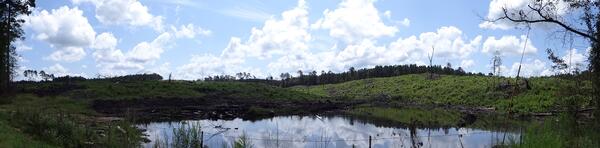
Panorama of Clear-Cutting for Pulp Mill
A panorama view of an area clear-cut of pine trees for processing at a pulp mill. Pulp mills manufacture paper from wood.
A panorama view of an area clear-cut of pine trees for processing at a pulp mill. Pulp mills manufacture paper from wood.
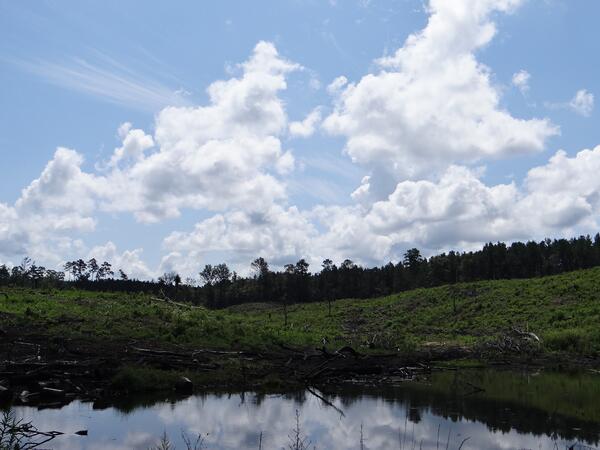
Clear-Cutting for Pulp Mill
A view of an area clear-cut of pine trees for processing at a pulp mill. Pulp mills manufacture paper from wood.
A view of an area clear-cut of pine trees for processing at a pulp mill. Pulp mills manufacture paper from wood.
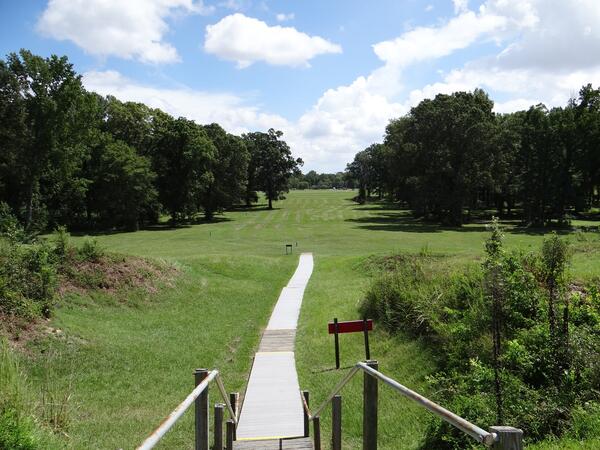
View from Mound A to the East
The stairs descending Mound A to the east. Mound A is also known as the "Bird Mound," because its original shape is believed to have been that of a bird. Mound A is at the apex of a series of 6 concentric rings of raised earthworks. The rings were believed to have been the site of dwellings.
The stairs descending Mound A to the east. Mound A is also known as the "Bird Mound," because its original shape is believed to have been that of a bird. Mound A is at the apex of a series of 6 concentric rings of raised earthworks. The rings were believed to have been the site of dwellings.
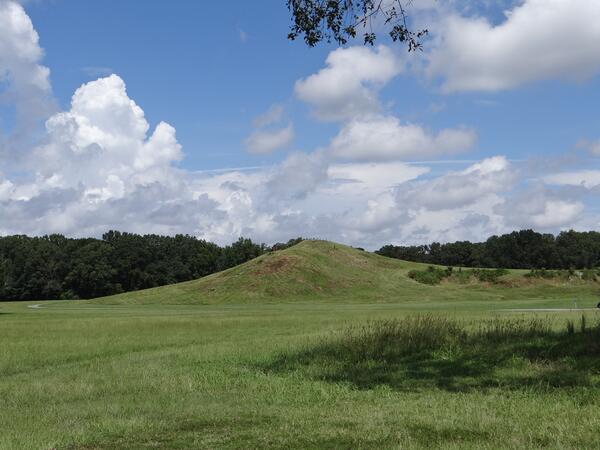
View of Mound A
View of the primary mound, Mound A, looking north. Mound A is also known as the "Bird Mound," because its original shape is believed to have been that of a bird.
View of the primary mound, Mound A, looking north. Mound A is also known as the "Bird Mound," because its original shape is believed to have been that of a bird.

View of Mound A
View of the primary mound, Mound A, looking northwest. Mound A is also known as the "Bird Mound," because its original shape is believed to have been that of a bird.
View of the primary mound, Mound A, looking northwest. Mound A is also known as the "Bird Mound," because its original shape is believed to have been that of a bird.
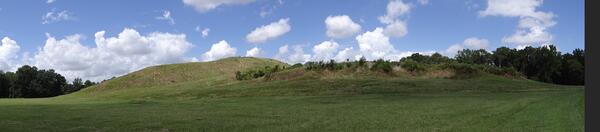
Panorama of Mound A
Panorama of the primary mound, Mound A, looking north. Mound A is also known as the "Bird Mound," because its original shape is believed to have been that of a bird.
Panorama of the primary mound, Mound A, looking north. Mound A is also known as the "Bird Mound," because its original shape is believed to have been that of a bird.
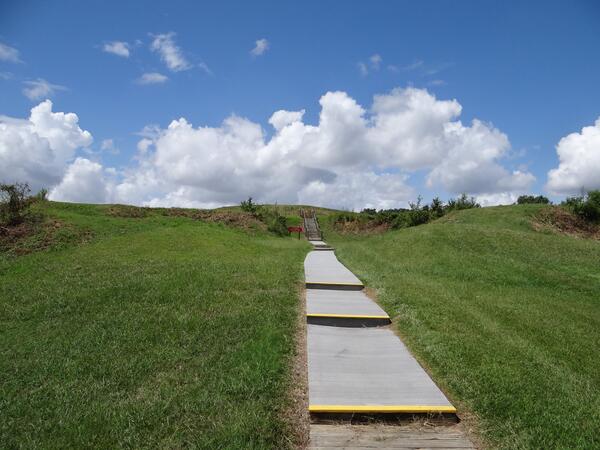
Stairs Ascending Mound A
The stairs ascending Mound A from the east. Mound A is also known as the "Bird Mound," because its original shape is believed to have been that of a bird. The stairs climb from the legs and tail of the bird toward its head.
The stairs ascending Mound A from the east. Mound A is also known as the "Bird Mound," because its original shape is believed to have been that of a bird. The stairs climb from the legs and tail of the bird toward its head.
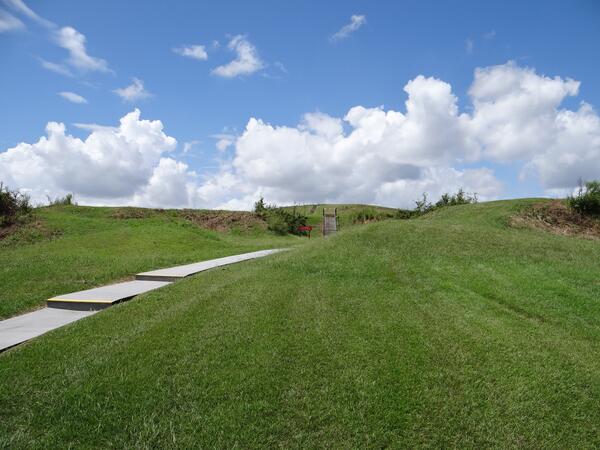
Stairs Ascending Mound A
The stairs ascending Mound A from the east. Mound A is also known as the "Bird Mound," because its original shape is believed to have been that of a bird. The stairs climb from the legs and tail of the bird toward its head.
The stairs ascending Mound A from the east. Mound A is also known as the "Bird Mound," because its original shape is believed to have been that of a bird. The stairs climb from the legs and tail of the bird toward its head.
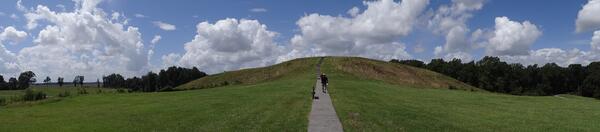
Panorama of Mound A
A panorama of the stairs ascending Mound A from the east. Mound A is also known as the "Bird Mound," because its original shape is believed to have been that of a bird. The stairs climb from the legs and tail of the bird toward its head.
A panorama of the stairs ascending Mound A from the east. Mound A is also known as the "Bird Mound," because its original shape is believed to have been that of a bird. The stairs climb from the legs and tail of the bird toward its head.
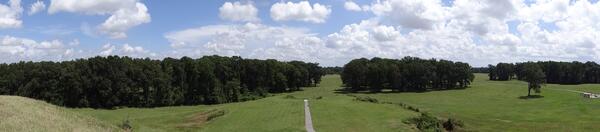
Panorama of View from Mound A to the East
A panorama of the stairs descending Mound A to the east. Mound A is also known as the "Bird Mound," because its original shape is believed to have been that of a bird. Mound A is at the apex of a series of 6 concentric rings of raised earthworks. The rings were believed to have been the site of dwellings.
A panorama of the stairs descending Mound A to the east. Mound A is also known as the "Bird Mound," because its original shape is believed to have been that of a bird. Mound A is at the apex of a series of 6 concentric rings of raised earthworks. The rings were believed to have been the site of dwellings.
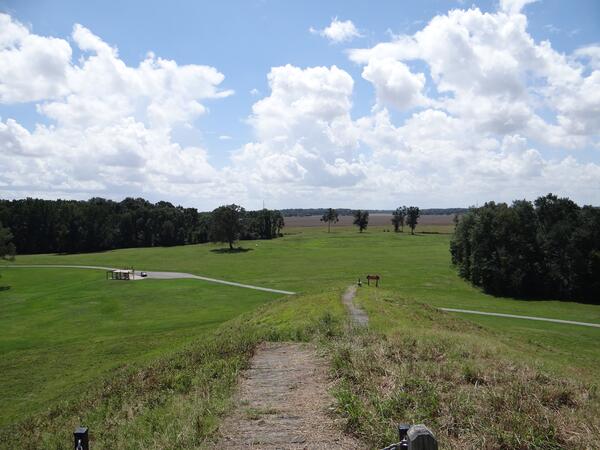
Crest of Mound A Looking South
A view from the crest of Mound A to the south. Mound A is also known as the "Bird Mound," because its original shape is believed to have been that of a bird. This view is of its left wing, looking towards Mound E, which can be seen at the edge of the green field.
A view from the crest of Mound A to the south. Mound A is also known as the "Bird Mound," because its original shape is believed to have been that of a bird. This view is of its left wing, looking towards Mound E, which can be seen at the edge of the green field.
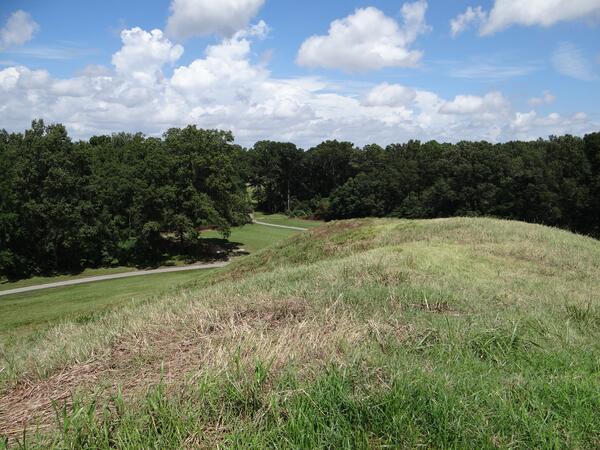
Crest of Mound A Looking North
A view from the crest of Mound A to the north. Mound A is also known as the "Bird Mound," because its original shape is believed to have been that of a bird. This view is of its right wing, looking towards Mound B, which is obscured in the trees.
A view from the crest of Mound A to the north. Mound A is also known as the "Bird Mound," because its original shape is believed to have been that of a bird. This view is of its right wing, looking towards Mound B, which is obscured in the trees.
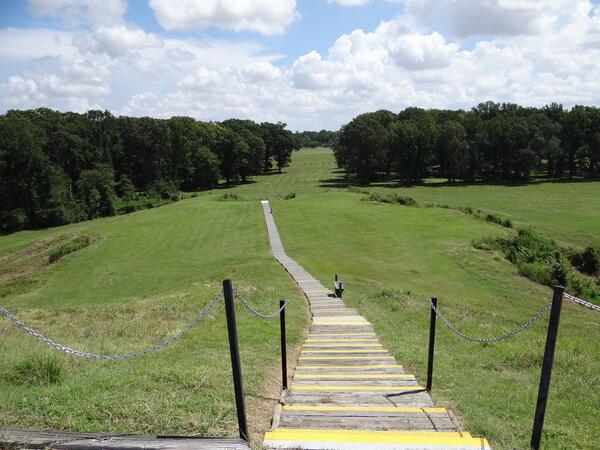
Crest of Mound A Looking East
A view from the crest of Mound A of the stairs descending to the east. Mound A is also known as the "Bird Mound," because its original shape is believed to have been that of a bird. Mound A is at the apex of a series of 6 concentric rings of raised earthworks. The rings were believed to have been the site of dwellings.
A view from the crest of Mound A of the stairs descending to the east. Mound A is also known as the "Bird Mound," because its original shape is believed to have been that of a bird. Mound A is at the apex of a series of 6 concentric rings of raised earthworks. The rings were believed to have been the site of dwellings.
Maryland Soybean Farm
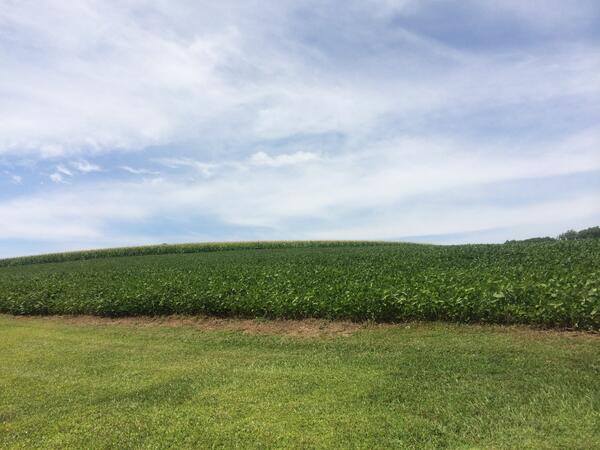
A soybean farm in northern Maryland. Corn can be seen growing in the background.
A soybean farm in northern Maryland. Corn can be seen growing in the background.
Cascade Hops on the Vine
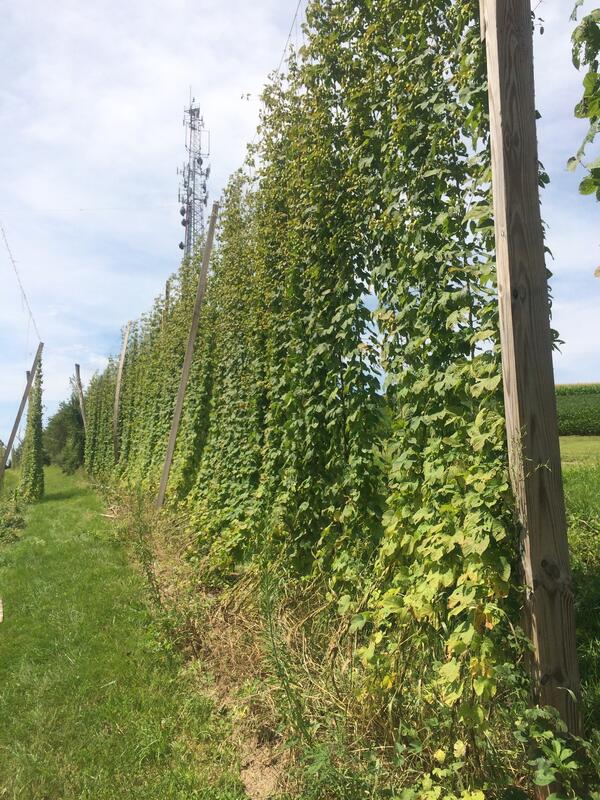
Hops are a species of vine, whose flowers are used in the beer-brewing process. It provides flavor to beer, and has several varieties. This variety is called Cascade.
Hops are a species of vine, whose flowers are used in the beer-brewing process. It provides flavor to beer, and has several varieties. This variety is called Cascade.
Cascade Hops on the Vine
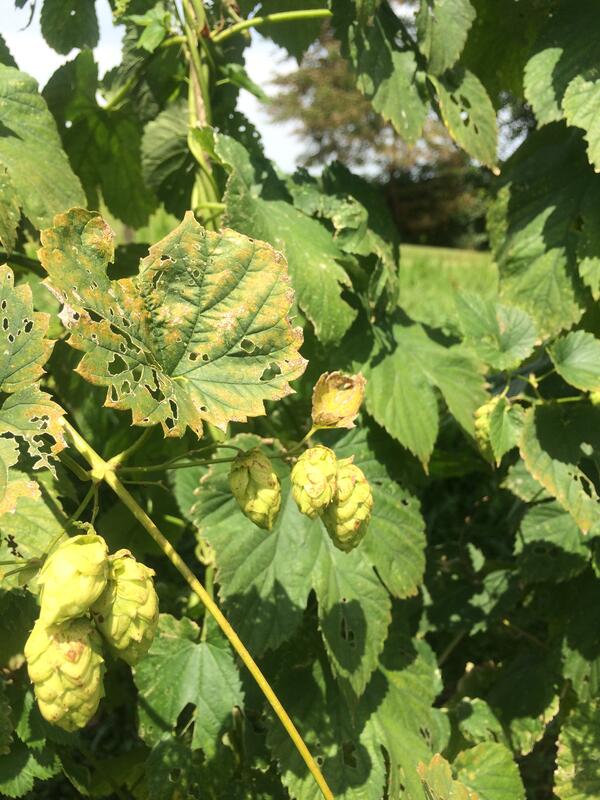
Hops are a species of vine, whose flowers are used in the beer-brewing process. It provides flavor to beer, and has several varieties. This variety is called Cascade.
Hops are a species of vine, whose flowers are used in the beer-brewing process. It provides flavor to beer, and has several varieties. This variety is called Cascade.
Cascade Hops on the Vine
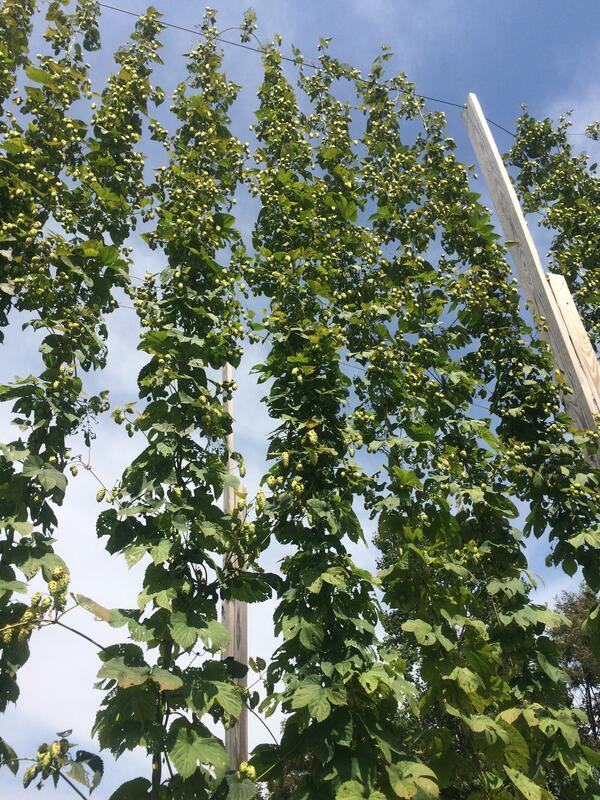
Hops are a species of vine, whose flowers are used in the beer-brewing process. It provides flavor to beer, and has several varieties. This variety is called Cascade.
Hops are a species of vine, whose flowers are used in the beer-brewing process. It provides flavor to beer, and has several varieties. This variety is called Cascade.
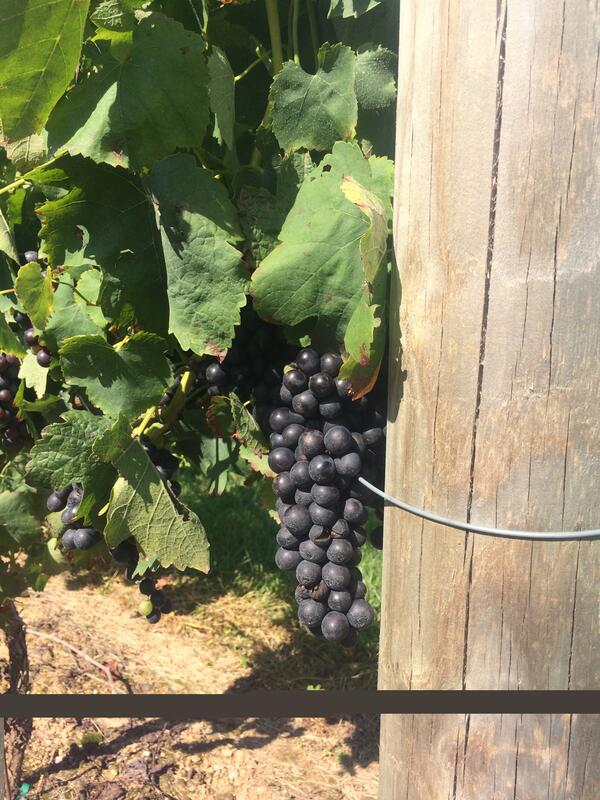
Syrah Grapes on the Vine
Wine-making grapes, like these Syrah (or Shiraz) grapes, require different growing conditions than grapes meant for eating. Cultivating wine grapes involves trying to concentrate sugars and encourage thicker skins, because these are what give wine its flavor. To do that, one of the most important factors to look for is the drainage of the soils.
Wine-making grapes, like these Syrah (or Shiraz) grapes, require different growing conditions than grapes meant for eating. Cultivating wine grapes involves trying to concentrate sugars and encourage thicker skins, because these are what give wine its flavor. To do that, one of the most important factors to look for is the drainage of the soils.
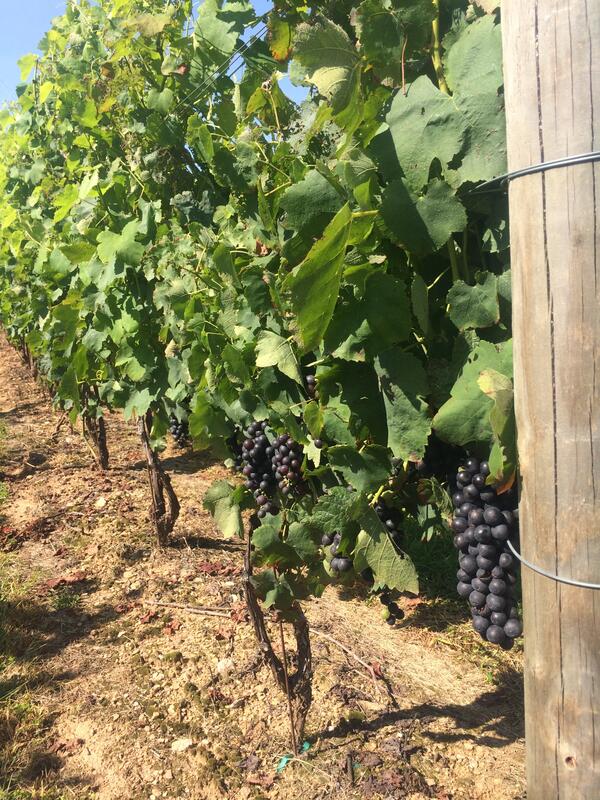
Syrah Grapes on the Vine
Wine-making grapes, like these Syrah (or Shiraz) grapes, require different growing conditions than grapes meant for eating. Cultivating wine grapes involves trying to concentrate sugars and encourage thicker skins, because these are what give wine its flavor. To do that, one of the most important factors to look for is the drainage of the soils.
Wine-making grapes, like these Syrah (or Shiraz) grapes, require different growing conditions than grapes meant for eating. Cultivating wine grapes involves trying to concentrate sugars and encourage thicker skins, because these are what give wine its flavor. To do that, one of the most important factors to look for is the drainage of the soils.
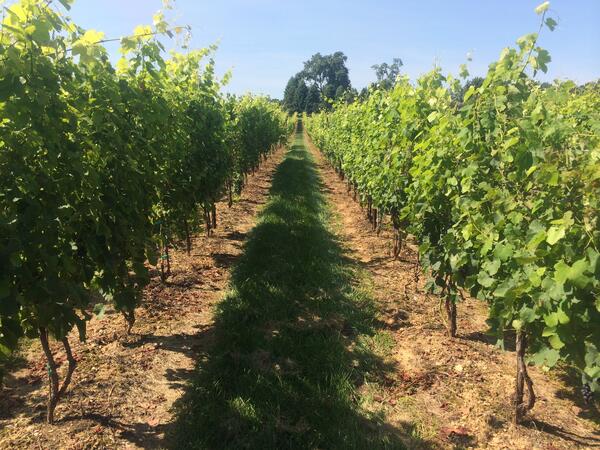
Syrah Grapes on the Vine
Wine-making grapes, like these Syrah (or Shiraz) grapes, require different growing conditions than grapes meant for eating. Cultivating wine grapes involves trying to concentrate sugars and encourage thicker skins, because these are what give wine its flavor. To do that, one of the most important factors to look for is the drainage of the soils.
Wine-making grapes, like these Syrah (or Shiraz) grapes, require different growing conditions than grapes meant for eating. Cultivating wine grapes involves trying to concentrate sugars and encourage thicker skins, because these are what give wine its flavor. To do that, one of the most important factors to look for is the drainage of the soils.
Science and Products
Filter Total Items: 845
Natural Gas Flare
A natural gas flare. Sometimes, often due to lack of transportation or storage capacity, natural gas that is co-produced with oil will be burned in a flare. This wellpad is in the Tuscaloosa Marine Shale.
A natural gas flare. Sometimes, often due to lack of transportation or storage capacity, natural gas that is co-produced with oil will be burned in a flare. This wellpad is in the Tuscaloosa Marine Shale.
Panorama of Clear-Cutting for Pulp Mill
A panorama view of an area clear-cut of pine trees for processing at a pulp mill. Pulp mills manufacture paper from wood.
A panorama view of an area clear-cut of pine trees for processing at a pulp mill. Pulp mills manufacture paper from wood.
Clear-Cutting for Pulp Mill
A view of an area clear-cut of pine trees for processing at a pulp mill. Pulp mills manufacture paper from wood.
A view of an area clear-cut of pine trees for processing at a pulp mill. Pulp mills manufacture paper from wood.
View from Mound A to the East
The stairs descending Mound A to the east. Mound A is also known as the "Bird Mound," because its original shape is believed to have been that of a bird. Mound A is at the apex of a series of 6 concentric rings of raised earthworks. The rings were believed to have been the site of dwellings.
The stairs descending Mound A to the east. Mound A is also known as the "Bird Mound," because its original shape is believed to have been that of a bird. Mound A is at the apex of a series of 6 concentric rings of raised earthworks. The rings were believed to have been the site of dwellings.
View of Mound A
View of the primary mound, Mound A, looking north. Mound A is also known as the "Bird Mound," because its original shape is believed to have been that of a bird.
View of the primary mound, Mound A, looking north. Mound A is also known as the "Bird Mound," because its original shape is believed to have been that of a bird.
View of Mound A
View of the primary mound, Mound A, looking northwest. Mound A is also known as the "Bird Mound," because its original shape is believed to have been that of a bird.
View of the primary mound, Mound A, looking northwest. Mound A is also known as the "Bird Mound," because its original shape is believed to have been that of a bird.
Panorama of Mound A
Panorama of the primary mound, Mound A, looking north. Mound A is also known as the "Bird Mound," because its original shape is believed to have been that of a bird.
Panorama of the primary mound, Mound A, looking north. Mound A is also known as the "Bird Mound," because its original shape is believed to have been that of a bird.
Stairs Ascending Mound A
The stairs ascending Mound A from the east. Mound A is also known as the "Bird Mound," because its original shape is believed to have been that of a bird. The stairs climb from the legs and tail of the bird toward its head.
The stairs ascending Mound A from the east. Mound A is also known as the "Bird Mound," because its original shape is believed to have been that of a bird. The stairs climb from the legs and tail of the bird toward its head.
Stairs Ascending Mound A
The stairs ascending Mound A from the east. Mound A is also known as the "Bird Mound," because its original shape is believed to have been that of a bird. The stairs climb from the legs and tail of the bird toward its head.
The stairs ascending Mound A from the east. Mound A is also known as the "Bird Mound," because its original shape is believed to have been that of a bird. The stairs climb from the legs and tail of the bird toward its head.
Panorama of Mound A
A panorama of the stairs ascending Mound A from the east. Mound A is also known as the "Bird Mound," because its original shape is believed to have been that of a bird. The stairs climb from the legs and tail of the bird toward its head.
A panorama of the stairs ascending Mound A from the east. Mound A is also known as the "Bird Mound," because its original shape is believed to have been that of a bird. The stairs climb from the legs and tail of the bird toward its head.
Panorama of View from Mound A to the East
A panorama of the stairs descending Mound A to the east. Mound A is also known as the "Bird Mound," because its original shape is believed to have been that of a bird. Mound A is at the apex of a series of 6 concentric rings of raised earthworks. The rings were believed to have been the site of dwellings.
A panorama of the stairs descending Mound A to the east. Mound A is also known as the "Bird Mound," because its original shape is believed to have been that of a bird. Mound A is at the apex of a series of 6 concentric rings of raised earthworks. The rings were believed to have been the site of dwellings.
Crest of Mound A Looking South
A view from the crest of Mound A to the south. Mound A is also known as the "Bird Mound," because its original shape is believed to have been that of a bird. This view is of its left wing, looking towards Mound E, which can be seen at the edge of the green field.
A view from the crest of Mound A to the south. Mound A is also known as the "Bird Mound," because its original shape is believed to have been that of a bird. This view is of its left wing, looking towards Mound E, which can be seen at the edge of the green field.
Crest of Mound A Looking North
A view from the crest of Mound A to the north. Mound A is also known as the "Bird Mound," because its original shape is believed to have been that of a bird. This view is of its right wing, looking towards Mound B, which is obscured in the trees.
A view from the crest of Mound A to the north. Mound A is also known as the "Bird Mound," because its original shape is believed to have been that of a bird. This view is of its right wing, looking towards Mound B, which is obscured in the trees.
Crest of Mound A Looking East
A view from the crest of Mound A of the stairs descending to the east. Mound A is also known as the "Bird Mound," because its original shape is believed to have been that of a bird. Mound A is at the apex of a series of 6 concentric rings of raised earthworks. The rings were believed to have been the site of dwellings.
A view from the crest of Mound A of the stairs descending to the east. Mound A is also known as the "Bird Mound," because its original shape is believed to have been that of a bird. Mound A is at the apex of a series of 6 concentric rings of raised earthworks. The rings were believed to have been the site of dwellings.
Maryland Soybean Farm
A soybean farm in northern Maryland. Corn can be seen growing in the background.
A soybean farm in northern Maryland. Corn can be seen growing in the background.
Cascade Hops on the Vine
Hops are a species of vine, whose flowers are used in the beer-brewing process. It provides flavor to beer, and has several varieties. This variety is called Cascade.
Hops are a species of vine, whose flowers are used in the beer-brewing process. It provides flavor to beer, and has several varieties. This variety is called Cascade.
Cascade Hops on the Vine
Hops are a species of vine, whose flowers are used in the beer-brewing process. It provides flavor to beer, and has several varieties. This variety is called Cascade.
Hops are a species of vine, whose flowers are used in the beer-brewing process. It provides flavor to beer, and has several varieties. This variety is called Cascade.
Cascade Hops on the Vine
Hops are a species of vine, whose flowers are used in the beer-brewing process. It provides flavor to beer, and has several varieties. This variety is called Cascade.
Hops are a species of vine, whose flowers are used in the beer-brewing process. It provides flavor to beer, and has several varieties. This variety is called Cascade.
Syrah Grapes on the Vine
Wine-making grapes, like these Syrah (or Shiraz) grapes, require different growing conditions than grapes meant for eating. Cultivating wine grapes involves trying to concentrate sugars and encourage thicker skins, because these are what give wine its flavor. To do that, one of the most important factors to look for is the drainage of the soils.
Wine-making grapes, like these Syrah (or Shiraz) grapes, require different growing conditions than grapes meant for eating. Cultivating wine grapes involves trying to concentrate sugars and encourage thicker skins, because these are what give wine its flavor. To do that, one of the most important factors to look for is the drainage of the soils.
Syrah Grapes on the Vine
Wine-making grapes, like these Syrah (or Shiraz) grapes, require different growing conditions than grapes meant for eating. Cultivating wine grapes involves trying to concentrate sugars and encourage thicker skins, because these are what give wine its flavor. To do that, one of the most important factors to look for is the drainage of the soils.
Wine-making grapes, like these Syrah (or Shiraz) grapes, require different growing conditions than grapes meant for eating. Cultivating wine grapes involves trying to concentrate sugars and encourage thicker skins, because these are what give wine its flavor. To do that, one of the most important factors to look for is the drainage of the soils.
Syrah Grapes on the Vine
Wine-making grapes, like these Syrah (or Shiraz) grapes, require different growing conditions than grapes meant for eating. Cultivating wine grapes involves trying to concentrate sugars and encourage thicker skins, because these are what give wine its flavor. To do that, one of the most important factors to look for is the drainage of the soils.
Wine-making grapes, like these Syrah (or Shiraz) grapes, require different growing conditions than grapes meant for eating. Cultivating wine grapes involves trying to concentrate sugars and encourage thicker skins, because these are what give wine its flavor. To do that, one of the most important factors to look for is the drainage of the soils.