



Athena P Clark
Athena Clark is the USGS Southeast Region, Science Advisor and USGS Coastal Storm Team Leader.
Science and Products

Making USGS/NOAA Total Water Level and Coastal Change Forecast data accessible through user-friendly interfaces
The Total Water Level and Coastal Change Forecast delivers 6-day forecasts of hourly water levels and the probability of waves impacting dunes along 5000 km of sandy coasts along the Atlantic and Gulf of Mexico and will soon expand to the Pacific. These forecasts provide needed information to local governments and federal partners and are used by the USGS to place sensors before a storm...

Surge, Wave, and Tide Hydrodynamics (SWaTH) Network
During large coastal storms, the storm surge and waves are the main cause of destruction and landscape change, transporting saline water, sediment, and debris inland. The USGS, in collaboration with stakeholders, has constructed a national Surge, Wave, and Tide Hydrodynamics (SWaTH) Network for the Atlantic, Eastern Pacific, and Central Pacific. SWaTH monitors and documents the height, extent, and...
Providing Major Storm and Short-Term Flood Event Data
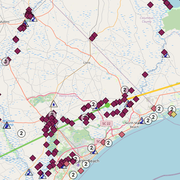
During major storms or other short-term events, the USGS collects streamflow and additional data to help document high-water events. This data is uploaded to the Short-Term Network (STN) for long-term archival and served out to the public through the Flood Event Viewer (FEV) which provides convenient, map-based access to downloadable event-based data.
Science and Products
Making USGS/NOAA Total Water Level and Coastal Change Forecast data accessible through user-friendly interfaces
The Total Water Level and Coastal Change Forecast delivers 6-day forecasts of hourly water levels and the probability of waves impacting dunes along 5000 km of sandy coasts along the Atlantic and Gulf of Mexico and will soon expand to the Pacific. These forecasts provide needed information to local governments and federal partners and are used by the USGS to place sensors before a storm...
Surge, Wave, and Tide Hydrodynamics (SWaTH) Network
During large coastal storms, the storm surge and waves are the main cause of destruction and landscape change, transporting saline water, sediment, and debris inland. The USGS, in collaboration with stakeholders, has constructed a national Surge, Wave, and Tide Hydrodynamics (SWaTH) Network for the Atlantic, Eastern Pacific, and Central Pacific. SWaTH monitors and documents the height, extent, and...
Providing Major Storm and Short-Term Flood Event Data
During major storms or other short-term events, the USGS collects streamflow and additional data to help document high-water events. This data is uploaded to the Short-Term Network (STN) for long-term archival and served out to the public through the Flood Event Viewer (FEV) which provides convenient, map-based access to downloadable event-based data.