
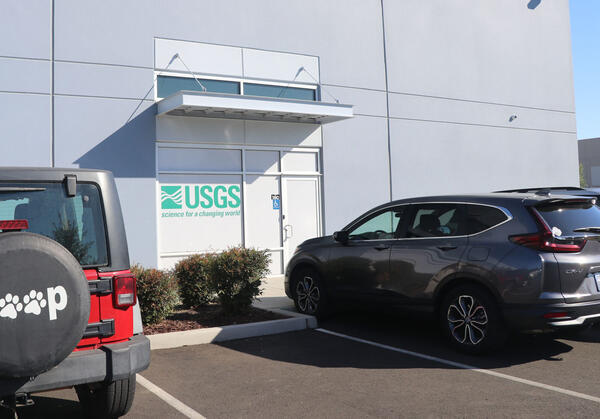
The West Sacramento Projects Office is the primary home the CAWSC Hydrodynamics and Ecology Program and also houses members of the Biogeochemistry group. These are pictures of the facility.
Catherine Ruhl
Catherine Ruhl - California Water Science Center
Science and Products
Physics to fish—Understanding the factors that create and sustain native fish habitat in the San Francisco Estuary Physics to fish—Understanding the factors that create and sustain native fish habitat in the San Francisco Estuary
Executive Summary The Bureau of Reclamation (Reclamation) operates the Central Valley Project (CVP), one of the nation’s largest water projects. Reclamation has an ongoing need to improve the scientific basis for adaptive management of the CVP and, by extension, joint operations with California’s State Water Project. The U.S. Geological Survey (USGS) works cooperatively with the Bureau...
Authors
Larry R. Brown, David E. Ayers, Brian A. Bergamaschi, Jon R. Burau, Evan T. Dailey, Bryan D. Downing, Maureen A. Downing-Kunz, Frederick V. Feyrer, Brock M. Huntsman, Tamara E. C. Kraus, Tara Morgan, Jessica R. Lacy, Francis Parchaso, Catherine A. Ruhl, Elizabeth B. Stumpner, Paul Stumpner, Janet Thompson, Matthew J. Young
Innovation in monitoring: The U.S. Geological Survey Sacramento–San Joaquin River Delta, California, flow-station network Innovation in monitoring: The U.S. Geological Survey Sacramento–San Joaquin River Delta, California, flow-station network
The U.S. Geological Survey (USGS) installed the first gage to measure the flow of water into California’s Sacramento–San Joaquin River Delta from the Sacramento River in the late 1800s. Today, a network of 35 hydro-acoustic meters measure flow throughout the delta. This region is a critical part of California’s freshwater supply and conveyance system. With the data provided by this flow...
Authors
Jon Burau, Cathy Ruhl, Paul A. Work
Water quality Water quality
Sustainable water policy in California will require maintaining or improving water quality. The Delta is an important source of drinking water for Californians, but sustaining a quality sufficient for human and agricultural consumption presents a number of problems and challenges to water managers. Similarly, poor environmental water quality is recognized as one of the influential...
Authors
Samuel N. Luoma, Susan Anderson, Brian A. Bergamaschi, Lisa Holm, Cathy Ruhl, David H. Schoellhamer, Robin Stewart
Computation of discharge using the index-velocity method in tidally affected areas Computation of discharge using the index-velocity method in tidally affected areas
Computation of a discharge time-series in a tidally affected area is a two-step process. First, the cross-sectional area is computed on the basis of measured water levels and the mean cross-sectional velocity is computed on the basis of the measured index velocity. Then discharge is calculated as the product of the area and mean velocity. Daily mean discharge is computed as the daily...
Authors
Catherine A. Ruhl, Michael R. Simpson
Investigation of hydroacoustic flow-monitoring alternatives at the Sacramento River at Freeport, California: results of the 2002-2004 pilot study Investigation of hydroacoustic flow-monitoring alternatives at the Sacramento River at Freeport, California: results of the 2002-2004 pilot study
The Sacramento River at Freeport is a tidally affected channel approximately 620 feet wide located at the northern boundary of the Sacramento?San Joaquin River Delta, California. In 1978, an acoustic velocity meter was installed at Freeport to monitor the flow. The acoustic velocity meter was calibrated successfully and has been used continuously since that time. Although the calibration...
Authors
Catherine A. Ruhl, James B. DeRose
Spatial and temporal variability of suspended-sediment concentrations in a shallow estuarine environment Spatial and temporal variability of suspended-sediment concentrations in a shallow estuarine environment
Shallow subembayments respond differently than deep channels to physical forces acting in estuaries. The U.S. Geological Survey measured suspended-sediment concentrations at five locations in Honker Bay, a shallow subembayment of San Francisco Bay, and the adjacent channel to investigate the spatial and temporal differences between deep and shallow estuarine environments. During the...
Authors
Catherine A. Ruhl, David H. Schoellhamer
Flow and Water Quality Data in the San Francisco Estuary
The San Francisco Bay and Sacramento-San Joaquin Delta form one of the largest estuaries in the United States. Water flow and water quality in the San Francisco Bay-Delta Estuary are important to the economies of both California and the nation. The Bay-Delta system provides water to more than 25 million California residents and vast farmlands, as well as key habitat for birds, fish, and other...
The West Sacramento Projects Office is the primary home the CAWSC Hydrodynamics and Ecology Program and also houses members of the Biogeochemistry group. These are pictures of the facility.
Science and Products
Physics to fish—Understanding the factors that create and sustain native fish habitat in the San Francisco Estuary Physics to fish—Understanding the factors that create and sustain native fish habitat in the San Francisco Estuary
Executive Summary The Bureau of Reclamation (Reclamation) operates the Central Valley Project (CVP), one of the nation’s largest water projects. Reclamation has an ongoing need to improve the scientific basis for adaptive management of the CVP and, by extension, joint operations with California’s State Water Project. The U.S. Geological Survey (USGS) works cooperatively with the Bureau...
Authors
Larry R. Brown, David E. Ayers, Brian A. Bergamaschi, Jon R. Burau, Evan T. Dailey, Bryan D. Downing, Maureen A. Downing-Kunz, Frederick V. Feyrer, Brock M. Huntsman, Tamara E. C. Kraus, Tara Morgan, Jessica R. Lacy, Francis Parchaso, Catherine A. Ruhl, Elizabeth B. Stumpner, Paul Stumpner, Janet Thompson, Matthew J. Young
Innovation in monitoring: The U.S. Geological Survey Sacramento–San Joaquin River Delta, California, flow-station network Innovation in monitoring: The U.S. Geological Survey Sacramento–San Joaquin River Delta, California, flow-station network
The U.S. Geological Survey (USGS) installed the first gage to measure the flow of water into California’s Sacramento–San Joaquin River Delta from the Sacramento River in the late 1800s. Today, a network of 35 hydro-acoustic meters measure flow throughout the delta. This region is a critical part of California’s freshwater supply and conveyance system. With the data provided by this flow...
Authors
Jon Burau, Cathy Ruhl, Paul A. Work
Water quality Water quality
Sustainable water policy in California will require maintaining or improving water quality. The Delta is an important source of drinking water for Californians, but sustaining a quality sufficient for human and agricultural consumption presents a number of problems and challenges to water managers. Similarly, poor environmental water quality is recognized as one of the influential...
Authors
Samuel N. Luoma, Susan Anderson, Brian A. Bergamaschi, Lisa Holm, Cathy Ruhl, David H. Schoellhamer, Robin Stewart
Computation of discharge using the index-velocity method in tidally affected areas Computation of discharge using the index-velocity method in tidally affected areas
Computation of a discharge time-series in a tidally affected area is a two-step process. First, the cross-sectional area is computed on the basis of measured water levels and the mean cross-sectional velocity is computed on the basis of the measured index velocity. Then discharge is calculated as the product of the area and mean velocity. Daily mean discharge is computed as the daily...
Authors
Catherine A. Ruhl, Michael R. Simpson
Investigation of hydroacoustic flow-monitoring alternatives at the Sacramento River at Freeport, California: results of the 2002-2004 pilot study Investigation of hydroacoustic flow-monitoring alternatives at the Sacramento River at Freeport, California: results of the 2002-2004 pilot study
The Sacramento River at Freeport is a tidally affected channel approximately 620 feet wide located at the northern boundary of the Sacramento?San Joaquin River Delta, California. In 1978, an acoustic velocity meter was installed at Freeport to monitor the flow. The acoustic velocity meter was calibrated successfully and has been used continuously since that time. Although the calibration...
Authors
Catherine A. Ruhl, James B. DeRose
Spatial and temporal variability of suspended-sediment concentrations in a shallow estuarine environment Spatial and temporal variability of suspended-sediment concentrations in a shallow estuarine environment
Shallow subembayments respond differently than deep channels to physical forces acting in estuaries. The U.S. Geological Survey measured suspended-sediment concentrations at five locations in Honker Bay, a shallow subembayment of San Francisco Bay, and the adjacent channel to investigate the spatial and temporal differences between deep and shallow estuarine environments. During the...
Authors
Catherine A. Ruhl, David H. Schoellhamer
Flow and Water Quality Data in the San Francisco Estuary
The San Francisco Bay and Sacramento-San Joaquin Delta form one of the largest estuaries in the United States. Water flow and water quality in the San Francisco Bay-Delta Estuary are important to the economies of both California and the nation. The Bay-Delta system provides water to more than 25 million California residents and vast farmlands, as well as key habitat for birds, fish, and other...
West Sacramento Projects Office
The West Sacramento Projects Office is the primary home the CAWSC Hydrodynamics and Ecology Program and also houses members of the Biogeochemistry group. These are pictures of the facility.