



DC-area geoscience
Field Trips Around Washinton DC
Are you ready to take a trip? There are many fun field trips you can take, with your class, or your family, or on your own, to learn more about the geology in and around Washington DC.
Media
Sources/Usage: Public Domain. View Media Details
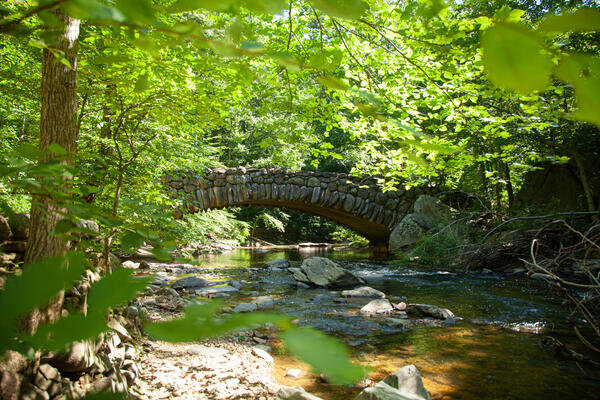
Rock Creek Park is in the heart of the city and it's a great place to learn about the geology and biology in Washington DC. Rock Creek Park is in the Fall Zone—the boundary between the Piedmont to the west and the Coastal Plain to the east.
Media
Sources/Usage: Public Domain. View Media Details
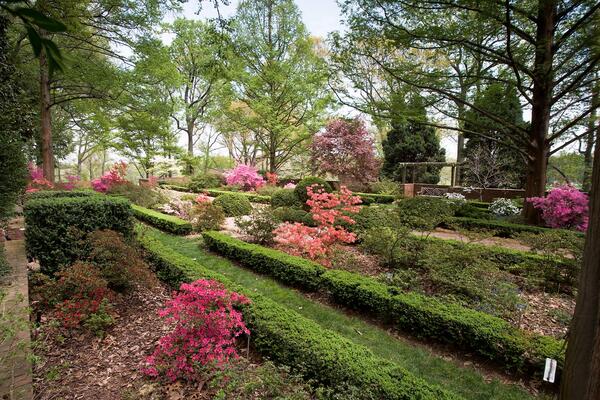
The U.S. National Arboretum is a U.S Department of Agriculture research and education facility. It is a living museum with over 400 acres of trees, shrubs, and herbaceous plants are cultivated for scientific and educational purposes. It is a wonderful place to see regional flora and fauna.
Media
Sources/Usage: Public Domain. View Media Details
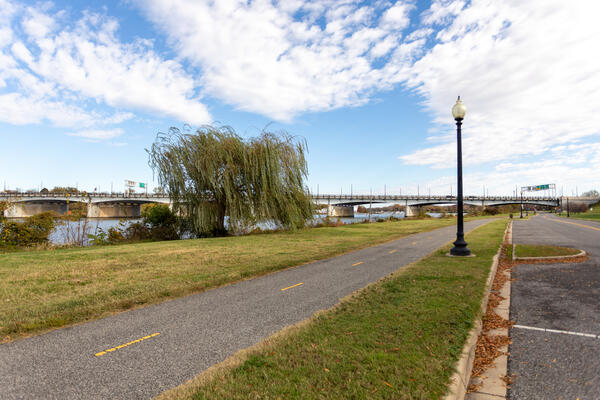
Anacostia Park protects the wetlands and woodlands alongside the Anacostia River, providing a habitat for diverse species of animals and plants.
Media
Sources/Usage: Public Domain. View Media Details
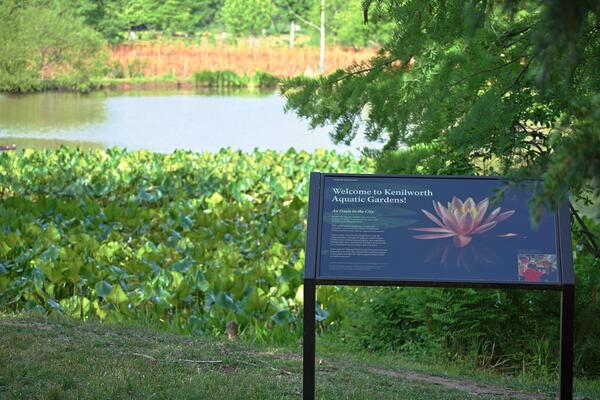
Kenilworth Aquatic Garden is a site in Anacostia Park, a mixture of recreation fields, marshes, magnolia bogs, and landscapes along the Anacostia River. Kenilworth Aquatic Garden, and the northern end of the park, serves the public by filtering water, reducing flood damage, and preserving the biological and cultural resources that let us see from the past into the future.
Media
Sources/Usage: Public Domain. View Media Details
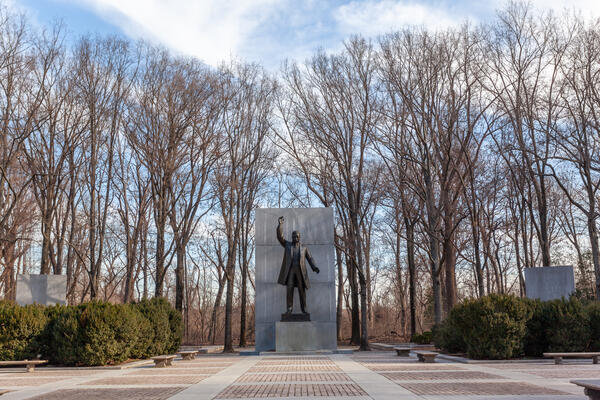
Theodore Roosevelt Island makes a great classroom! With such diverse human and natural history, you are guaranteed to find interesting landforms, wildlife, or historic resources.
DC's Rocks and Minerals
Washington DC is located at the contact between the Piedmont region at the foothills of the Appalachian Mountains and the Coastal plains. The Piedmont is mostly made of very old metamorphic rocks, the Coastal Plain is made of more recent sedimentary rocks. Below is a list of some of the rocks and minerals that are found in the DC region.
Media

Sources/Usage: Public Domain. View Media Details
Quartz: Quartz is one of the most common minerals in the Earth's crust because it is made up of the two most abundant elements in the crust: silicon and oxygen. Silicon dioxide (SiO2) is also known as silica. This common, hard mineral can be nearly any color. When quartz is purple, it's called amethyst! To learn more about minerals, visit: Explore Minerals
Media

Sources/Usage: Public Domain. View Media Details
Schist: Schist is a metamorphic rock that shows visible flat grains that lie like sheets on top of each other. It is mostly made of long and flat minerals like mica, that sparkle in light. Schist is often finely mixed with quartz and other minerals.
Media

Sources/Usage: Public Domain. View Media Details
Soapstone: This metamorphic rock is rich in talc, therefore it is not as strong as other rocks. It is relatively easy to cut and shape with tools. Because of this, and because it is very smooth thanks to the talc, native people used to carve soapstone into bowls, vases and decorative objects; it was even used as currency.
Deposits of gravel, sand, silt and clay: These deposits formed from the erosion of the rocks of the Piedmont and were transported and reshaped by gravity and streams. Downtown DC is built on deposits of these materials that have been building up in this area since the geologic period called the Cretaceous (since 80 million years ago!). Materials like these are found throughout the Coastal Plains region.