



New Research Shows a Troubling Trend for Chesapeake Bay Osprey
USGS research shows that Osprey reproduction declined when nests were located in areas with higher‑salinity water, a trend observed across multiple areas of the Chesapeake Bay.
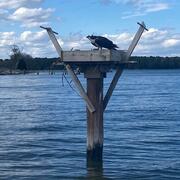

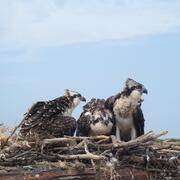
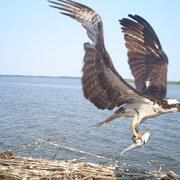
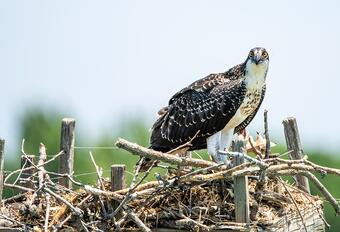
Ospreys (Pandion haliaetus) are an important indicator of the health of the Chesapeake Bay [the Bay] because their success depends on clean water and plentiful fish. In 2024, scientists from the U.S. Geological Survey Eastern Ecological Science Center and collaborators studied 571 Osprey nests across the Bay and discovered a striking pattern: osprey nesting in saltier parts of the Bay were less successful in reproducing and fledging young than those nests located in areas with fresh water.
In high‑salinity areas, many nests failed to raise enough young to sustain the local population. These places have become “demographic sinks,” meaning more birds are lost than produced. In contrast, low‑salinity areas acted as “demographic sources,” where Osprey populations can grow.
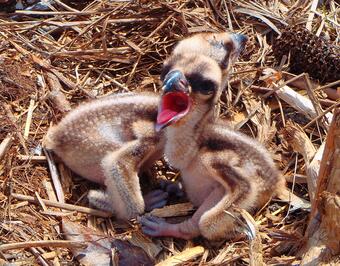
In fresher, low‑salinity waters, ospreys are thriving, laying more eggs, raising more chicks, and showing none of the stress signs seen elsewhere. The stark contrast suggests that food availability in the Bay’s saltier waters is driving a widespread reproductive decline that threatens the future of the region’s iconic osprey population.
Results suggest Ospreys in saltier waters are not getting enough nutritious fish to raise their young successfully. When researchers compared today’s high‑salinity sites with data from the 1980s, they found that conditions (food availability) have worsened. During that era, these areas were highly productive and more similar to the thriving low-salinity sites seen in 2024.
Although several environmental factors can affect osprey reproduction, the strongest evidence suggests that the availability of Atlantic menhaden (Brevoortia tyrannus), one of their most important food sources, seems to be the main driver behind poor nesting success in saltier parts of the Bay.
This research helps the public understand an important signal from the Chesapeake Bay ecosystem: when Osprey struggle to raise their young, it can mean the fish they rely on are not being captured and consumed. By showing how changes in forage‑fish availability directly affect Osprey nesting success, the science gives us a clearer picture of how the Bay food web is functioning.
These findings help in strengthening the science needed to keep U.S. seafood resources productive while also maintaining a healthy ecosystem that supports wildlife and coastal communities.
This work provides transparent data‑driven evidence that may help decision‑makers in balancing tradeoffs between fish harvest, ecosystem needs, and long‑term sustainability.
Collectively, these findings provide insight to inform sustainable fisheries management for partners like the Atlantic States Marine Fisheries Commission and reinforce the essential connection between forage‑fish availability, ecosystem integrity, and the long‑term viability of the Chesapeake Bay’s Osprey population.
USGS and the Eastern Ecological Science Center continue long‑term research on Chesapeake Bay Osprey, monitoring trends in reproduction and prey delivery to nests.
Read the full publication here.