



Spring 2026 Highlights from EESC’s Disease Decision Analysis and Research Group
The Disease Decision Analysis and Research (DDAR) group is a multi-disciplinary team based out of the Eastern Ecological Science Center whose strengths are in ecology, decision science, quantitative modeling, social science, and informing natural resource management. Learn more about the recent activities of this team below.
USGS scientists of the Disease Decision Analysis and Research (DDAR) group and their collaborators continue to support the management of wildlife diseases by working closely with state, federal, and tribal partners on several key initiatives. Recent highlights include:
- Producing decision-relevant science to inform elk and bison feedground management decisions in the state of Wyoming;
- Supporting the response to highly pathogenic avian influenza by (1) analyzing outbreaks in commercial poultry and assessing relative importance of different on-the-farm practices and (2) exploring exposure of non-traditional host species to assess continued mortality risk and inform state management efforts;
- Supporting the state of Vermont in estimating the time-to-arrival and future impacts of chronic wasting disease on white-tailed deer and moose and how management can help delay impacts and reduce agency costs;
- Working to estimate the risk of chronic wasting disease introduction to western U.S. states and Canadian provinces that are currently disease-free;
- Supporting state, federal, and tribal land managers in quantitatively assessing options to reduce the risk of an emerging infectious salamander fungal disease (Bsal) to native amphibians;
- Leading an international effort to coordinate information sharing and scientific information to address the risk of the introduction of Bsal to North American amphibians;
- Advancing the science and practice of wildlife disease decision analysis with perspectives and guidance for informing management responses in leading journals; and
- Growing our network to over 20 members and 40 collaborating partners across the country.
As a team with wide-ranging scientific capabilities, DDAR continues to work directly with decision makers for rapid response to both persistent and emerging infectious disease issues.
Recent Products
Highly Pathogenic Avian Influenza
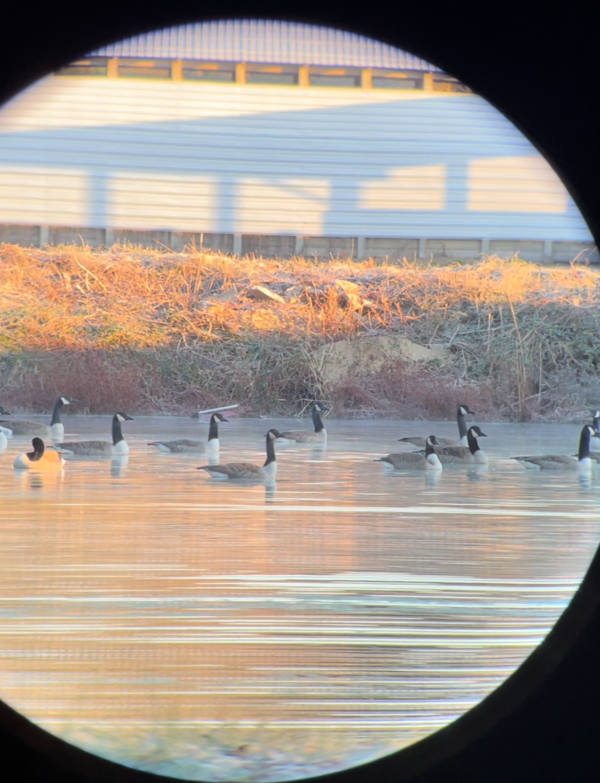
New research by USGS and partners shows that in mixed agricultural and developed landscapes waterfowl tend to move less, increasing their likelihood of encountering domestic birds. This reduced movement can elevate the risk of avian influenza persistence or spread. These findings help state wildlife managers target surveillance and strengthen biosecurity where disease risk is highest.
New research by USGS and partners shows mallard presence near poultry farms substantially increases the likelihood of HPAI spillover, especially during peak migration seasons. This understanding helps states use these patterns to time surveillance and strengthen biosecurity outreach where wild–poultry interactions are most likely.
Read the study: Spatiotemporal Overlap of Mallards with Poultry Farms is Associated with Greater Risk of Avian Influenza Wild Bird Spillover Events
New modeling research by USGS and partners indicates that climate‑driven shifts toward earlier migration could increase the impacts of highly pathogenic avian influenza (HPAI), especially when the virus spreads primarily through direct bird‑to‑bird contact. These findings can help states anticipate periods of elevated risk and target management actions that reduce opportunities for transmission among wild birds.
Read the study: Host responses and viral traits interact to shape the impacts of climate warming on highly pathogenic avian influenza in migratory waterfowl
New research by USGS and partners shows that diving ducks are more widely exposed to HPAI than previously recognized, suggesting they may play a larger role in how the virus circulates and spreads across landscapes. These findings help states strengthen waterfowl monitoring and surveillance programs, improve risk assessments, better target communication and biosecurity actions, and make faster, more informed management decisions.
Illegally Traded Turtles
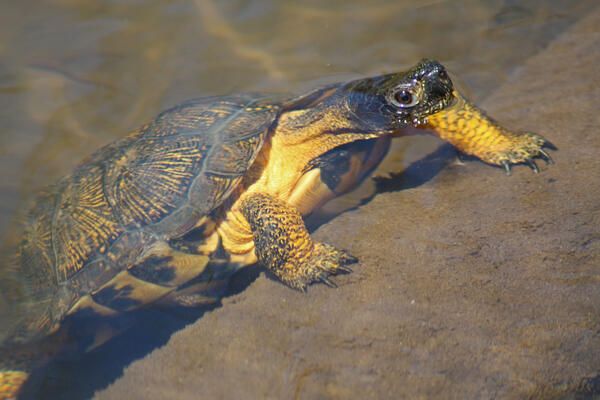
In new research using the wood turtle as a case study, USGS and partners examined how agencies make decisions after confiscating illegally traded freshwater turtles.
Researchers mapped the decision process and tested how uncertainties, particularly disease status and the turtles’ origins, affect choices about whether and how to return confiscated animals to the wild. Despite these uncertainties, they found that optimal decisions were generally consistent across scenarios.
The study demonstrated that structured decision tools can help agencies navigate complex, high‑risk choices about returning turtles to the wild and improve outcomes for vulnerable turtle populations.
These findings can guide state efforts to establish clear decision pathways, improve risk assessment, coordinate more effectively with partner agencies, and apply transparent, repeatable frameworks to determine the safest and most effective actions for handling confiscated turtles.
Read the study: An analysis of the linked decisions in the confiscation of illegally traded turtles
Chronic Wasting Disease
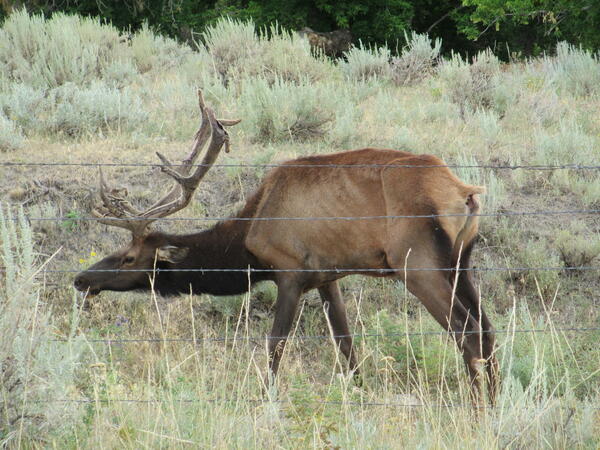
Secretarial Order 3356 aims to improve habitat, migration corridors, and management for big‑game species. USGS supports this by providing CWD models and risk tools, studying how disease interacts with habitat and movement, coordinating with agencies and Tribes, and supplying science that helps maintain sustainable big‑game herds.
Upcoming Products
- In spring 2026, USGS and partners will publish a chronic wasting disease (CWD) risk assessment for western states and Canadian provinces. A technical report designed for state/provincial agencies, will be released in March.
- In early summer 2026, USGS and partners will publish an interagency report on CWD management in the northeast. The report evaluates a range of objectives for agriculture, wildlife, and public health agencies and is focused on efficient strategies to manage CWD, while preserving captive cervid farming, rural economies, and hunting opportunities.
- In early summer 2026, USGS and Washington Department of Fish and Wildlife will publish a report that builds on previous work on elk feeding ground issues. It will evaluate elk feeding actions in eastern Washington and effects on hunting opportunities, human-elk conflicts, and CWD.
Workshops and Trainings
In addition to projects, DDAR also offers training to both internal and external audiences. Here are a few recent and upcoming offerings:
Structured Decision-Making Rapid Risk Assessment. Theme: Risk mitigation for an unknown amphibian pathogen in the pet trade. Virtual. January 4-23, 2026.
Structured Decision-Making Rapid Prototyping Workshop. Theme: Management of chronic wasting disease in the Yakima elk herd. Washington Department of Fish and Wildlife, Yakima, Washington. January 23-26, 2026.
Decision Analysis: Tools. Virtual offering through the National Conservation Training Center in Shepherdstown, West Virginia. March 3-19, 2026.
Structured Decision-Making Task Force Meeting. Theme: Management of chronic wasting disease in Vermont. Vermont Fish and Wildlife Department, Montpelier, Vermont. September 29, 2026.
Our Team
Principal Investigators at USGS Eastern Ecological Science Center
Jonathan D. Cook, Research Wildlife Biologist
Evan H. Campbell Grant, Research Wildlife Biologist
Howard Ginsberg (Retired), Emeritus Scientist
Michael C. Runge, Research Ecologist
Diann J. Prosser, Research Wildlife Biologist
Collaborators
Larissa Bailey, Associate Professor, Department of Fish, Wildlife, and Conservation, Colorado State University
Richard E.W. Berl, Research Social Scientist, National Wildlife Health Center, USGS
Riley Bernard, Assistant Professor, Department of Zoology and Physiology, University of Wyoming
Molly Bletz, Assistant Professor, Department of Ecosystem Science and Management, Penn State University
Janelle Couret, Assistant Professor, Department of Biological Sciences, University of Rhode Island
Graziella V. DiRenzo, Assistant Unit Leader, USGS, Massachusetts Cooperative Fish and Wildlife Research Unit
Johanna Harvey, Assistant Professor, Department of Natural Resources Science, University of Rhode Island
Brittany Mosher, Assistant Professor, Rubenstein School of Environment and Natural Resources, University of Vermont
Jennifer Mullinax, Associate Professor, Department of Environmental Science and Technology, University of Maryland
Jeffery Sullivan, Biologist, USGS, Eastern Ecological Science Center
Noelle Thompson, Western Interagency Wildlife Health Specialist, Western Association of Fish and Wildlife Agencies
Claire Teitelbaum, Assistant Unit Leader, USGS, Georgia Cooperative Fish and Wildlife Research Unit
Postdoctoral and Student Researchers
Matthew Gonnerman, USGS Visiting Scientist and Postdoctoral Researcher at University of Maryland
Riley Mummah, Mendenhall Postdoctoral Researcher, USGS, Eastern Ecological Science Center
Isabella Ragonese, USGS Visiting Scientist and Postdoctoral Researcher at University of Massachusetts, Amherst
Elias Rosenblatt, Postdoctoral Researcher, University of Minnesota
Annabelle Stanley, PhD Student, University of Vermont
Alexis L. White, Postdoctoral Researcher, University of Rhode Island