



FORT Science in Action 2026, Part 15: Stable isotope analyses for improved understanding of wildlife-environment interactions
This past year, USGS scientists leveraged stable isotopes to provide novel insights on wildlife-ecosystem interactions: grizzly bear diets in Alaska and mercury contamination of fish communities in the Upper Colorado River Basin. Isotopic analyses were conducted at the USGS Geology, Geophysics, and Geochemistry Stable Isotope Laboratory which specializes in chemical and isotopic tracers.
Energetics of Arctic grizzly bears
Working with the US Fish and Wildlife Service, Alaska Department of Fish and Game, and Washington State University, USGS researchers paired stable isotope techniques with behavioral observations and energy balance estimates to examine the feeding behaviors of Arctic grizzles leading up to hibernation. By analyzing stable nitrogen and carbon isotopes, the team assessed levels of carnivory with respect to available dietary resources. They found that bears in the foothills were primarily herbivorous and bears on the coast were primarily carnivorous, diets that likely reflect differences in resource availability across different Arctic habitats.
At the completion of the study, coastal bears had on average gained more body fat but were also more likely to lose body mass prior to hibernation due to the energetic costs associated with carnivory. Arctic grizzlies in both locations had an average of 34% less fat than bears living in areas like the salmon-rich Kenai Peninsula, suggesting an overall lack of calorically dense food sources in the study area. This study demonstrated that dietary plasticity is likely driven by resource availability in the Arctic, which may be more limited than in other parts of this species range.
Monitoring mercury in Colorado River Basin fish communities
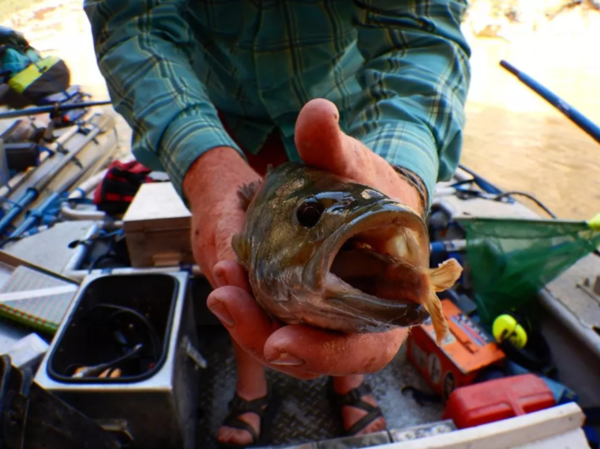
Another USGS study used geochemical and stable isotope data to investigate mercury bioaccumulation and the potential impacts of invasive species on mercury contamination in native fish communities of the Upper Colorado River Basin. Carbon and nitrogen isotopes were analyzed to understand food web structure, niche overlap between native and invasive fish species, and the bioaccumulation of mercury.
The results suggested that fish tissue mercury burdens may be continuing to increase in the Basin, often exceeding the US EPA aquatic life criterion, particularly for piscivores, and warrants future monitoring. In addition, sub-basins with greater invasive fish species richness had higher mercury levels, perhaps because those species are increasing food chain length. This work is vital to the health of both the river basin and the people who enjoy it, but also suggests that mercury contamination in the basin may pose an unrecognized threat to native fish recovery.
More FORT Science in Action
This September, FORT is highlighting how our science projects support sound decision-making. Each day, we will highlight a new project and its applications. To see more, follow the tabs below.
Related

Geology, Geophysics, and Geochemistry Stable Isotope Laboratory (GSIL)

Food Webs and Wildlife Nutrition

Ecosystem Biogeochemistry
Related
Geology, Geophysics, and Geochemistry Stable Isotope Laboratory (GSIL)
Food Webs and Wildlife Nutrition