



FORT Science in Action 2026, Part 18: Ecological research supporting wild horse and burro management
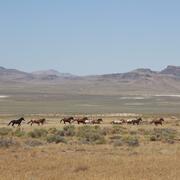
The wild horses and burros of the American West are a complicated management issue. Populations can grow quickly, straining ecosystems, and posing challenges for management. FORT scientists are studying wild horse and burro habitat use, demography, interactions with native wildlife, and mountain lion predation on horses, providing science to inform herd management strategies.
Movement of wild donkeys in the Mojave
A new FORT study in partnership with researchers from three western universities provides important insights into the movement and habitat preferences of wild donkeys in California’s Mojave Desert. By assessing the seasonal habitat use of wild donkeys, the team showed that donkeys often select for habitats with closer proximity to water rather than high biomass vegetation for browsing. In addition, donkeys had larger home ranges in cooler, wetter months (November through March), than the rest of the year. Finally, donkeys infected with pathogens preferred slightly different habitat types to noninfected individuals. Together, these results provide new insights into how precipitation, water, and disease shape wild donkey movement across large landscapes.
Mountain lion prey selection
Another recent publication examined prey-selection behavior of mountain lions in Nevada, where wild horses overlap with native mountain lion prey like mule deer. Researchers hypothesized mountain lions would prefer their native prey of mule deer but discovered that individuals varied quite a bit in prey preferences and hunting strategies. Some lions preferred to hunt mule deer in the winter and horse the rest of the year, but others hunted opportunistically, consuming whichever prey were more available at any time. Specifically, a few individual mountain lions preferred to hunt adult deer and horse foals, suggesting that mountain lions may be prioritizing prey size rather than species. The study highlights how difficult it can be to predict predator behavior in mixed-prey communities, and the importance of acquiring individual-level information about predator preferences. Resource managers can use such information to inform mountain lion and horse management.
More FORT Science in Action
This September, FORT is highlighting how our science projects support sound decision-making. Each day, we will highlight a new project and its applications. To see more, follow the tabs below.
Related
Science for management of America’s iconic wild horses and burros
Related