



Native Pollinators in Agricultural Ecosystems
Beginning in 2012, the USGS collaborated with the USDA to assess the effectiveness of pollinator plantings and how alteration of landscapes has affected native pollinators and potentially contributed to their decline. The 2008 Farm Bill recognized contributions made by pollinators and made conservation of pollinator habitat a priority. The USGS is assessing native bee habitat, diversity, and richness in eastern Colorado grasslands and croplands to evaluate the extent to which they provide food and refuge.
Unfortunately, as recognition of the significance and demand for pollination services is increasing, wild pollinator abundance and diversity continue to decline.
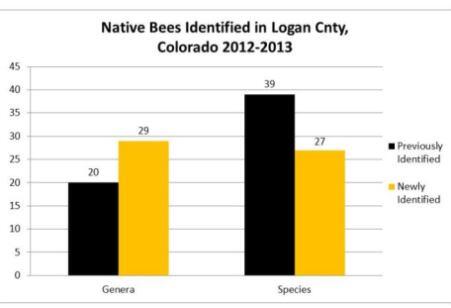
To date, this ongoing work has provided valuable information for this region, and has been a successful collaboration with partners and stakeholders such as the USDA Farm Service Agency, Natural Resources Conservation Service, and private landowners. Between 2012 and 2013, the project collected 29 new genera of native bees and 27 new species never before recorded in the area.
These data are valuable as there is deficient information on the diversity of native bees in agricultural landscapes. This study will help to maximize the potential of pollinator habitat on private lands by means that are both acceptable to farm operators and the USDA. Activities in 2015 continued to focus on linking pollinator habitat and environmental factors to the welfare of native bee populations.

Beginning in 2012, the USGS collaborated with the USDA to assess the effectiveness of pollinator plantings and how alteration of landscapes has affected native pollinators and potentially contributed to their decline. The 2008 Farm Bill recognized contributions made by pollinators and made conservation of pollinator habitat a priority. The USGS is assessing native bee habitat, diversity, and richness in eastern Colorado grasslands and croplands to evaluate the extent to which they provide food and refuge.
Unfortunately, as recognition of the significance and demand for pollination services is increasing, wild pollinator abundance and diversity continue to decline.
To date, this ongoing work has provided valuable information for this region, and has been a successful collaboration with partners and stakeholders such as the USDA Farm Service Agency, Natural Resources Conservation Service, and private landowners. Between 2012 and 2013, the project collected 29 new genera of native bees and 27 new species never before recorded in the area.
These data are valuable as there is deficient information on the diversity of native bees in agricultural landscapes. This study will help to maximize the potential of pollinator habitat on private lands by means that are both acceptable to farm operators and the USDA. Activities in 2015 continued to focus on linking pollinator habitat and environmental factors to the welfare of native bee populations.