



Predicting Cyanobacterial Harmful Algal Blooms at Lake Champlain Beaches
USGS, in cooperation with the Lake Champlain Basin Program, is evaluating machine learning models for predicting blooms of potentially harmful cyanobacteria, a damaging blue-green algae, at Lake Champlain beaches in Vermont and New York. Harmful cyanobacterial algal blooms (cyanoHABs) degrade the water quality of Lake Champlain and can threaten environmental and public health because the lake serves as drinking water source for more than 200,000. To better forecast HABs at Lake Champlain beaches, this project will use machine learning models to create short-term probability forecasts.
One of the largest freshwater lakes in the country, Lake Champlain is an expansive aquatic ecosystem that relies on healthy water to support fish, wildlife, and the people who use it as a drinking water source. Therefore, the lake’s ecosystem health, sustainability, and water quality requires monitoring, investigative science, and prediction.
Lake Champlain has experienced cyanoHABs for several decades. Common in many water bodies, cyanobacteria proliferate when the water has high nutrient levels, warmer temperatures, high levels of sun, and calm waters. When cyanoHABs occur in the lake, clarity is reduced, dissolved oxygen becomes depleted (causing fish kills), and water quality can become unsuitable for drinking. Additionally, some cyanobacteria species release toxins that, when inhaled or ingested, may cause health problems in people and wildlife.
Building a Predictive Model
In this project, the USGS will investigate how machine learning methods can be used with observational harmful algal bloom data and forecasting. The USGS will use existing cyanoHAB data to identify the beaches to include in this study. A whole-lake, three-dimensional hydrodynamic model that includes discharges into the lake from contributing rivers and climate data from six meteorological stations will be used to generate some of the predictive variables, or features (e.g. wind, temperature) that are helpful in predicting cyanoHABs. Calibration of the hydrodynamic model will be done by running the model on the dates and times blooms previously occurred.
Then, a predictive model will be developed using the results from the hydrodynamic model, as well as other climate and constituent data (such as Sentinel satellite-derived levels of chlorophyll-a), as predictor inputs. This will allow the model to identify patterns in the water, climate, or season that determine when blooms are most likely to take place.
Supporting Recreational Water Use Planning for Lake Champlain
This project will enable Lake Champlain’s water quality and resource managers to better understand how the lake responds to certain climatic conditions and where cyanoHABs may develop before they occur. The models and results from this study will help managers decide how best to respond to cyanoHABs in the future, such as issuing beach advisories and recommending closures. This information also may help water suppliers know when blooms are encroaching on areas of water intakes for water supply, which may make water treatment more efficient.
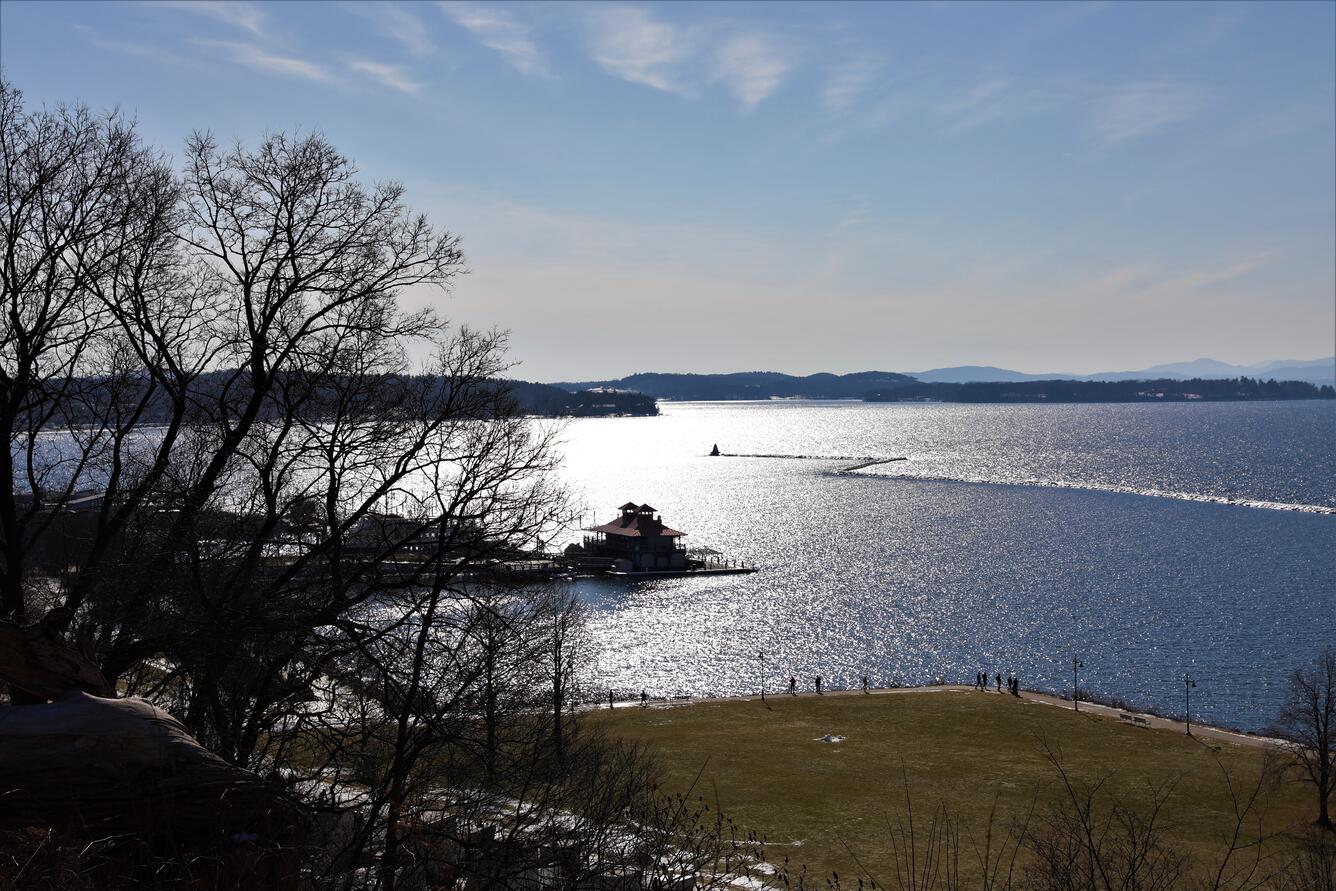
USGS, in cooperation with the Lake Champlain Basin Program, is evaluating machine learning models for predicting blooms of potentially harmful cyanobacteria, a damaging blue-green algae, at Lake Champlain beaches in Vermont and New York. Harmful cyanobacterial algal blooms (cyanoHABs) degrade the water quality of Lake Champlain and can threaten environmental and public health because the lake serves as drinking water source for more than 200,000. To better forecast HABs at Lake Champlain beaches, this project will use machine learning models to create short-term probability forecasts.
One of the largest freshwater lakes in the country, Lake Champlain is an expansive aquatic ecosystem that relies on healthy water to support fish, wildlife, and the people who use it as a drinking water source. Therefore, the lake’s ecosystem health, sustainability, and water quality requires monitoring, investigative science, and prediction.
Lake Champlain has experienced cyanoHABs for several decades. Common in many water bodies, cyanobacteria proliferate when the water has high nutrient levels, warmer temperatures, high levels of sun, and calm waters. When cyanoHABs occur in the lake, clarity is reduced, dissolved oxygen becomes depleted (causing fish kills), and water quality can become unsuitable for drinking. Additionally, some cyanobacteria species release toxins that, when inhaled or ingested, may cause health problems in people and wildlife.
Building a Predictive Model
In this project, the USGS will investigate how machine learning methods can be used with observational harmful algal bloom data and forecasting. The USGS will use existing cyanoHAB data to identify the beaches to include in this study. A whole-lake, three-dimensional hydrodynamic model that includes discharges into the lake from contributing rivers and climate data from six meteorological stations will be used to generate some of the predictive variables, or features (e.g. wind, temperature) that are helpful in predicting cyanoHABs. Calibration of the hydrodynamic model will be done by running the model on the dates and times blooms previously occurred.
Then, a predictive model will be developed using the results from the hydrodynamic model, as well as other climate and constituent data (such as Sentinel satellite-derived levels of chlorophyll-a), as predictor inputs. This will allow the model to identify patterns in the water, climate, or season that determine when blooms are most likely to take place.
Supporting Recreational Water Use Planning for Lake Champlain
This project will enable Lake Champlain’s water quality and resource managers to better understand how the lake responds to certain climatic conditions and where cyanoHABs may develop before they occur. The models and results from this study will help managers decide how best to respond to cyanoHABs in the future, such as issuing beach advisories and recommending closures. This information also may help water suppliers know when blooms are encroaching on areas of water intakes for water supply, which may make water treatment more efficient.