



Harmful Algal Blooms Studies in New Jersey Waters
Harmful Algal Blooms (HABs) in lakes, ponds, and rivers adversely affect water resources worldwide. Under the right conditions, cyanobacteria can produce cyanotoxins that can pose health risks to both animals and humans which makes them a major environmental and public health concern. More studies to examine the occurrence and persistence of HABs and their potential transport are needed to better inform water-resource decision makers.
Harmful Algal Blooms (HABs) are increasingly recognized as an important environmental and public health issue across New Jersey’s lakes, ponds, rivers, and coastal waters because they can significantly impair water quality and aquatic ecosystem health. These blooms occur when cyanobacteria— naturally present in freshwater systems — grow rapidly under favorable environmental conditions such as warm temperatures, still water, and a nutrient rich environment.
Some cyanobacteria can produce potent cyanotoxins that may affect drinking-water supplies, pose risks to pets and wildlife, and limit recreational activities. There is a need for better understanding the occurrence, movement, or persistence of HABs in New Jersey. Understanding how HABs develop, how toxins disperse, and how environmental conditions influence bloom behavior is essential to provide information decision makers can use to guide effective monitoring and mitigation strategies statewide.
NJWSC research provides data and insights to support management decisions by State agencies, water suppliers, and environmental organizations. Findings may help to inform risk assessments, recreational advisories, nutrient reduction strategies, and long-term planning for water-resources resilience.
For more information on HABS related projects at the NJWSC, see links below!

HABs Studies in New Jersey
-

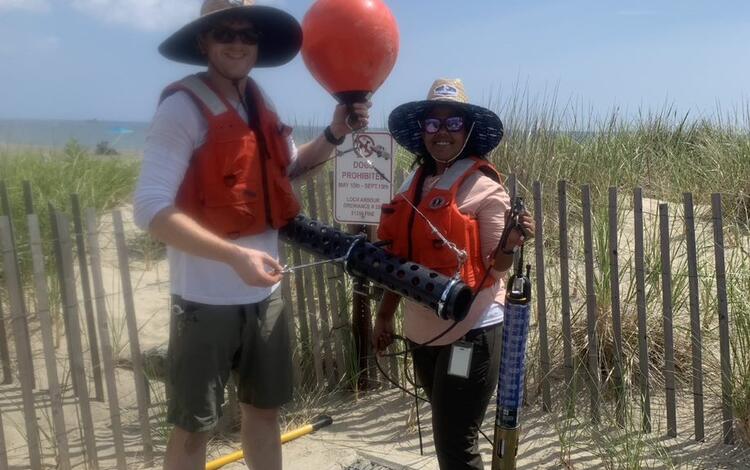
Monitoring Harmful Algal Blooms in a Coastal System to Identify the Factors that Affect HAB Production and the Downstream Transport of Cyanobacteria and Associated Cyanotoxins from Freshwater to Marine Environments
Across the nation, Cyanobacterial harmful algal blooms (HABs) in freshwater coastal lakes and ponds have become a major environmental and public health concern. Under the right conditions, cyanobacteria can produce cyanotoxins that can pose health risks to both animals and humans (U.S. Environmental Protection Agency (USEPA), 2020) and have been shown to have severe impacts on water quality...
-

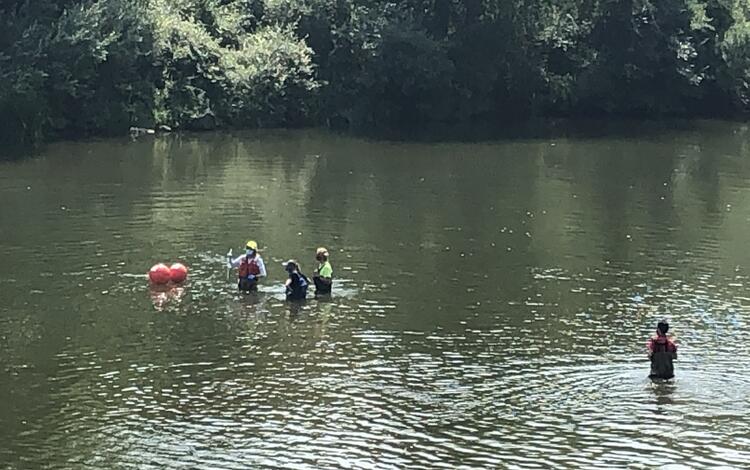
Downstream Fate and Transport of Cyanobacteria and Cyanotoxins in the Raritan Basin Water Supply Complex, New Jersey
Harmful algal blooms with cyanotoxin production (CyanoHABs) have been shown to adversely affect water resources worldwide, however only a handful of studies have examined the occurrence and persistence of CyanoHABs in fluvial systems used for municipal water-supply. Of particular concern in New Jersey is the Raritan Basin Water Supply Complex (RBWSC) as it is the water supply for multiple water...
-

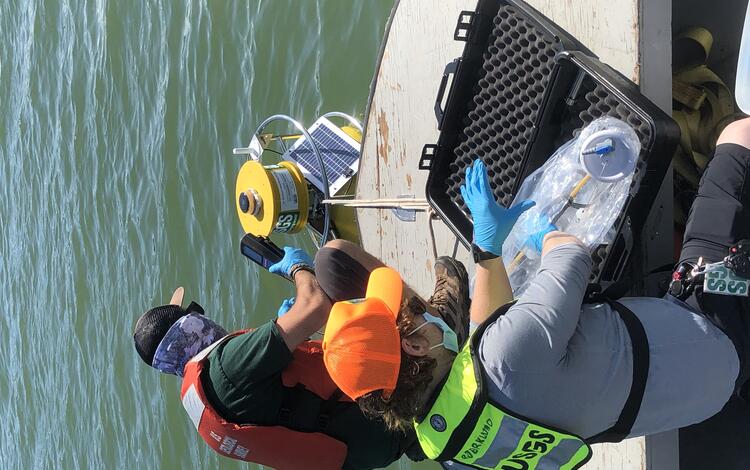
An Evaluation of SPATT Technology to Assess Cyanotoxins Variability and Transport in the Salem River, New Jersey
As part of the USGS Next Generation Water Observing System the NJWSC is evaluating the use of passive samplers, or Solid Phase Adsorption Toxin Tracking (SPATT) samplers, to examine the temporal variability of dissolved cyanotoxin occurrence. These innovative, low-cost, time-integrated passive samplers offer several advantages over current water-column cyanotoxin monitoring techniques. However...
Monitoring Harmful Algal Blooms in a Coastal System to Identify the Factors that Affect HAB Production and the Downstream Transport of Cyanobacteria and Associated Cyanotoxins from Freshwater to Marine Environments
An Evaluation of SPATT Technology to Assess Cyanotoxins Variability and Transport in the Salem River, New Jersey
Downstream Fate and Transport of Cyanobacteria and Cyanotoxins in the Raritan Basin Water Supply Complex, New Jersey
Harmful Algal Blooms (HABs) in lakes, ponds, and rivers adversely affect water resources worldwide. Under the right conditions, cyanobacteria can produce cyanotoxins that can pose health risks to both animals and humans which makes them a major environmental and public health concern. More studies to examine the occurrence and persistence of HABs and their potential transport are needed to better inform water-resource decision makers.
Harmful Algal Blooms (HABs) are increasingly recognized as an important environmental and public health issue across New Jersey’s lakes, ponds, rivers, and coastal waters because they can significantly impair water quality and aquatic ecosystem health. These blooms occur when cyanobacteria— naturally present in freshwater systems — grow rapidly under favorable environmental conditions such as warm temperatures, still water, and a nutrient rich environment.
Some cyanobacteria can produce potent cyanotoxins that may affect drinking-water supplies, pose risks to pets and wildlife, and limit recreational activities. There is a need for better understanding the occurrence, movement, or persistence of HABs in New Jersey. Understanding how HABs develop, how toxins disperse, and how environmental conditions influence bloom behavior is essential to provide information decision makers can use to guide effective monitoring and mitigation strategies statewide.
NJWSC research provides data and insights to support management decisions by State agencies, water suppliers, and environmental organizations. Findings may help to inform risk assessments, recreational advisories, nutrient reduction strategies, and long-term planning for water-resources resilience.
For more information on HABS related projects at the NJWSC, see links below!
HABs Studies in New Jersey
-
-
Monitoring Harmful Algal Blooms in a Coastal System to Identify the Factors that Affect HAB Production and the Downstream Transport of Cyanobacteria and Associated Cyanotoxins from Freshwater to Marine Environments
Across the nation, Cyanobacterial harmful algal blooms (HABs) in freshwater coastal lakes and ponds have become a major environmental and public health concern. Under the right conditions, cyanobacteria can produce cyanotoxins that can pose health risks to both animals and humans (U.S. Environmental Protection Agency (USEPA), 2020) and have been shown to have severe impacts on water quality...
-
-
Downstream Fate and Transport of Cyanobacteria and Cyanotoxins in the Raritan Basin Water Supply Complex, New Jersey
Harmful algal blooms with cyanotoxin production (CyanoHABs) have been shown to adversely affect water resources worldwide, however only a handful of studies have examined the occurrence and persistence of CyanoHABs in fluvial systems used for municipal water-supply. Of particular concern in New Jersey is the Raritan Basin Water Supply Complex (RBWSC) as it is the water supply for multiple water...
-
-
An Evaluation of SPATT Technology to Assess Cyanotoxins Variability and Transport in the Salem River, New Jersey
As part of the USGS Next Generation Water Observing System the NJWSC is evaluating the use of passive samplers, or Solid Phase Adsorption Toxin Tracking (SPATT) samplers, to examine the temporal variability of dissolved cyanotoxin occurrence. These innovative, low-cost, time-integrated passive samplers offer several advantages over current water-column cyanotoxin monitoring techniques. However...
Monitoring Harmful Algal Blooms in a Coastal System to Identify the Factors that Affect HAB Production and the Downstream Transport of Cyanobacteria and Associated Cyanotoxins from Freshwater to Marine Environments
An Evaluation of SPATT Technology to Assess Cyanotoxins Variability and Transport in the Salem River, New Jersey