



Humpback chub rebound: USGS science uncovers population increase and range expansion for threatened fish
A new USGS study estimates that adult humpback chub in western Grand Canyon increased roughly 160-fold between 2010 and 2024, a large population increase within this river segment, even as the long-term resilience of the population overall remains unknown.
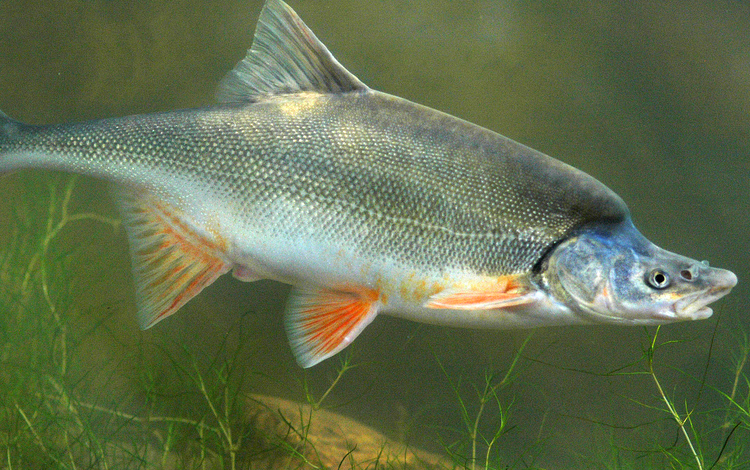
A new paper by the USGS and U.S. Fish and Wildlife Service (USFWS) on humpback chub (Gila cypha), a threatened fish species, is showcasing some timely good news. The humpback chub is one of five native fishes still found in the Grand Canyon section of the Colorado River. Due to invasive fishes and other threats elsewhere in the basin, the Grand Canyon population has become essential for long-term persistence of the species.
The new paper provides model-based estimates of humpback chub abundance over a 15-year period in western Grand Canyon during which river conditions changed dramatically, due to drought and increased water temperatures.

Results of the Study
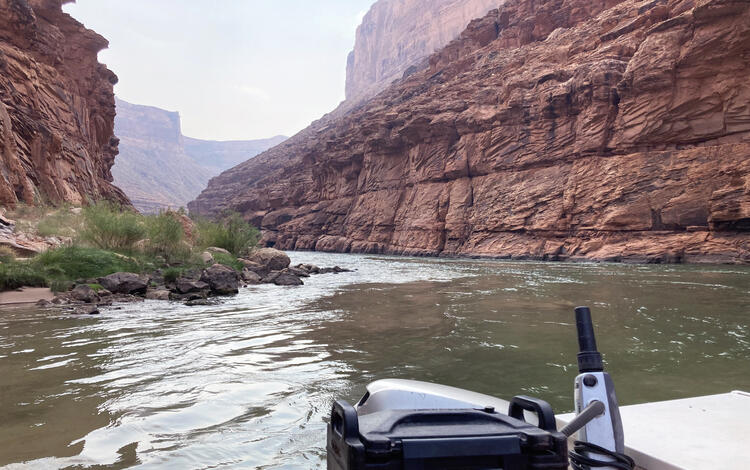
The study reconstructs humpback chub abundance across roughly 200 kilometers of the Colorado River in western Grand Canyon — from Havasu Creek downstream to Pearce Ferry Rapid — between 2010 and 2024.
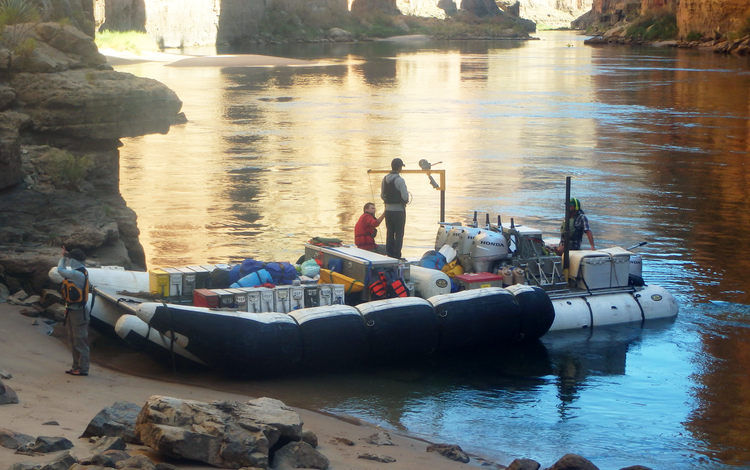
The USFWS collected the underlying field data, capturing fish in baited hoop nets and marking them with passive integrated transponder tags. In select years, crews revisited sites to estimate how likely fish were to be caught. USGS scientists then combined those catch and mark-recapture data with expert assessments of habitat quality and a spatial model, allowing them to estimate abundance at the many sites that could not be sampled each year.
Within this 200-kilometer segment, the results describe a rapid increase in the population, with particular intervals of fast growth. The model estimates that adult abundance grew about 160-fold over the 15-year period, reaching a median of roughly 70,000 adults in 2024. The primary population of humpback chub also shifted westward. More humpback chub are now found in western Grand Canyon, downstream of Havasu Creek, than the Little Colorado River, with the highest densities currently estimated about 210–250 river miles downstream of Lee Ferry. The analysis also offers a modeling approach suited to large river systems where comprehensively sampling every reach isn’t feasible.
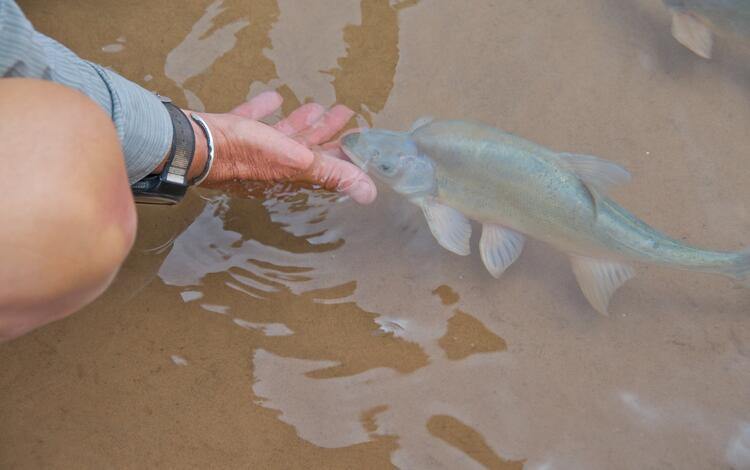
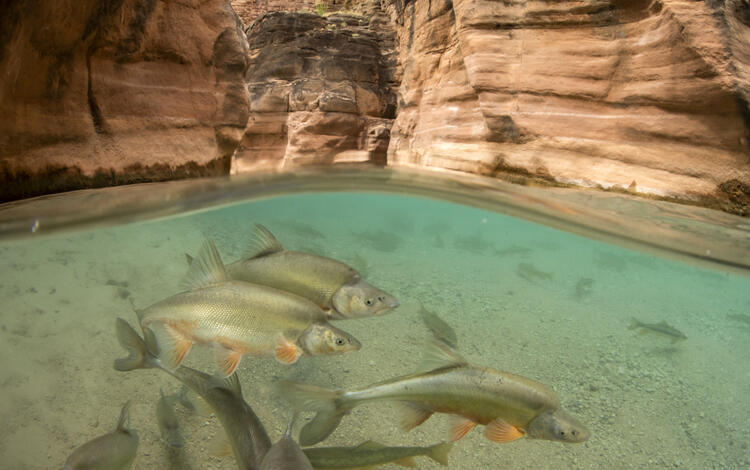
Scientists attribute the population increase primarily to warmer water temperatures, a consequence of low reservoir levels in Lake Powell, paired with a current scarcity of warmwater invasive predators in this stretch of river. Pearce Ferry Rapid, an evolving Class VI rapid that formed in 2007, acts as a partial barrier to non-native fishes moving upstream from Lake Mead, likely reducing predation pressure.
A companion genetic analysis found negligible differences between humpback chub populations found in western Grand Canyon and Little Colorado River, and recaptures show very little movement between the two areas. These patterns are consistent with a once-continuous distribution that fragmented during the cold-water decades.
While these results document an increase within this one river segment, invasive fishes remain the central concern for the future of humpback chub and other native fishes. Smallmouth bass are associated with steep declines in humpback chub abundances elsewhere in the basin. Due to high elevations of Lake Powell and cool water temperatures, smallmouth bass were extremely rare in Grand Canyon until 2022.
In 2022, evidence of smallmouth bass juvenile production in Glen Canyon raised concerns that warm water conditions may allow the species to colonize and disperse farther downstream into Grand Canyon. Were this to happen, experience elsewhere suggests humpback chub would become prey to smallmouth bass, which would likely lead to population decline. To date, “cool mix” flow releases in 2024 and 2025 conducted by the Bureau of Reclamation, which are timed to discourage smallmouth bass spawning, combined with mechanical removal efforts led by National Park Service, have appeared to lead to a decline in bass in the areas where they had briefly taken hold.
Background
Humpback chub are one of eight fishes native to the Colorado River historically found in Grand Canyon, and one of the five remaining native fish species still found in Grand Canyon today.
Humpback chub are endemic to the Colorado River basin, and Grand Canyon has become their stronghold, sustaining the largest of the five remaining populations. The humpback chub population in the Grand Canyon has experienced large changes during the last century. Before the late 20th century, based on archeological evidence and historic records, humpback chub were widespread throughout the Colorado River system.
After Glen Canyon Dam began operating in the mid-1960s, the river below it cooled sharply. Water that was once warm enough to support spawning became too cold for humpback chub to reproduce, and their population and viable habitat in Grand Canyon contracted. The species persisted largely by relying on a warmwater tributary, the Little Colorado River, for spawning. They were federally listed as endangered in 1967, and by the early 2000s the Little Colorado River population had dwindled to a few thousand fish. By 2021, their population had rebounded somewhat due to warming water temperatures, and they were downlisted to threatened.
Given the history of this species and these new findings, we now understand that future changes in reservoir operations, water temperature, and the possible downstream spread of invasive fishes could all shape what comes next. Continued monitoring will be key to tracking this expanding group of humpback chub, and can provide information vital to resource managers.
Read the paper:
Associated data:
Related

Study Uncovers Migration Patterns of Native Fish in the Colorado River

Humpback Chub in the Colorado River, Grand Canyon
Related
Study Uncovers Migration Patterns of Native Fish in the Colorado River