



New project: Early detection of aquatic threats—eDNA research in the Colorado River ecosystem & Lake Powell
The USGS and partners are conducting environmental DNA (eDNA) research in the Colorado River downstream from Glen Canyon Dam and in Lake Powell to detect invasive fish species and other aquatic threats before they become established. eDNA is a cutting-edge technology that makes it possible to identify invasive species before they are visible.
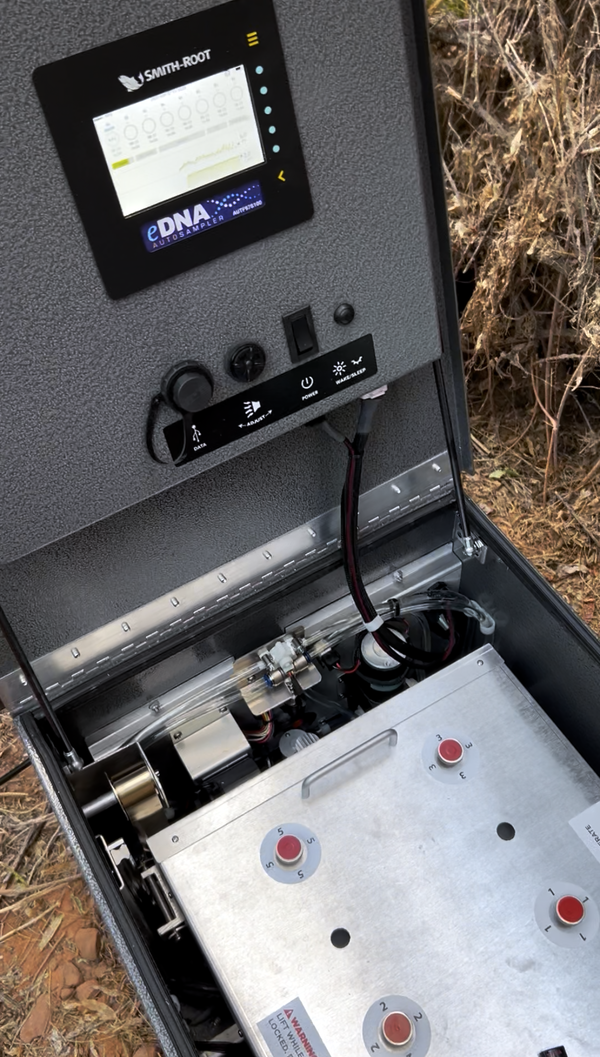
SBSC's Grand Canyon Monitoring and Research Center, in collaboration with the Bureau of Reclamation, U.S. Forest Service, National Park Service, U.S. Fish and Wildlife Service, and Arizona Game and Fish Department, is conducting an environmental DNA (eDNA) project to detect invasive aquatic species, like smallmouth bass, in the Colorado River ecosystem and Lake Powell.
Want to know more about eDNA and this project?
Click on this link to access our new project page: