



Early detection of aquatic threats: eDNA research in the Colorado River ecosystem & Lake Powell
Smallmouth bass (Micropterus dolomieu)
The USGS and partners are conducting environmental DNA (eDNA) research in the Colorado River downstream from Glen Canyon Dam and in Lake Powell to detect invasive fish species and other aquatic threats before they become established. eDNA is a cutting-edge technology that makes it possible to identify invasive species before they are visible, even in vast or hard-to-survey environments like rivers and lakes.
The research addresses a critical challenge facing the Colorado River ecosystem: preventing warm-water invasive fish from devastating populations of threatened and endangered native fish species like razorback sucker (Xyrauchen texanus) and humpback chub (Gila cypha).
This work is part of a broader effort by the USGS Southwest Biological Science Center's Grand Canyon Monitoring and Research Center (GCMRC) in collaboration with the Bureau of Reclamation, U.S. Forest Service, National Park Service, U.S. Fish and Wildlife Service, and Arizona Game and Fish Department.
A changing river and emerging threats
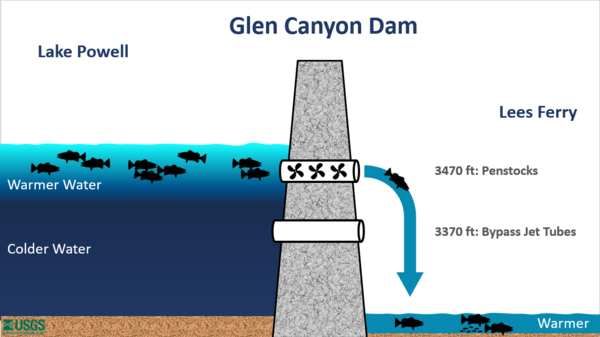
For decades following Glen Canyon Dam's completion in 1963, cold water released from Lake Powell kept warm-water invasive fish from establishing in the downstream river.
However, severe drought conditions since the early 2000s have dramatically lowered Lake Powell's water levels, causing warmer surface water to flow through the dam's penstocks into the river below.
These warmer conditions have created ideal habitat for invasive predatory fish like smallmouth bass (Micropterus dolomieu), walleye (Sander vitreus), and green sunfish (Lepomis cyanellus) that prey on native fish.
In 2022, these warm-water invaders were captured in unprecedented numbers, raising alarms among resource managers about the survival of threatened and endangered species.
Detecting these invasive species early, before populations explode, is far more cost-effective and environmentally sound than attempting control or eradication after they become established.
How USGS scientists are using eDNA
What is eDNA and why does it matter?
Environmental DNA is genetic material that organisms continuously shed into their environment through skin cells, feces, reproductive fluids, and other biological processes.
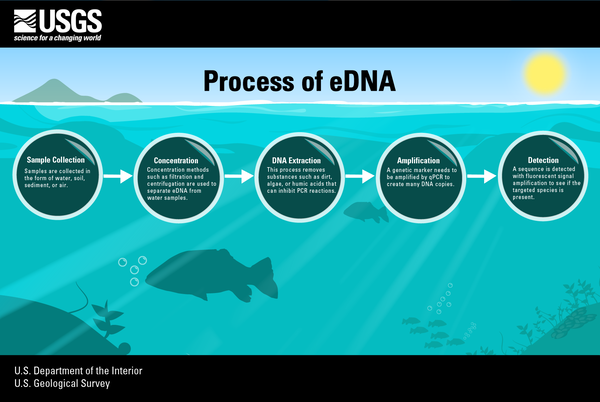
In aquatic ecosystems, scientists can collect water samples and extract DNA from these microscopic traces to detect which species are present, even at very low population levels before traditional fishing methods would capture them.

This technology allows managers to identify new invasive species, track their spread, and respond quickly before populations grow large enough to cause irreversible ecological damage.
Importantly, eDNA sampling reduces or eliminates the need to physically handle fish, which addresses concerns from recreational anglers and Tribal communities about fish stress and welfare.

The USGS is deploying multiple innovative approaches to monitor aquatic species in the Colorado River
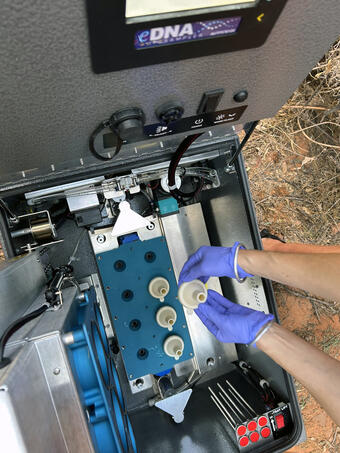
One breakthrough involves installing automated eDNA samplers, which are devices that collect water samples on a preset schedule even when researchers aren't in the field.
These devices will be placed in known "hot spots" for invasive fish, such as downstream from the dam or within side channels, and potentially inside the dam's draft tubes where water enters from Lake Powell.
Samples are collected every few days year-round and analyzed in laboratories using high-throughput genetic screening technology developed by the U.S. Forest Service National Genomics Center.
This screening uses a specialized "biochip" designed to detect up to 46 of the most problematic invasive aquatic species in the United States, with plans to refine it specifically for species of concern in the Colorado River.
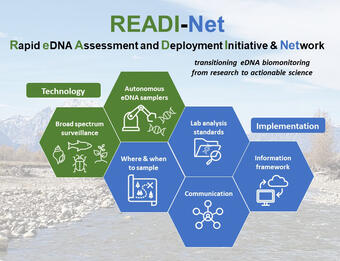
This automated sampler is part of a new USGS network called READI-Net (Rapid eDNA Assessment and Deployment Initiative & Network) which aims to accelerate the use of eDNA as a best practice for early detection of aquatic biological threats across western rivers.
This pilot technology represents a major step toward real-time biosurveillance of river ecosystems, providing managers with continuous monitoring data that would be impossible to collect through traditional sampling alone.
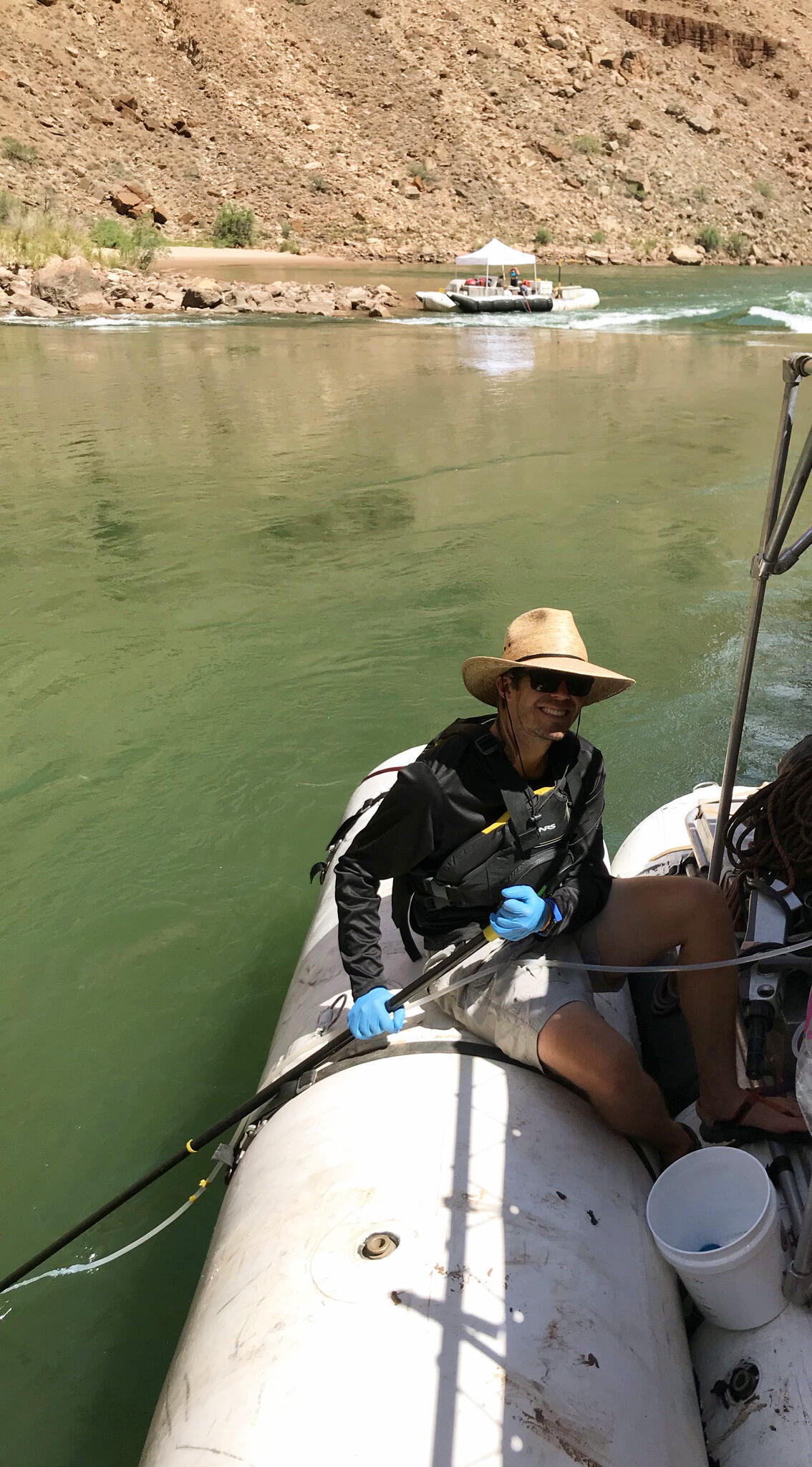
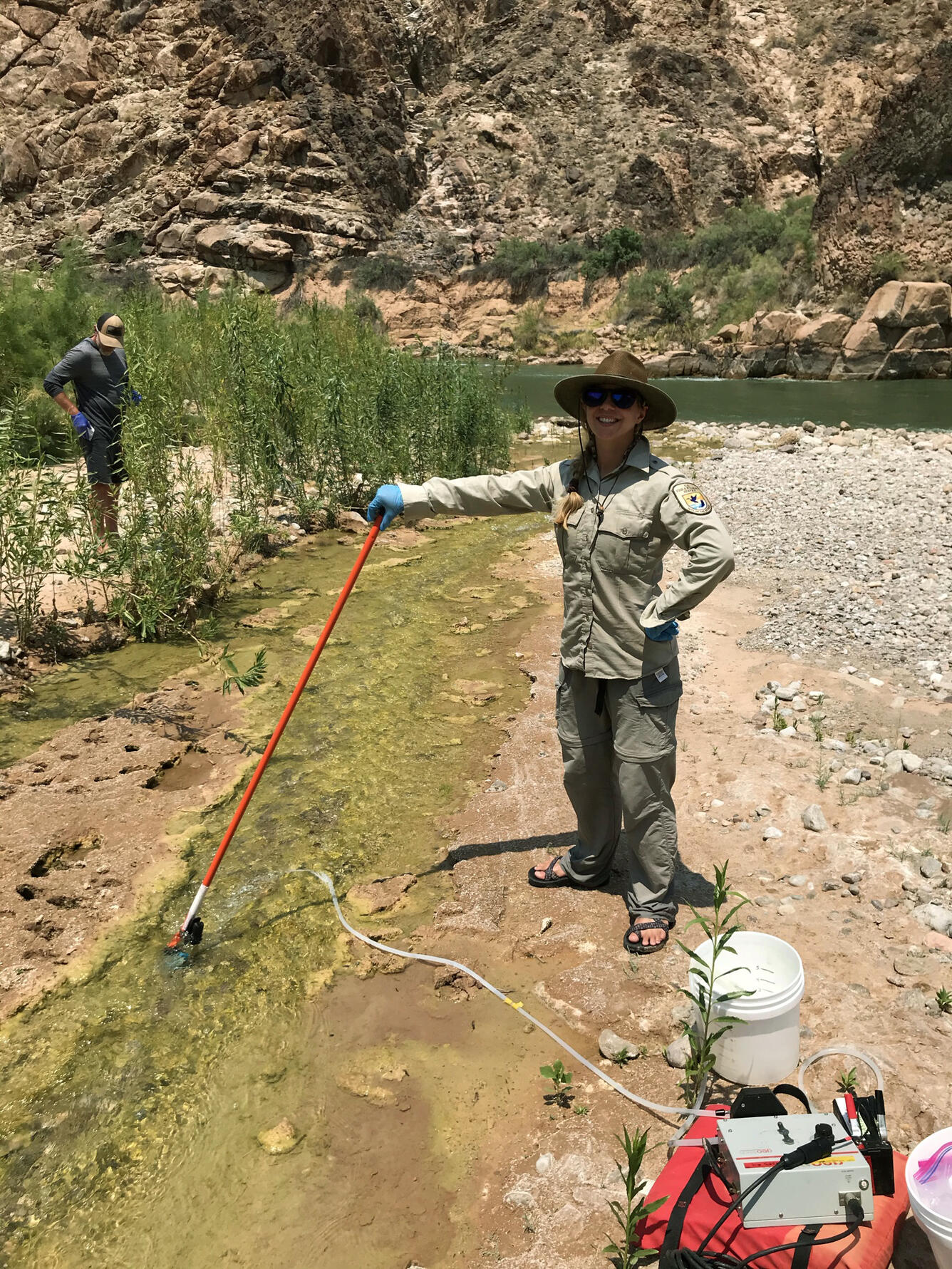
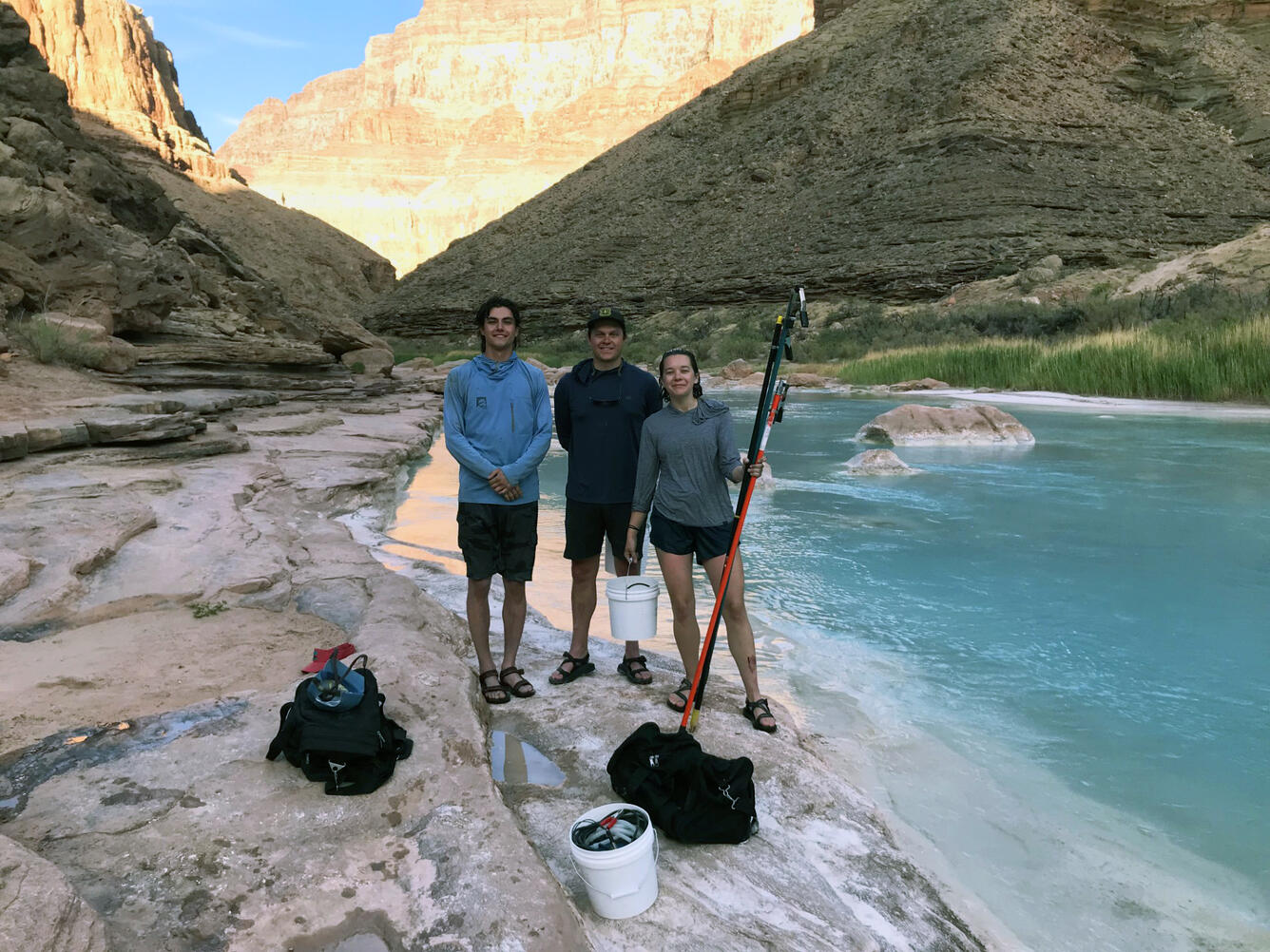
Beyond automated sampling, USGS scientists are collecting eDNA samples during traditional fish monitoring trips conducted by partner agencies.
By collecting water samples at the same time and place where nets, electrofishing, and other conventional methods are being used, researchers can directly compare how well eDNA detects species relative to hands-on sampling.
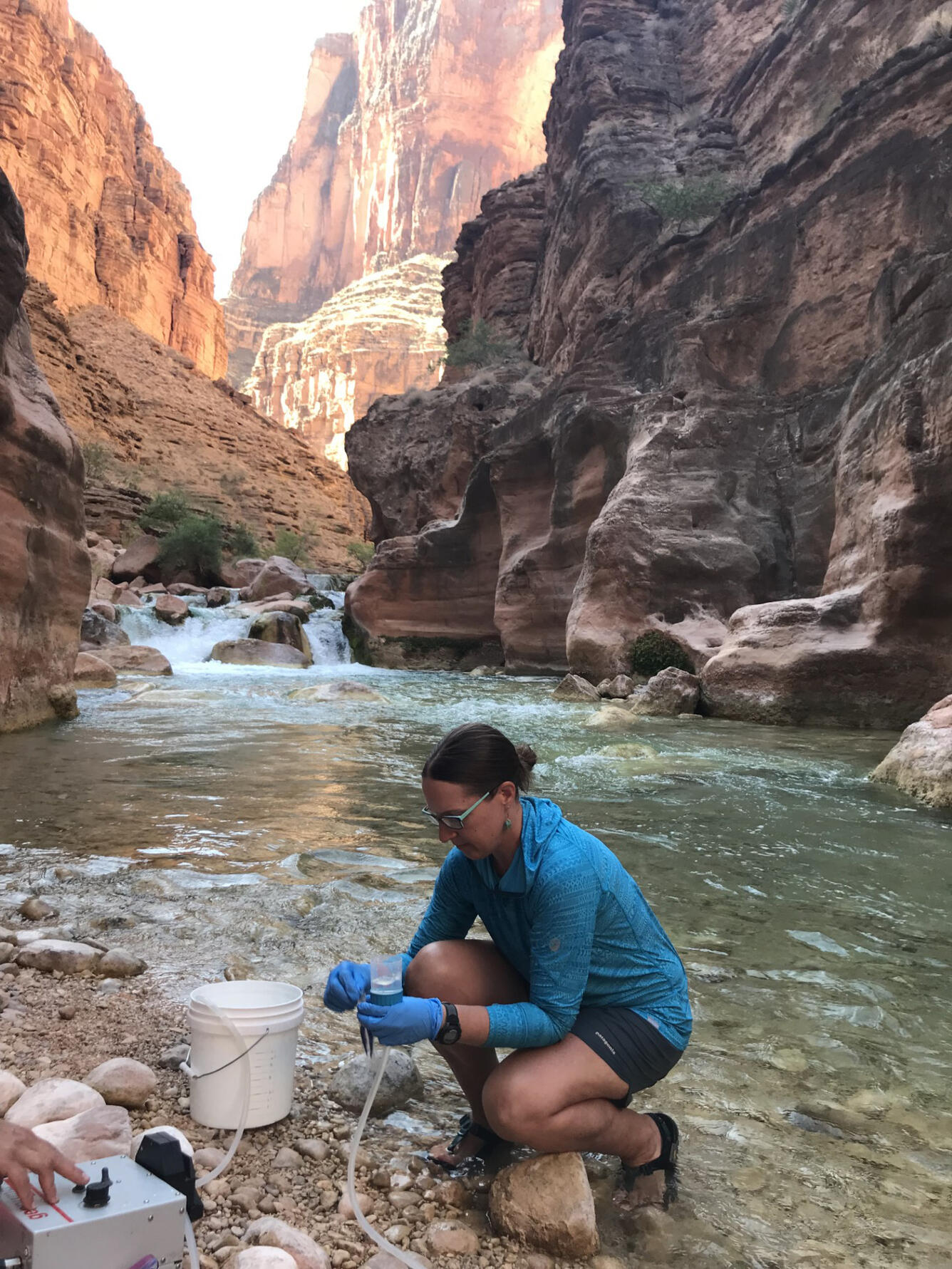
This comparison will determine whether eDNA can eventually serve as a reliable, less invasive alternative or complement to traditional monitoring approaches.
Scientists are testing this across different habitats, from backwaters and isolated pools to the main river channel, and using different gear types to understand eDNA's strengths and limitations in a large, complex river system.
Understanding where invasive fish come from: The Lake Powell connection
A critical question facing the Bureau of Reclamation and other managers is whether invasive fish found downstream from Glen Canyon Dam were born in the river (local reproduction) or whether they passed through the dam from Lake Powell (entrainment).
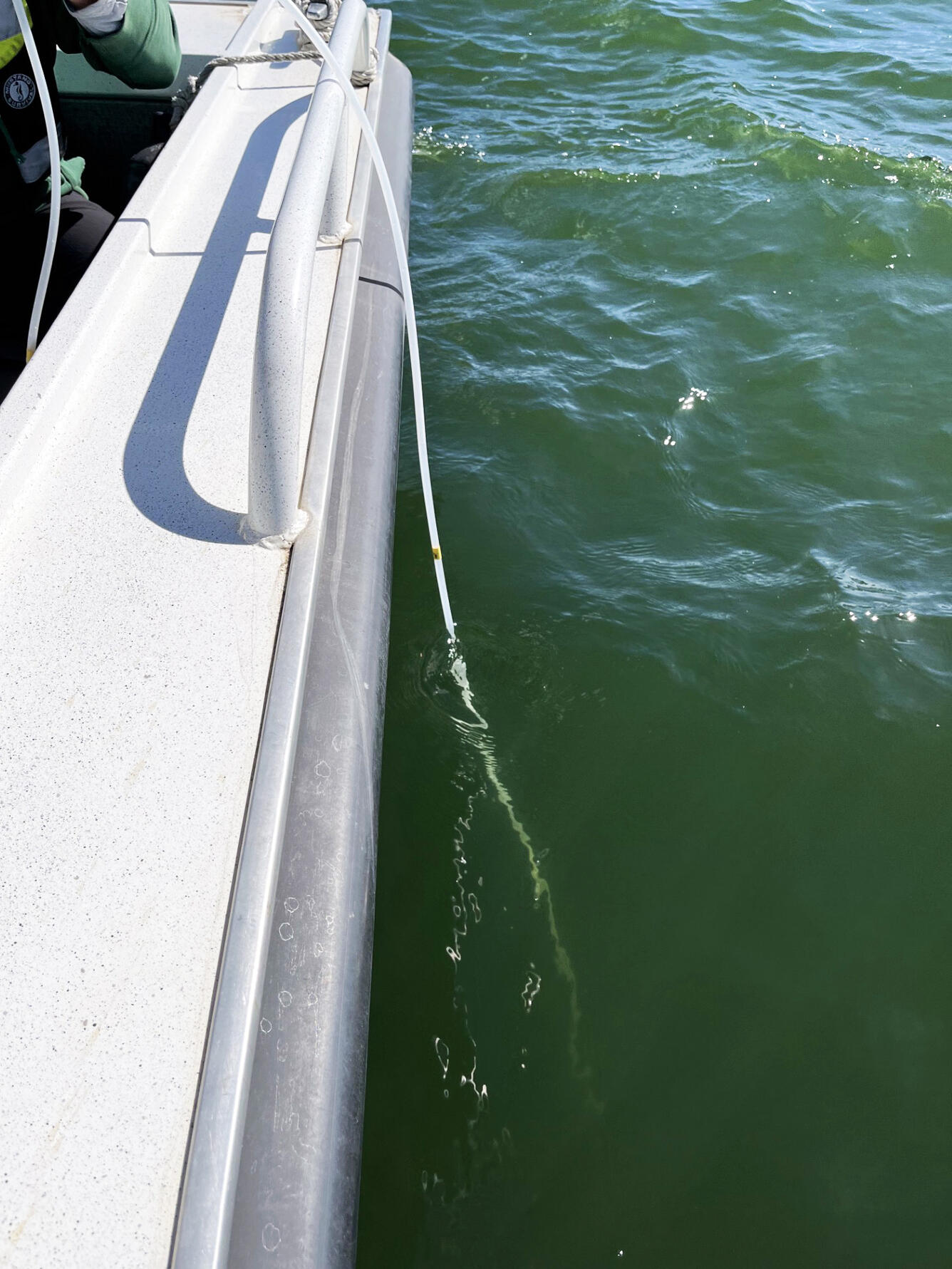
To answer this, USGS scientists are conducting specialized eDNA sampling in Lake Powell itself, working directly with the Bureau of Reclamation's ongoing water quality monitoring program.
Using equipment already deployed for water quality monitoring—a Van Dorn sampler that collects water at specific depths—USGS scientists will sample water at multiple levels in Lake Powell's forebay (the area directly upstream from the dam).

These samples will target distinct zones based on water temperature, oxygen levels, and chlorophyll concentrations.
Scientists will sample at the surface, at depths where the dam's penstocks draw water, and at various levels above and below the intake structures. By detecting which invasive species are present at different depths, researchers can estimate which fish are most likely to be pulled through the dam and deposited into the downstream river.

How this research benefits partner agencies
The USGS brings specialized scientific expertise that directly supports the management responsibilities of multiple agencies.
For the Bureau of Reclamation, which operates Glen Canyon Dam and is responsible under the 2016 Long-term Experimental and Management Plan (LTEMP) and 2016 Biological Opinion to pursue means to prevent the passage of deleterious invasive nonnative fish through Glen Canyon Dam and to minimize or reduce their presence and expansion downstream, USGS research provides the scientific foundation for evaluating potential engineering solutions and flow management strategies.
Another USGS project supports this effort by using genetic kinship analyses to help determine whether smallmouth bass captured downstream from the dam are siblings (suggesting local reproduction) or represent many different family groups from both the lake and river (suggesting entrainment from the reservoir).
This informs whether management efforts should focus on implementing experimental flows or temperature alterations to disadvantage reproduction and growth in the river or on other management actions to prevent fish passage through the dam.
For the National Park Service, which manages Grand Canyon National Park and Glen Canyon National Recreation Area and must make decisions about invasive fish removal efforts, USGS provides continuous monitoring data and early warning of new invasive species detections and geographic expansion.
For the U.S. Fish and Wildlife Service, USGS research (in collaboration with university partners) on parasite detection using eDNA could eventually replace more invasive monitoring methods that require holding native fish in treatment baths for 48 hours.
Collaborative science for better management support
This eDNA research exemplifies how USGS scientific expertise supports multi-agency natural resource management.
By coordinating with the Bureau of Reclamation's water quality monitoring, the U.S. Forest Service's genetic screening capabilities, and National Park Service, U.S. Fish and Wildlife, and Arizona Game and Fish Department's fish monitoring trips, USGS scientists are efficiently collecting maximum information while minimizing duplication of effort and costs.
The research provides standardized, scientifically rigorous data that all agencies can use to make informed decisions about invasive species control, species recovery, and dam operations in a rapidly changing Colorado River ecosystem.

SBSC science supports invasive species management
The USGS and partners are conducting environmental DNA (eDNA) research in the Colorado River downstream from Glen Canyon Dam and in Lake Powell to detect invasive fish species and other aquatic threats before they become established. eDNA is a cutting-edge technology that makes it possible to identify invasive species before they are visible, even in vast or hard-to-survey environments like rivers and lakes.
The research addresses a critical challenge facing the Colorado River ecosystem: preventing warm-water invasive fish from devastating populations of threatened and endangered native fish species like razorback sucker (Xyrauchen texanus) and humpback chub (Gila cypha).
This work is part of a broader effort by the USGS Southwest Biological Science Center's Grand Canyon Monitoring and Research Center (GCMRC) in collaboration with the Bureau of Reclamation, U.S. Forest Service, National Park Service, U.S. Fish and Wildlife Service, and Arizona Game and Fish Department.
A changing river and emerging threats
For decades following Glen Canyon Dam's completion in 1963, cold water released from Lake Powell kept warm-water invasive fish from establishing in the downstream river.
However, severe drought conditions since the early 2000s have dramatically lowered Lake Powell's water levels, causing warmer surface water to flow through the dam's penstocks into the river below.
These warmer conditions have created ideal habitat for invasive predatory fish like smallmouth bass (Micropterus dolomieu), walleye (Sander vitreus), and green sunfish (Lepomis cyanellus) that prey on native fish.
In 2022, these warm-water invaders were captured in unprecedented numbers, raising alarms among resource managers about the survival of threatened and endangered species.
Detecting these invasive species early, before populations explode, is far more cost-effective and environmentally sound than attempting control or eradication after they become established.
How USGS scientists are using eDNA
What is eDNA and why does it matter?
Environmental DNA is genetic material that organisms continuously shed into their environment through skin cells, feces, reproductive fluids, and other biological processes.
In aquatic ecosystems, scientists can collect water samples and extract DNA from these microscopic traces to detect which species are present, even at very low population levels before traditional fishing methods would capture them.
This technology allows managers to identify new invasive species, track their spread, and respond quickly before populations grow large enough to cause irreversible ecological damage.
Importantly, eDNA sampling reduces or eliminates the need to physically handle fish, which addresses concerns from recreational anglers and Tribal communities about fish stress and welfare.
The USGS is deploying multiple innovative approaches to monitor aquatic species in the Colorado River
One breakthrough involves installing automated eDNA samplers, which are devices that collect water samples on a preset schedule even when researchers aren't in the field.
These devices will be placed in known "hot spots" for invasive fish, such as downstream from the dam or within side channels, and potentially inside the dam's draft tubes where water enters from Lake Powell.
Samples are collected every few days year-round and analyzed in laboratories using high-throughput genetic screening technology developed by the U.S. Forest Service National Genomics Center.
This screening uses a specialized "biochip" designed to detect up to 46 of the most problematic invasive aquatic species in the United States, with plans to refine it specifically for species of concern in the Colorado River.
This automated sampler is part of a new USGS network called READI-Net (Rapid eDNA Assessment and Deployment Initiative & Network) which aims to accelerate the use of eDNA as a best practice for early detection of aquatic biological threats across western rivers.
This pilot technology represents a major step toward real-time biosurveillance of river ecosystems, providing managers with continuous monitoring data that would be impossible to collect through traditional sampling alone.
Beyond automated sampling, USGS scientists are collecting eDNA samples during traditional fish monitoring trips conducted by partner agencies.
By collecting water samples at the same time and place where nets, electrofishing, and other conventional methods are being used, researchers can directly compare how well eDNA detects species relative to hands-on sampling.
This comparison will determine whether eDNA can eventually serve as a reliable, less invasive alternative or complement to traditional monitoring approaches.
Scientists are testing this across different habitats, from backwaters and isolated pools to the main river channel, and using different gear types to understand eDNA's strengths and limitations in a large, complex river system.
Understanding where invasive fish come from: The Lake Powell connection
A critical question facing the Bureau of Reclamation and other managers is whether invasive fish found downstream from Glen Canyon Dam were born in the river (local reproduction) or whether they passed through the dam from Lake Powell (entrainment).
To answer this, USGS scientists are conducting specialized eDNA sampling in Lake Powell itself, working directly with the Bureau of Reclamation's ongoing water quality monitoring program.
Using equipment already deployed for water quality monitoring—a Van Dorn sampler that collects water at specific depths—USGS scientists will sample water at multiple levels in Lake Powell's forebay (the area directly upstream from the dam).
These samples will target distinct zones based on water temperature, oxygen levels, and chlorophyll concentrations.
Scientists will sample at the surface, at depths where the dam's penstocks draw water, and at various levels above and below the intake structures. By detecting which invasive species are present at different depths, researchers can estimate which fish are most likely to be pulled through the dam and deposited into the downstream river.
How this research benefits partner agencies
The USGS brings specialized scientific expertise that directly supports the management responsibilities of multiple agencies.
For the Bureau of Reclamation, which operates Glen Canyon Dam and is responsible under the 2016 Long-term Experimental and Management Plan (LTEMP) and 2016 Biological Opinion to pursue means to prevent the passage of deleterious invasive nonnative fish through Glen Canyon Dam and to minimize or reduce their presence and expansion downstream, USGS research provides the scientific foundation for evaluating potential engineering solutions and flow management strategies.
Another USGS project supports this effort by using genetic kinship analyses to help determine whether smallmouth bass captured downstream from the dam are siblings (suggesting local reproduction) or represent many different family groups from both the lake and river (suggesting entrainment from the reservoir).
This informs whether management efforts should focus on implementing experimental flows or temperature alterations to disadvantage reproduction and growth in the river or on other management actions to prevent fish passage through the dam.
For the National Park Service, which manages Grand Canyon National Park and Glen Canyon National Recreation Area and must make decisions about invasive fish removal efforts, USGS provides continuous monitoring data and early warning of new invasive species detections and geographic expansion.
For the U.S. Fish and Wildlife Service, USGS research (in collaboration with university partners) on parasite detection using eDNA could eventually replace more invasive monitoring methods that require holding native fish in treatment baths for 48 hours.
Collaborative science for better management support
This eDNA research exemplifies how USGS scientific expertise supports multi-agency natural resource management.
By coordinating with the Bureau of Reclamation's water quality monitoring, the U.S. Forest Service's genetic screening capabilities, and National Park Service, U.S. Fish and Wildlife, and Arizona Game and Fish Department's fish monitoring trips, USGS scientists are efficiently collecting maximum information while minimizing duplication of effort and costs.
The research provides standardized, scientifically rigorous data that all agencies can use to make informed decisions about invasive species control, species recovery, and dam operations in a rapidly changing Colorado River ecosystem.