



Building Cross‑Lab Expertise to Advance Cyanotoxin Detection
Scientists from the Michigan Bacteriological Research Laboratory (MI‑BaRL) in Lansing, Michigan recently partnered with the M3 Research Laboratory in Madison, Wisconsin, to optimize and validate new methods for detecting cyanotoxins in aquatic plants.
Biologists Alexei Rose and Jeanette Cruz from the USGS Michigan Bacteriological Research Laboratory (MI-BaRL) recently collaborated with the M3 (Mercury, trace Metals, and Microplastics) Research Laboratory in Madison, Wisconsin to optimize and validate methods for cyanotoxin testing in aquatic plants.
Cyanotoxins are produced when certain cyanobacteria (blue-green algae) are actively growing and bloom under the right environmental conditions, and can cause illness to wildlife, pets, and humans. The biologists are working to measure cyanotoxins to help tribes and managers understand potential exposure risk. Laboratory work included testing three different extraction methods to determine how effectively cyanotoxins can be detected from cattails, an aquatic plant commonly found in Wisconsin inland lakes.
As part of this effort, the researchers tested three extraction methods to determine how effectively cyanotoxins can be recovered from cattails, a widespread species in Wisconsin’s inland lakes. Cattails served as a surrogate for wild rice (Manoomin), allowing scientists to explore how aquatic plants absorb cyanotoxins and how toxin levels vary across different plant tissues. These insights will support communities assessing exposure risks from consuming wild rice or other plants grown in bloom‑impacted waters.
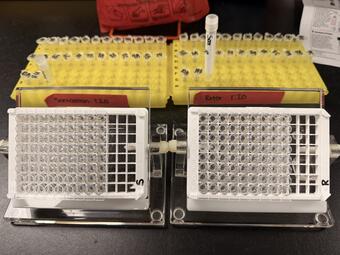
Following extraction, samples were analyzed at MI‑BaRL using enzyme-linked immunosorbent assay (ELISA) techniques to measure four key cyanotoxins: microcystin, anatoxin, saxitoxin, and cylindrospermopsin.
This work contributes to a three‑year study, “Influence of Headwaters Harmful Algal Blooms on Wild Rice and Downstream St. Croix River,” conducted in cooperation with the Wisconsin Department of Natural Resources and funded by the USGS Water Mission Area Directed Harmful Algal Blooms Program.
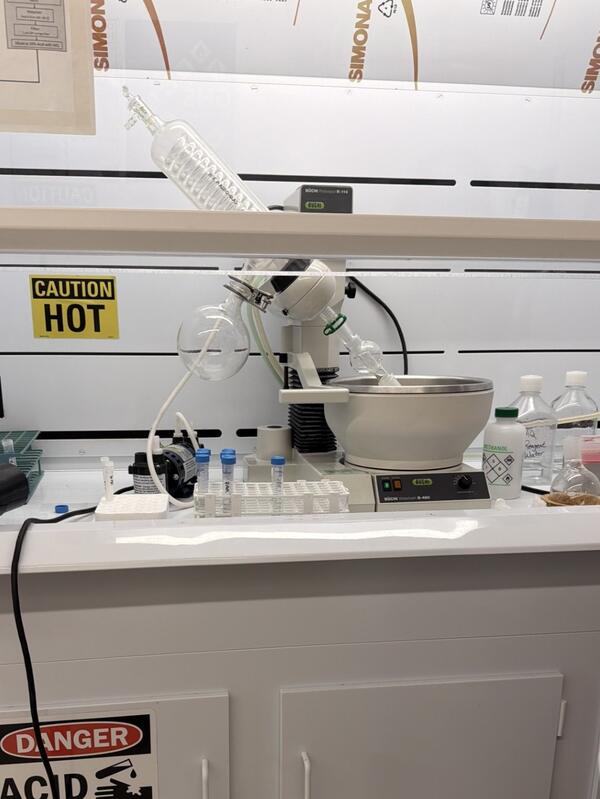
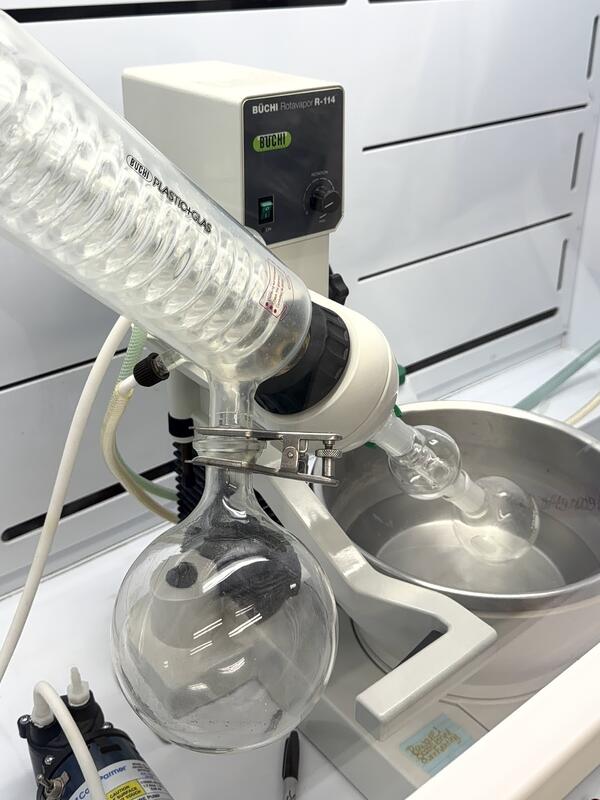
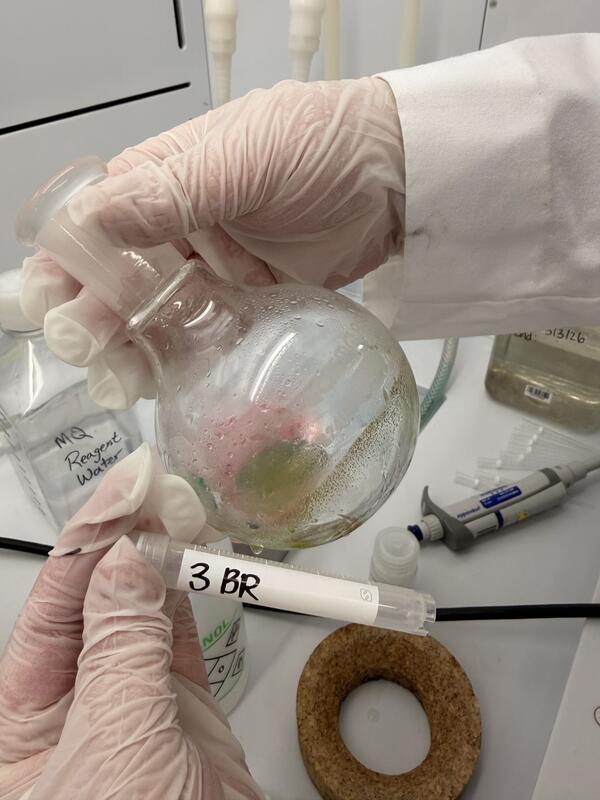
the extraction process. The crystals are then resuspended and added to a sterile tube.