Inspiring the Next Generation Through Hands-On Science in the Field
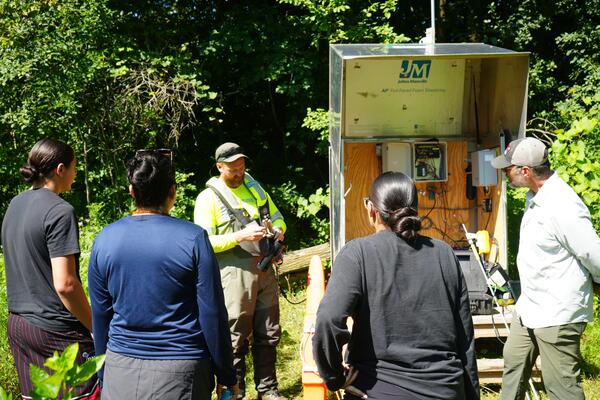
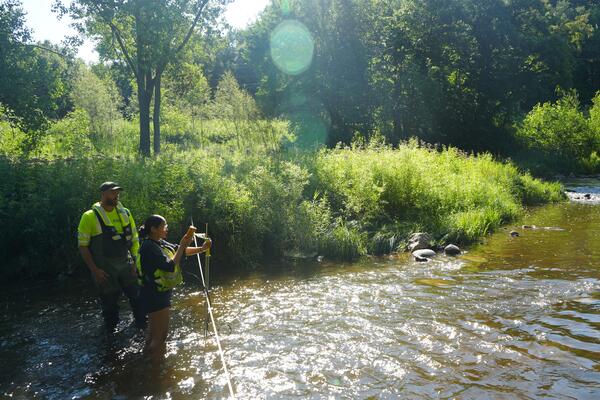
Scientists from the U.S. Geological Survey (USGS) recently partnered with the University of Wisconsin-Green Bay's National Estuarine Research Reserve (NERR) Tribal Engagement Coordinator and students from the Oneida Nation High School for a hands-on field science outreach event in northeast Wisconsin.
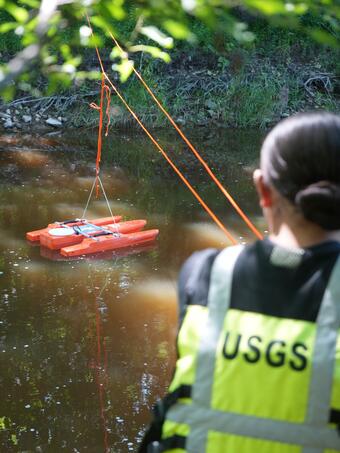
The event provided students with an opportunity to experience environmental science and hydrologic monitoring firsthand. Working alongside USGS scientists, students explored a variety of field instruments used to collect water-quality and streamflow data and participated directly in data collection activities. They also learned how scientists measure the movement of water using an Acoustic Doppler Current Profiler (ADCP), a specialized instrument that uses sound waves to measure water velocity and calculate streamflow.
The outreach activity highlighted the importance of connecting local students with real-world science applications while strengthening partnerships among USGS, the Bay of Green Bay National Estuarine Research Reserve, and tribal communities. Through experiences like these, students gained a deeper understanding of water-resource science, environmental stewardship, and the role scientific data play in managing and protecting natural resources.
The Bay of Green Bay NERR, led by UW-Green Bay, works collaboratively with tribal nations, local communities, educators, and resource managers to promote research, education, and stewardship of the Green Bay ecosystem. Events such as this help build meaningful connections between science and community while encouraging future careers in STEM fields.