



USGS and MMSD Expand Fish Monitoring Efforts in the Milwaukee River Watershed
USGS scientists continued long-term fish community monitoring across the Milwaukee, Wisconsin, area this summer as part of a collaborative effort with the Milwaukee Metropolitan Sewerage District (MMSD).
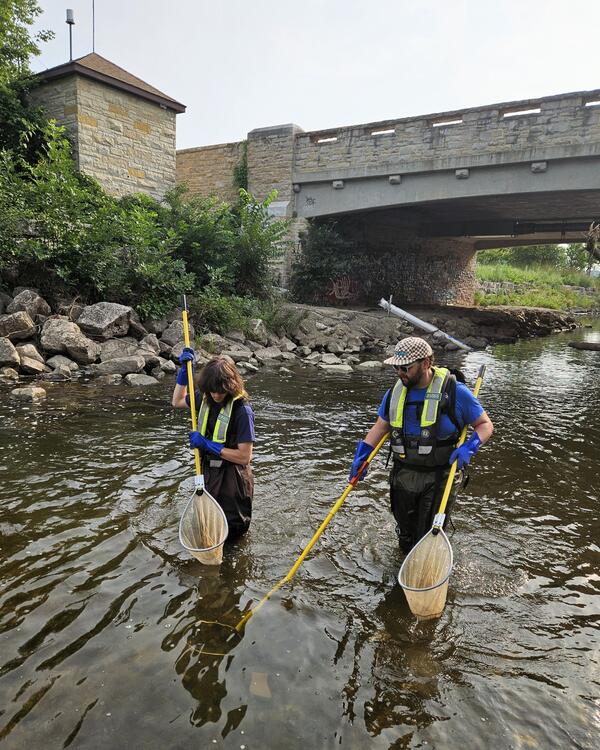
The project also expanded into several sites in the upper Milwaukee River watershed, providing new baseline data to help track stream health and assess future watershed changes and restoration efforts.
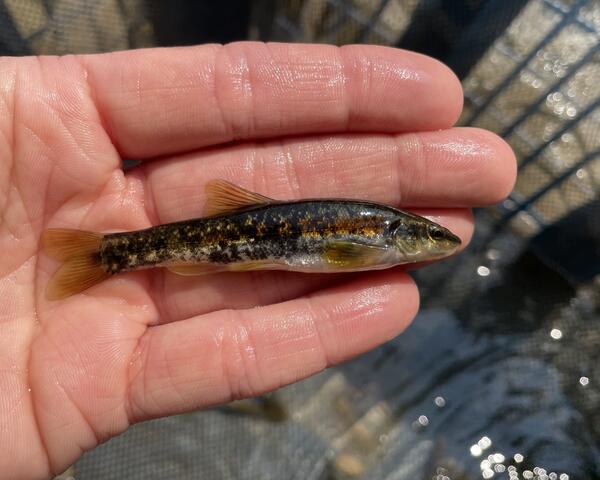
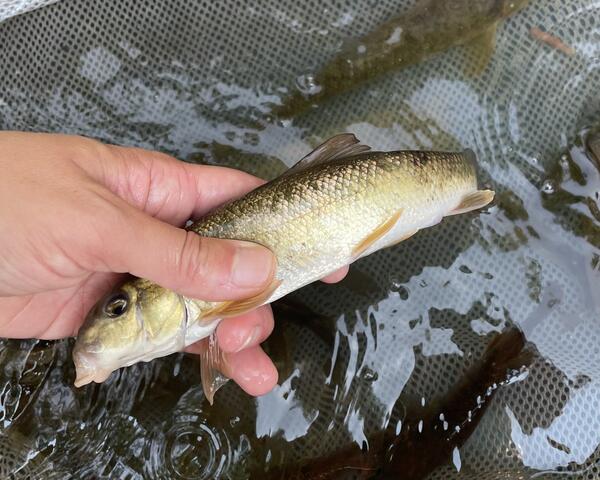
Fish communities serve as important indicators of stream condition because different species respond in unique ways to changes in water quality, habitat, and other environmental stressors. By documenting which species are present and how fish populations change over time, scientists can better understand the factors influencing the health of local waterways.
Field crews sampled fish communities throughout the region, identifying species and measuring their relative abundance. These data are used to calculate an Index of Biotic Integrity, a widely used metric that evaluates environmental quality based on the condition of aquatic biological communities.
The project also provided valuable hands-on training for an Oak Ridge Institute for Science and Education (ORISE) student fellow, who worked alongside USGS scientists in the field. Participating in fish collection and monitoring activities, the fellow gained practical experience in aquatic ecology, stream health assessment methods, and long-term environmental monitoring while contributing directly to the study's data collection efforts.
Monitoring at the newly added upper Milwaukee River watershed sites established important baseline information on local fish communities. As data are collected over time, scientists will be able to evaluate how fish populations respond to changes in land use, water quality, and restoration activities throughout the watershed.
By combining observations from the established monitoring network with data from these new sites, USGS, MMSD, and the ORISE program are helping build a more comprehensive understanding of stream health across southeastern Wisconsin while supporting the next generation of environmental scientists.
Related

Milwaukee Metropolitan Sewerage District (MMSD) Watercourse Corridor Study
Related