U.S. flag

An official website of the United States government

In mid-to late April 2026, Michigan and Wisconsin faced one of the wettest springs on record, as rapid snowmelt combined with sustained, record‑breaking rainfall produced widespread flooding across rivers and streams.

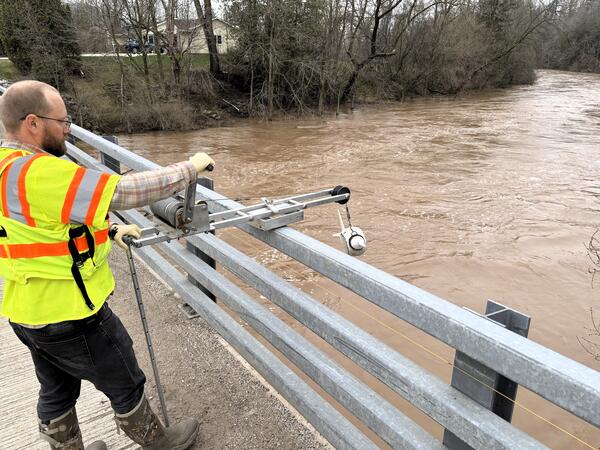
As soon as conditions allowed, USGS field specialists mobilized to assess impacts on stream conditions and critical monitoring infrastructure. By late April, teams had completed 110 site visits in Michigan and 167 in Wisconsin, performing high‑water streamflow measurements at flooded monitoring sites and evaluating storm‑related damage to equipment.

Despite the severity of the event, only three streamgages in Michigan and one in Wisconsin were destroyed, and all were quickly repaired and restored, ensuring uninterrupted delivery of real‑time water data relied upon by emergency managers, local partners, and the public.
Media
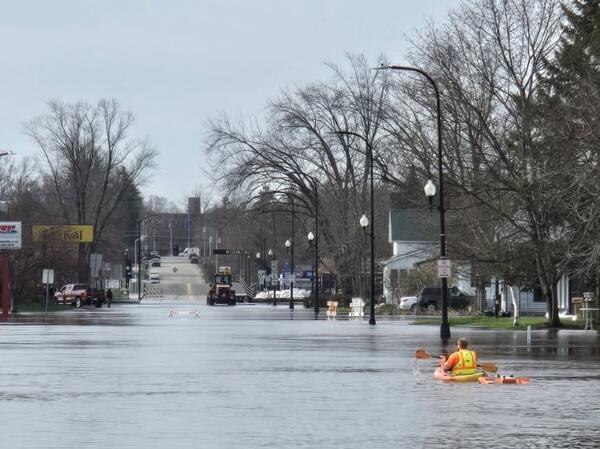
Hydrologic technician kayaks down a flooded street towing an ADCP
A USGS hydrologic technician paddles a kayak down Shawano Street (Highway 45) in New London, Wisconsin, towing an acoustic Doppler current profiler (ADCP), measuring stream overflow that bypassed the stream gage in the main channel.

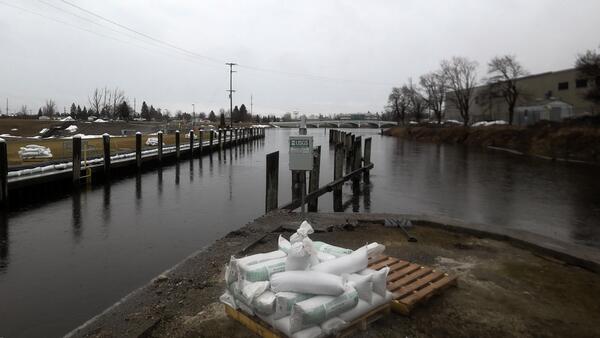
USGS crews also installed a rapid‑deployment gage near a potentially failing dam in Cheboygan, Michigan, providing essential safety monitoring during a period of heightened risk. In addition, teams completed numerous high‑water‑mark assessments to support indirect discharge measurements, helping characterize the full magnitude of the flood.

This work enabled hydrologic technicians to update rating curves, the relationship between stream stage and discharge, at several sites, improving the accuracy of ongoing flood monitoring.

Preliminary results show that 29 streamgages (22 in Michigan, seven in Wisconsin) recorded new maximum gage heights and/or flows, surpassing all previously measured values. Another 48 streamgages recorded flows ranking among their top five highest ever. Major rivers reaching record crests included:

  • Michigan: Grand, Muskegon, Au Sable, Manistee, and Cheboygan rivers
  • Wisconsin: Wolf River, Menominee River (WI–MI border), and the Wisconsin River at Portage

This coordinated response underscores the expertise, preparedness, and commitment of USGS scientists and technicians. Their rapid fieldwork provided the National Weather Service with critical, on‑demand data and delivered the timely, reliable hydrologic information needed to support public safety and informed decision‑making across the region.

Photos from the field

Michigan
Media
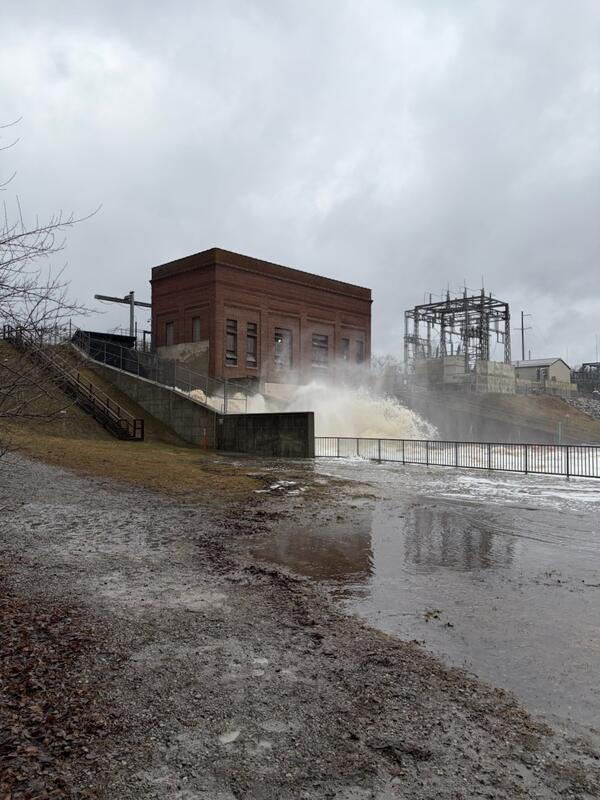
Floodwaters at high flow below historic brick dam
Flooded Foote Hydroelectric Dam at the Au Sable River, Michigan.
Media
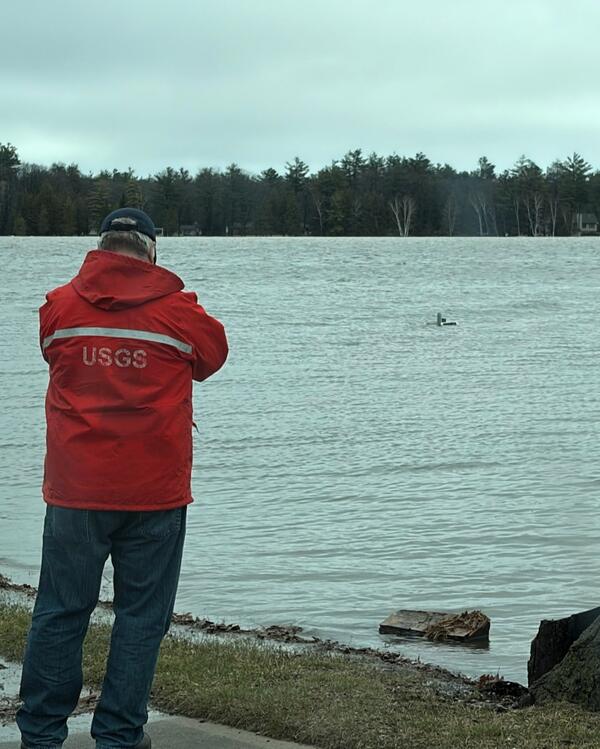
Hydrologic technician views submerged streamgage house in flooded lake
Hydrologic technician Ed Lipinksi looks out over a flooded Van Etten Lake near Oscoda, Michigan. The top of the streamgage housing sticks up over the surface of the flooded lake.
Media
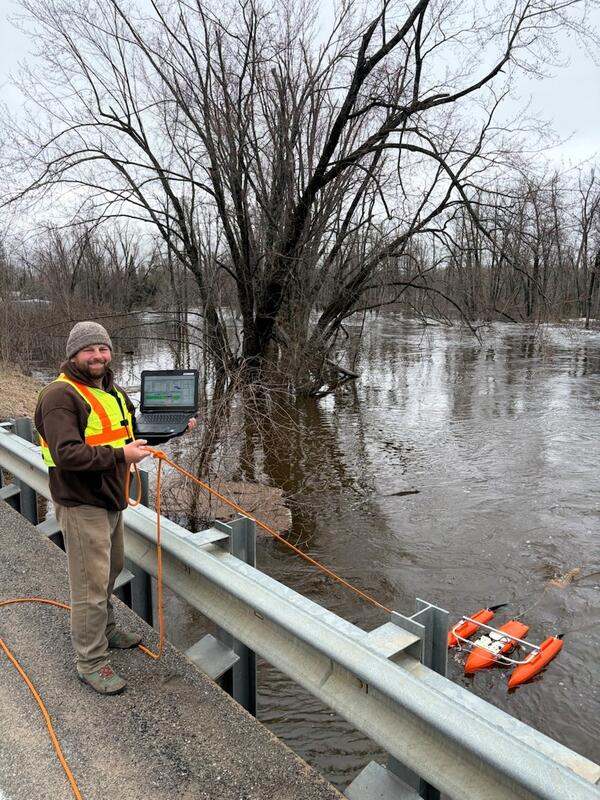
Hydrologic technician measures streamflow off bridge using ADCP on flooded river
USGS hydrologic technician Steven (Stosh) Sendek measures streamflow on the flooded Manistique River in the Upper Peninsula of Michigan.
Media
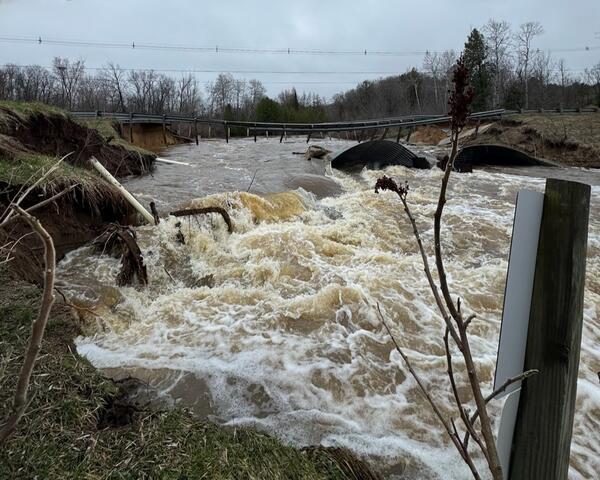
Washed out bridge over raging flood waters on a gray day
A bridge over the Boardman River near Traverse City, Michigan is washed out from raging flood waters. The white pipe on the left houses the data loggers for the streamgage at this site.
Media
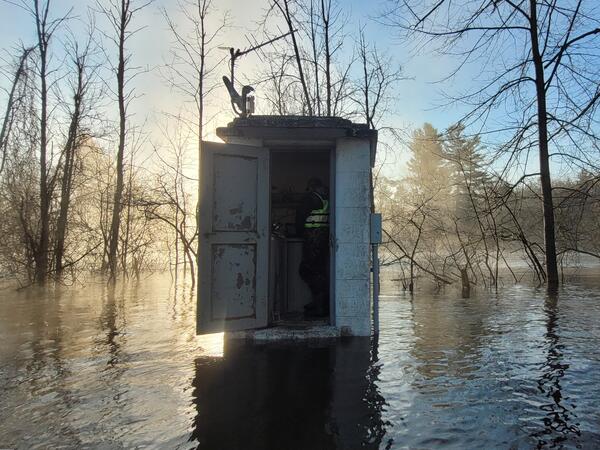
Hydrologic technician servicing a flooded streamgage housing, backlit by sunrise
A hydrologic technician services the streamgage at the flooded Muskegon River at Evart at sunrise.
Media
Streamgage at river with buildings on shore, sandbags in foreground
A streamgage on the Lincoln River near the flooding Cheboygan, Michigan dam. Sandbags are located in the foreground and along shoreline of the river to mitigate flooding to the Cheboygan Dam.

Wisconsin

Media
hydrologic technician prepares to measure streamflow on flooded creek with ADCP
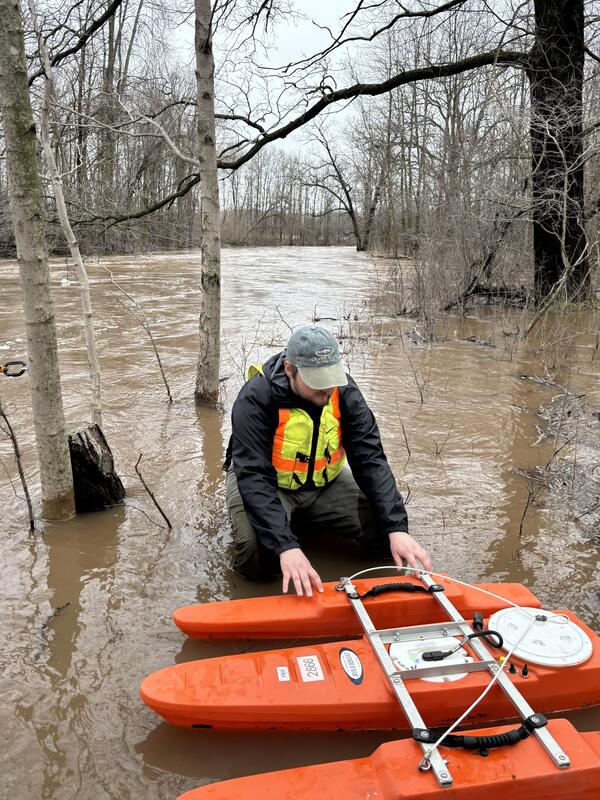
USGS hydrologic technician prepares to measure streamflow on the flooded Duck Creek in Howard, Wisconsin with an acoustic Doppler current profiler.
Media
Acoustic Doppler current profiler measures flow off of the side of a boat
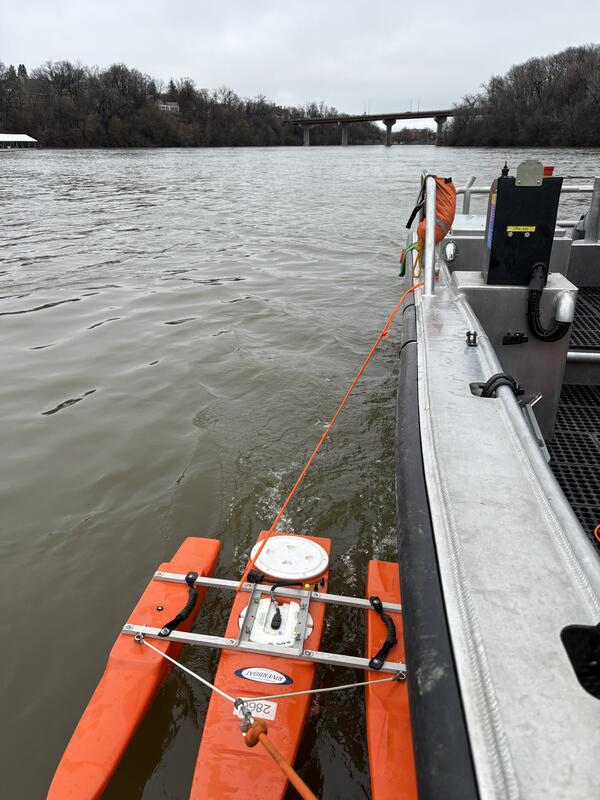
Acoustic Doppler current profiler (ADCP) measurement of the flooded Fox River at Appleton, Wisconsin.
Media
A brown flooded river flows just underneath a streamgage platform
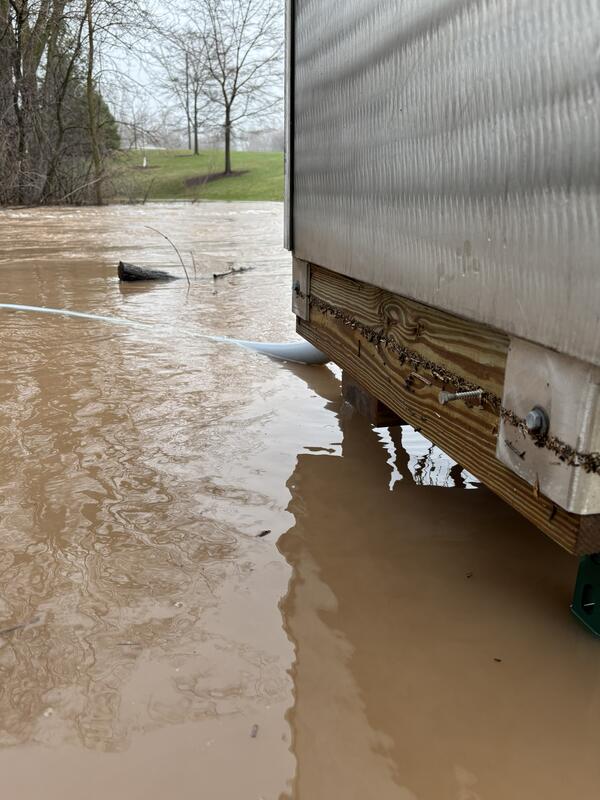
A high-water mark on a streamgage housing platform above a flooded Dutchman Creek in Ashwaubenon, Wisconsin.
Media
Hydrologic technician collects water sample from flooded river while standing on a bridge
Hydrologic technician takes a water sample to test for nutrients, from the flooded Manitowoc River, Wisconsin.
Media
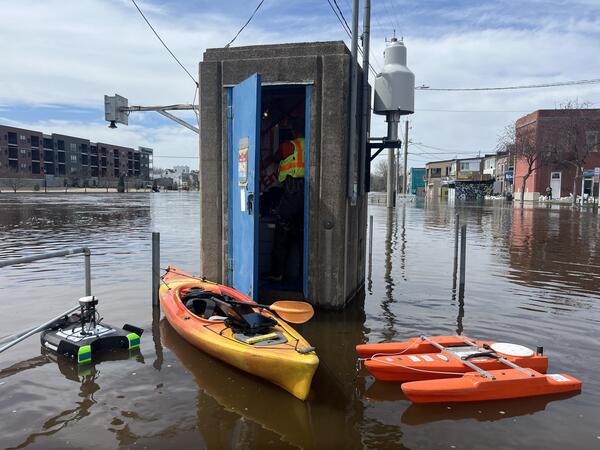
Hydrologic technician inside gage house with kayak and two ADCPs floating outside
USGS hydrologic technicians service the flooded Wolf River at New London, Wisconsin streamgage, read sensors and compare data to outside reference points to verify accurate gage height data.
Media
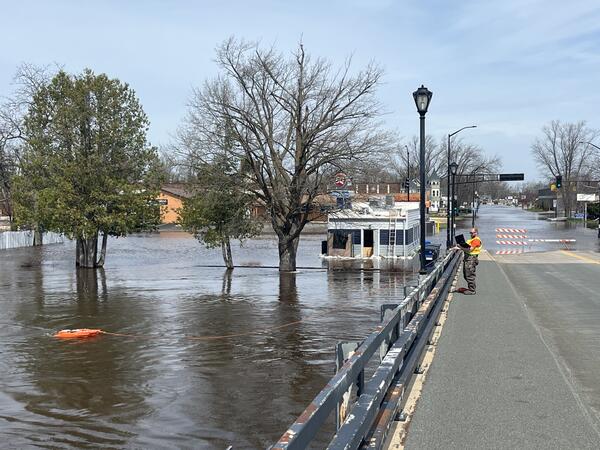
Hydrologic technician takes acoustic Doppler current profiler measurement of flooded river from bridge
Hydrologic technician performs a moving bed test using an acoustic Doppler current profiler (ADCP) on the main channel of the Wolf River off of the Shawano Street bridge in New London, Wisconsin.
Was this page helpful?