



Evaluating Stormwater Volume Reductions in Constructed Stormwater Wetlands with Native Vegetation
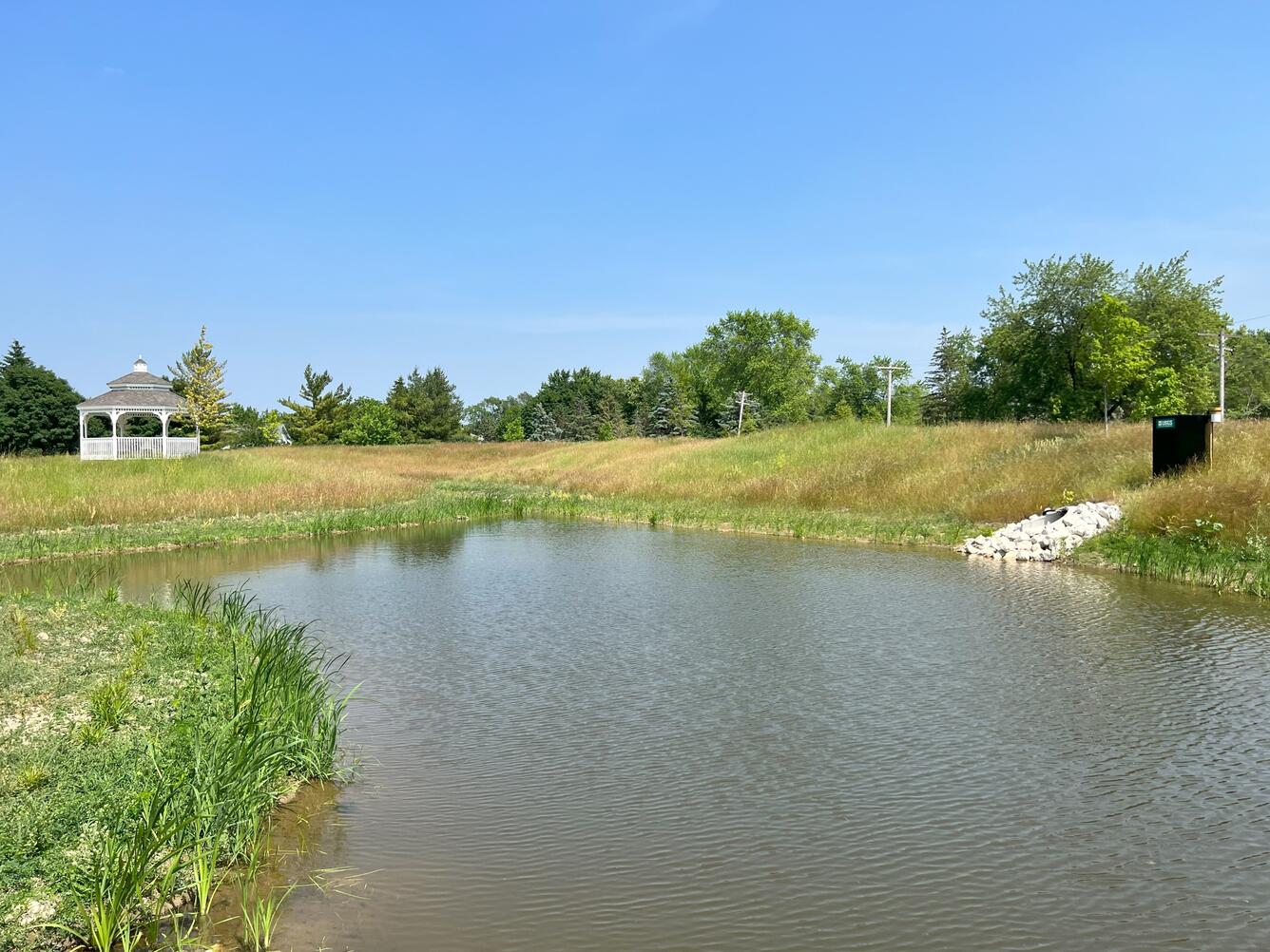
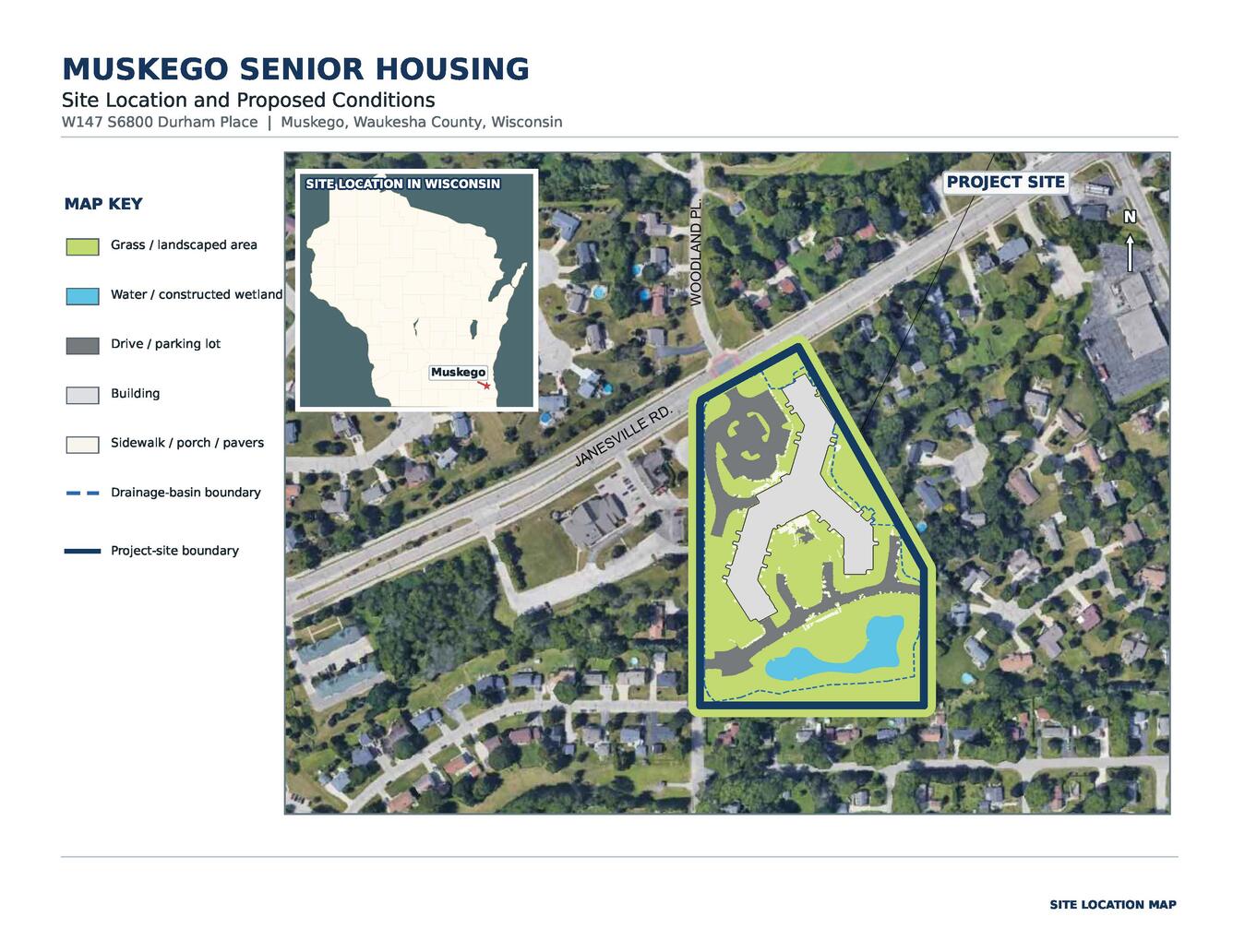
The effectiveness of utilizing native vegetation to enhance water retention capabilities of constructed stormwater wetlands is being investigated at a senior housing development in Muskego, WI in the Root River Watershed which drains into Lake Michigan. This study will evaluate influent and effluent discharge and climatic conditions pre- and post- vegetation establishment to ascertain the influence native vegetation may have on the hydrograph. Additional evaluations will be performed through the use of WinSLAMM (Source Loading and Management Model for Windows) and numerical models.
Background
Constructed Stormwater Wetlands or CSWs are structural stormwater controls built to remove pollutants and sediment through settling and biological uptake. Additionally, CSWs are designed to reduce and delay peak discharge through impoundment and extended release of stormwater. CSWs and wet ponds or retention ponds are widely accepted, stormwater control practices most commonly used in suburban areas, towns, and villages due to land requirements. Although the primary purpose of CSWs and retention ponds are similar, design characteristics, habitat, biodiversity, and pollutant removal mechanisms differ. This includes the incorporation of shallow water vegetation in marsh areas surrounding a permanent pool, increased vegetation biodiversity in both the marsh and floodplain/upland area, increased fauna biodiversity due in part to increased habitat, and utilization of biological uptake and microbial breakdown in addition to traditional settling to treat pollutants in CSWs.
Many of the benefits realized by CSWs may be enhanced with native vegetation introduction throughout the emergent, wet, and mesic landscape surrounding such treatment systems. Increased habitat due to plant species polyculture instead of non-native monocultures often found in constructed wetlands; increased animal species richness due to increased habitat; and increased infiltration and erosion prevention due to the extensive root system of native plants are among the benefits and ecosystem services associated with developing an ecosystem utilizing native plantings.
Although the use of CSWs and wet ponds as structural stormwater mitigation tools is widely accepted and these systems are well understood, little is known about how native vegetation in CSWs may affect and react to urban stormwater. Expected peak flow and volume reductions may be altered due to native plant characteristics such as deep, large root systems; stem clumping and plant growth patterns; growth rates; structural stability during senescence; duration and timing of growth and dieback; evapotranspiration rates; and infiltration rates compared to non-native plants and grasses often found in constructed wetlands. Additionally, the presence of chloride in runoff, often associated with the use of salt as a deicer, may complicate many of these factors and may affect the outcome of native plant communities and any potential boost to CSW stormwater mitigation.
Objectives
This study attempts to ascertain potential interstorm volumetric benefits of utilizing native vegetation in a CSW through:
- Quantification of water-storage and discharge characteristics of a CSW planted with native vegetation
- Evaluation of evapotranspiration, infiltration and vegetation characteristics contribution to interstorm water-level fluctuations and subsequent effluent discharge.
- Characterization of chloride concentrations and chloride transport through a CSW with native vegetation.
Description
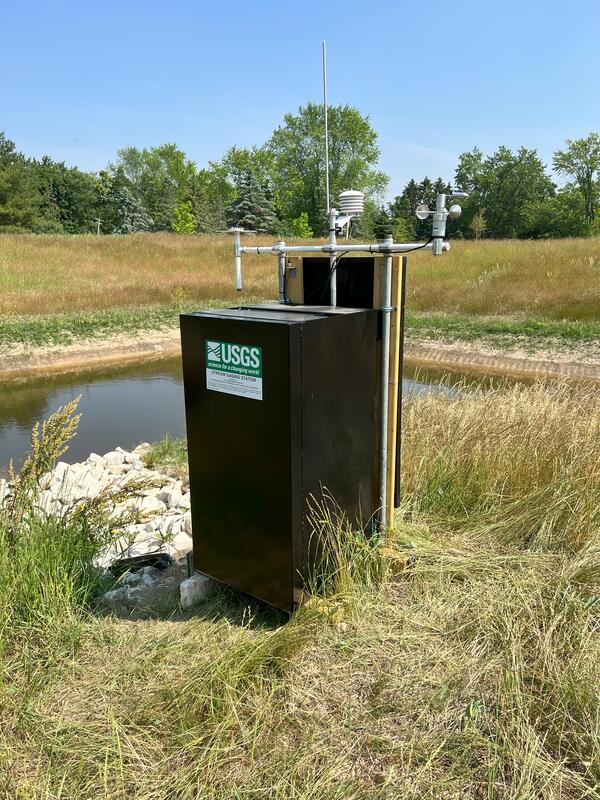
Site selection was finalized in July of 2022 with the help of Milwaukee Metropolitan Sewerage District although construction and final grading were not finished until the end of November. A plan for monitoring and equipment purchases was made between August and September of 2022. Monitoring stations were built out over the winter of 2022-2023, and installation of equipment and monitoring stations happened at the beginning of May 2023. Four solar powered stations, three measuring influent and 1 measuring effluent, collect stage, velocity, discharge, temperature, and specific conductance (chloride surrogate) data. Precipitation, air temperature, wind speed, wind direction, and solar radiation data are also collected to help calculate ET accurately. Continual water quality and quantity data was collected from Summer of 2023 to Fall of 2024 and will be used to ascertain CSW capabilities.
- 425514088055601 WEST 18-IN WETLAND INLET NR CORNELL DR MUSKEGO, WI
- 425514088055301 CENTER 15IN WETLAND INLET NR CORNELL DR MUSKEGO WI
- 425514088055201 EAST 12-IN WETLAND INLET NR CORNELL DR MUSKEGO, WI
- 425513088055501 WETLAND OUTLET NR CORNELL DR, MUSKEGO, W
Benefits
Results from this research will help determine if additional reductions in effluent runoff can be realized by utilizing native emergent, wet, and mesic prairie vegetation in an otherwise traditional CSW. In addition to habitat and ecosystem services benefits, this information may help developers and stormwater managers determine the appropriate CSW for individual stormwater management projects. Additionally, a reduced number of stormwater effluent runoff events also has the potential to impact nutrient and fine sediment export and overall downstream water quality and quantity throughout the lifespan of the CSW.
The effectiveness of utilizing native vegetation to enhance water retention capabilities of constructed stormwater wetlands is being investigated at a senior housing development in Muskego, WI in the Root River Watershed which drains into Lake Michigan. This study will evaluate influent and effluent discharge and climatic conditions pre- and post- vegetation establishment to ascertain the influence native vegetation may have on the hydrograph. Additional evaluations will be performed through the use of WinSLAMM (Source Loading and Management Model for Windows) and numerical models.
Background
Constructed Stormwater Wetlands or CSWs are structural stormwater controls built to remove pollutants and sediment through settling and biological uptake. Additionally, CSWs are designed to reduce and delay peak discharge through impoundment and extended release of stormwater. CSWs and wet ponds or retention ponds are widely accepted, stormwater control practices most commonly used in suburban areas, towns, and villages due to land requirements. Although the primary purpose of CSWs and retention ponds are similar, design characteristics, habitat, biodiversity, and pollutant removal mechanisms differ. This includes the incorporation of shallow water vegetation in marsh areas surrounding a permanent pool, increased vegetation biodiversity in both the marsh and floodplain/upland area, increased fauna biodiversity due in part to increased habitat, and utilization of biological uptake and microbial breakdown in addition to traditional settling to treat pollutants in CSWs.
Many of the benefits realized by CSWs may be enhanced with native vegetation introduction throughout the emergent, wet, and mesic landscape surrounding such treatment systems. Increased habitat due to plant species polyculture instead of non-native monocultures often found in constructed wetlands; increased animal species richness due to increased habitat; and increased infiltration and erosion prevention due to the extensive root system of native plants are among the benefits and ecosystem services associated with developing an ecosystem utilizing native plantings.
Although the use of CSWs and wet ponds as structural stormwater mitigation tools is widely accepted and these systems are well understood, little is known about how native vegetation in CSWs may affect and react to urban stormwater. Expected peak flow and volume reductions may be altered due to native plant characteristics such as deep, large root systems; stem clumping and plant growth patterns; growth rates; structural stability during senescence; duration and timing of growth and dieback; evapotranspiration rates; and infiltration rates compared to non-native plants and grasses often found in constructed wetlands. Additionally, the presence of chloride in runoff, often associated with the use of salt as a deicer, may complicate many of these factors and may affect the outcome of native plant communities and any potential boost to CSW stormwater mitigation.
Objectives
This study attempts to ascertain potential interstorm volumetric benefits of utilizing native vegetation in a CSW through:
- Quantification of water-storage and discharge characteristics of a CSW planted with native vegetation
- Evaluation of evapotranspiration, infiltration and vegetation characteristics contribution to interstorm water-level fluctuations and subsequent effluent discharge.
- Characterization of chloride concentrations and chloride transport through a CSW with native vegetation.
Description
Site selection was finalized in July of 2022 with the help of Milwaukee Metropolitan Sewerage District although construction and final grading were not finished until the end of November. A plan for monitoring and equipment purchases was made between August and September of 2022. Monitoring stations were built out over the winter of 2022-2023, and installation of equipment and monitoring stations happened at the beginning of May 2023. Four solar powered stations, three measuring influent and 1 measuring effluent, collect stage, velocity, discharge, temperature, and specific conductance (chloride surrogate) data. Precipitation, air temperature, wind speed, wind direction, and solar radiation data are also collected to help calculate ET accurately. Continual water quality and quantity data was collected from Summer of 2023 to Fall of 2024 and will be used to ascertain CSW capabilities.
- 425514088055601 WEST 18-IN WETLAND INLET NR CORNELL DR MUSKEGO, WI
- 425514088055301 CENTER 15IN WETLAND INLET NR CORNELL DR MUSKEGO WI
- 425514088055201 EAST 12-IN WETLAND INLET NR CORNELL DR MUSKEGO, WI
- 425513088055501 WETLAND OUTLET NR CORNELL DR, MUSKEGO, W
Benefits
Results from this research will help determine if additional reductions in effluent runoff can be realized by utilizing native emergent, wet, and mesic prairie vegetation in an otherwise traditional CSW. In addition to habitat and ecosystem services benefits, this information may help developers and stormwater managers determine the appropriate CSW for individual stormwater management projects. Additionally, a reduced number of stormwater effluent runoff events also has the potential to impact nutrient and fine sediment export and overall downstream water quality and quantity throughout the lifespan of the CSW.