



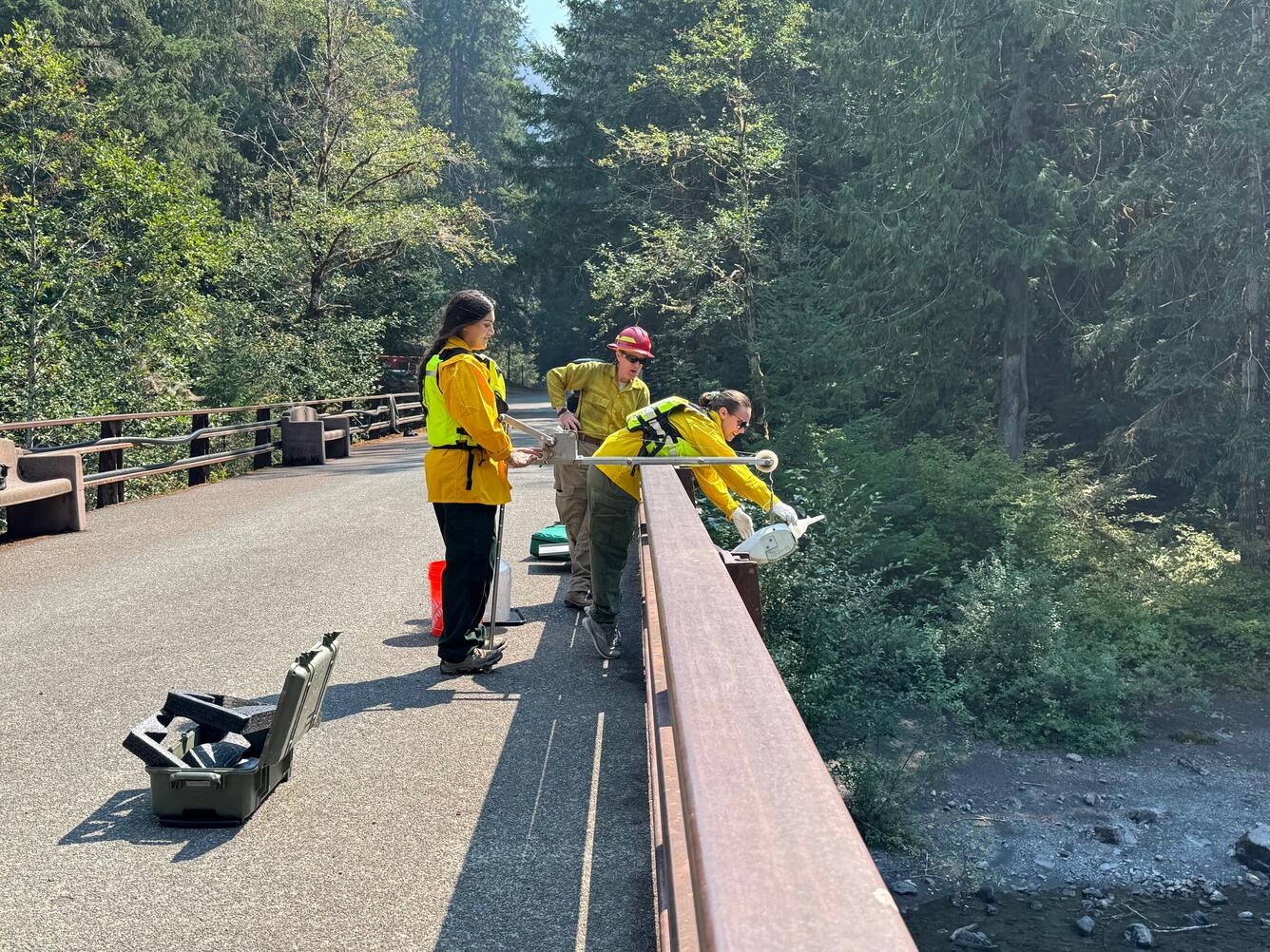
The USGS is monitoring water quality in the North Fork Skokomish River following the Bear Gulch Fire that burned in summer 2025. USGS has over 100 years of data from this river. Streamflow data support water supply management and flood prediction. Post-fire data provides an important window into how watersheds are shaped by fire.
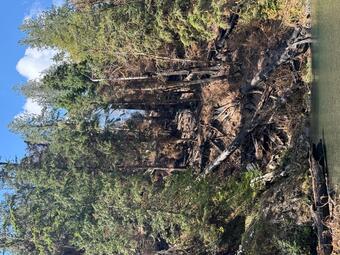
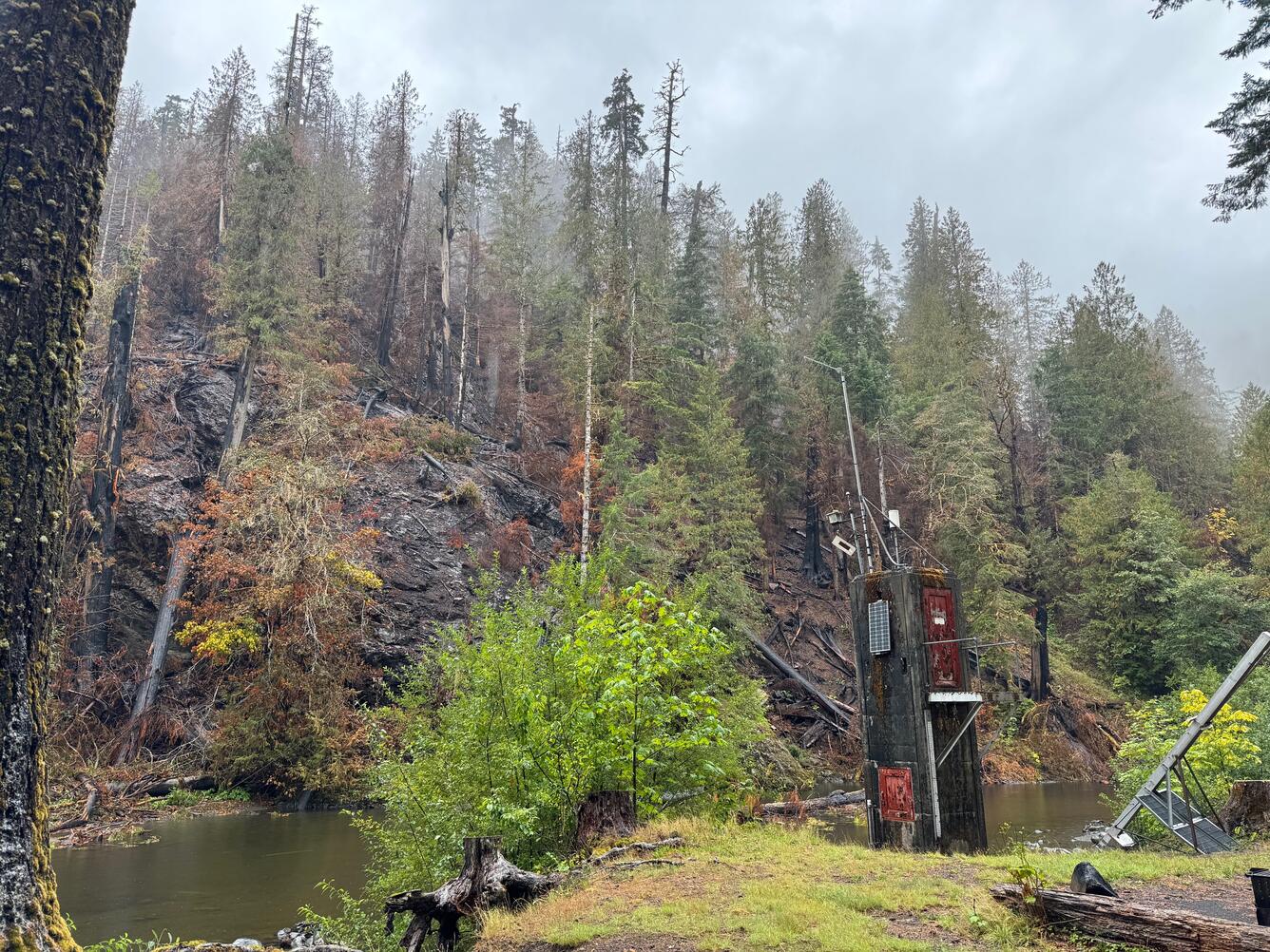
In 2025, the Bear Gulch Fire burned over 20,000 acres in Olympic National Forest and Olympic National Park. The USGS already operated a streamgage on the North Fork Skokomish River, in cooperation with Tacoma Power, that provided real-time streamflow information. USGS also regularly sampled for water quality in the river as part of the National Water Quality Network.
Recognizing the need for timely information for emergency response and hazard mitigation, the USGS quickly added monitoring capabilities to our existing streamgage, including:
- Continuous monitoring of several water quality parameters
- Dissolved organic matter florescence (fDOM)
- Dissolved oxygen (DO)
- pH
- Specific conductance
- Turbidity
- Discrete sampling for additional water quality parameters
- Suspended sediment concentration
- Particulate carbon and nitrogen
- Stable isotopes of water
- Trace elements including mercury
Our field sampling schedule will now target important events, such as storms, in addition to routine visits.
Why post-fire monitoring matters
Streamflow and flood hazard response
The USGS provides continuous streamflow data to help the NPS, USFS, and emergency managers prepare for floods and protect lives and property. Wildfires can increase the risk of flooding and debris flows, and the USGS streamgage enables early flood warning.
Assessing water quality
The USGS works with federal and state land managers and local water providers to monitor and assess water quality after wildfires to help protect our Nation’s water resources. Wildfires pose a substantial risk to water supplies because they can deliver sediment, nutrients, and metals to rivers, lakes, and reservoirs. Wildfires can compromise water quality both during active burning and for months and years after the fire has been contained or extinguished.
USGS water quality data helps the NPS and water managers evaluate the cumulative effects of fire, and potential water-quality impacts on drinking-water supplies.
Protecting aquatic ecosystems
The USGS and NPS work together to assess how fire impacts river and lake ecosystems, to better protect these important resources. The Skokomish River and Lake Cushman are home to several ecologically and culturally significant fish, including several species of salmon and trout. Run-off from fires can harm ecosystems by introducing contaminants and changing habitat structure. The USGS and NPS repeatedly surveyed species living in the Skokomish River before the fire, which will help resource managers plan for and manage wildfire impacts.
Long-term monitoring of hydrologic processes:
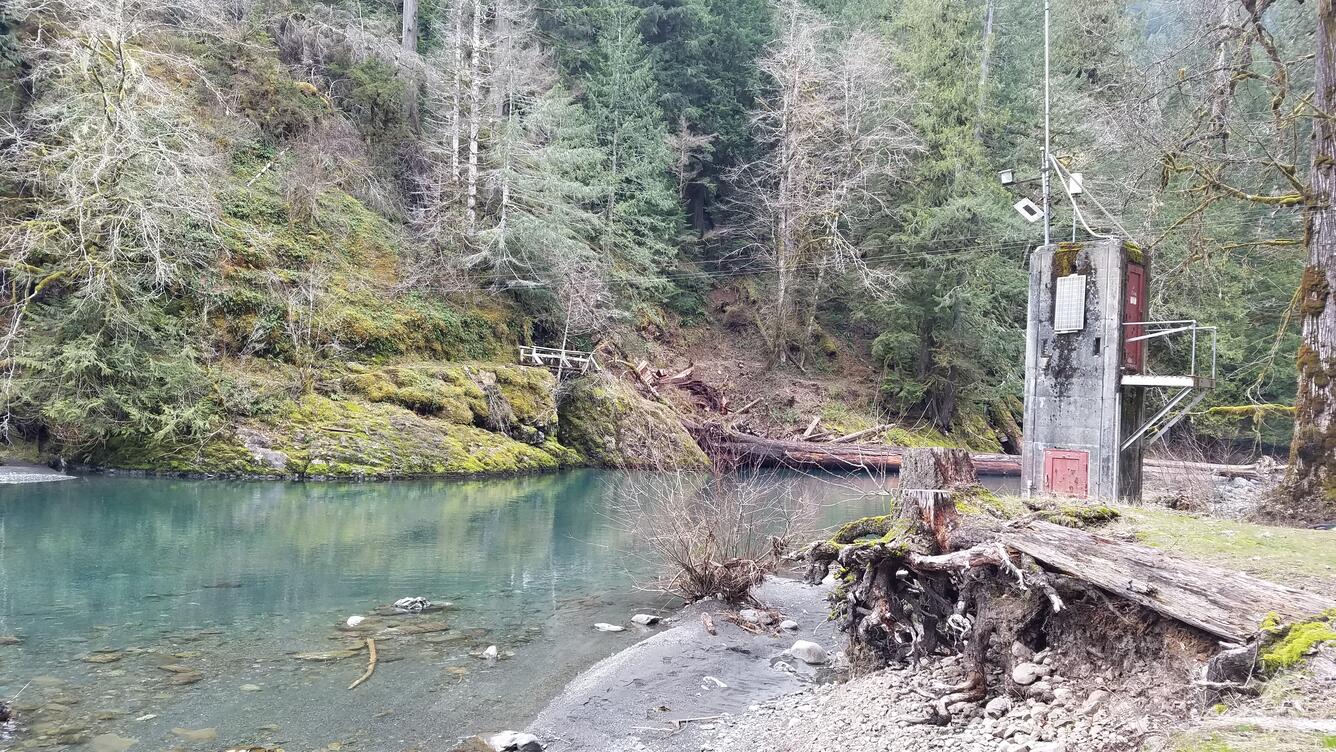
The USGS has monitored the NF Skokomish River for over 100 years. Established in 1924, the streamgage provides a long-term record of streamflow, allowing scientists to analyze trends in flow through time. In the 1990s, the NF Skokomish streamgage became part of the USGS National Water Quality Network. Technicians regularly collect water quality samples to track long-term water quality trends.
The pristine nature of the NF Skokomish watershed made it a useful reference site for evaluating streamflow and water quality conditions across the Nation. Following the 2025 wildfire, the long-term records offer a valuable opportunity to understand how rivers and streams respond to fire.
Learn more about USGS post-wildfire water quality research
Read more about How Wildfires Threaten U.S. Water Supplies
The USGS is monitoring water quality in the North Fork Skokomish River following the Bear Gulch Fire that burned in summer 2025. USGS has over 100 years of data from this river. Streamflow data support water supply management and flood prediction. Post-fire data provides an important window into how watersheds are shaped by fire.
In 2025, the Bear Gulch Fire burned over 20,000 acres in Olympic National Forest and Olympic National Park. The USGS already operated a streamgage on the North Fork Skokomish River, in cooperation with Tacoma Power, that provided real-time streamflow information. USGS also regularly sampled for water quality in the river as part of the National Water Quality Network.
Recognizing the need for timely information for emergency response and hazard mitigation, the USGS quickly added monitoring capabilities to our existing streamgage, including:
- Continuous monitoring of several water quality parameters
- Dissolved organic matter florescence (fDOM)
- Dissolved oxygen (DO)
- pH
- Specific conductance
- Turbidity
- Discrete sampling for additional water quality parameters
- Suspended sediment concentration
- Particulate carbon and nitrogen
- Stable isotopes of water
- Trace elements including mercury
Our field sampling schedule will now target important events, such as storms, in addition to routine visits.
Why post-fire monitoring matters
Streamflow and flood hazard response
The USGS provides continuous streamflow data to help the NPS, USFS, and emergency managers prepare for floods and protect lives and property. Wildfires can increase the risk of flooding and debris flows, and the USGS streamgage enables early flood warning.
Assessing water quality
The USGS works with federal and state land managers and local water providers to monitor and assess water quality after wildfires to help protect our Nation’s water resources. Wildfires pose a substantial risk to water supplies because they can deliver sediment, nutrients, and metals to rivers, lakes, and reservoirs. Wildfires can compromise water quality both during active burning and for months and years after the fire has been contained or extinguished.
USGS water quality data helps the NPS and water managers evaluate the cumulative effects of fire, and potential water-quality impacts on drinking-water supplies.
Protecting aquatic ecosystems
The USGS and NPS work together to assess how fire impacts river and lake ecosystems, to better protect these important resources. The Skokomish River and Lake Cushman are home to several ecologically and culturally significant fish, including several species of salmon and trout. Run-off from fires can harm ecosystems by introducing contaminants and changing habitat structure. The USGS and NPS repeatedly surveyed species living in the Skokomish River before the fire, which will help resource managers plan for and manage wildfire impacts.
Long-term monitoring of hydrologic processes:
The USGS has monitored the NF Skokomish River for over 100 years. Established in 1924, the streamgage provides a long-term record of streamflow, allowing scientists to analyze trends in flow through time. In the 1990s, the NF Skokomish streamgage became part of the USGS National Water Quality Network. Technicians regularly collect water quality samples to track long-term water quality trends.
The pristine nature of the NF Skokomish watershed made it a useful reference site for evaluating streamflow and water quality conditions across the Nation. Following the 2025 wildfire, the long-term records offer a valuable opportunity to understand how rivers and streams respond to fire.