Recent Accomplishments: The Skagit
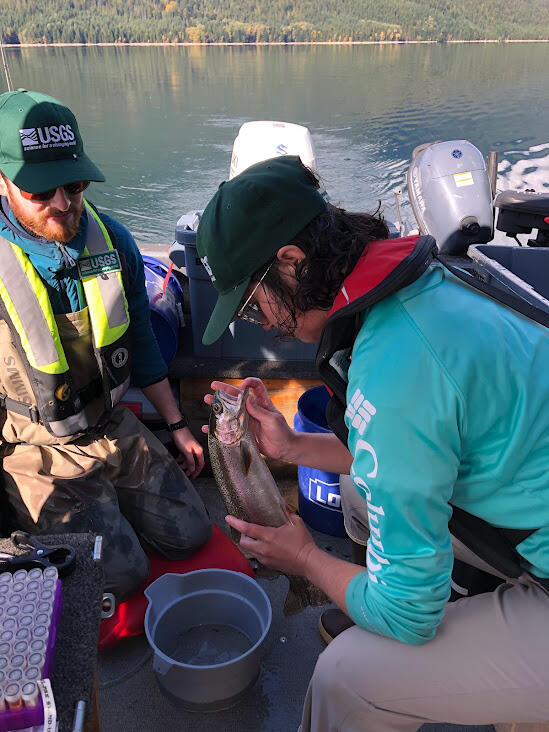
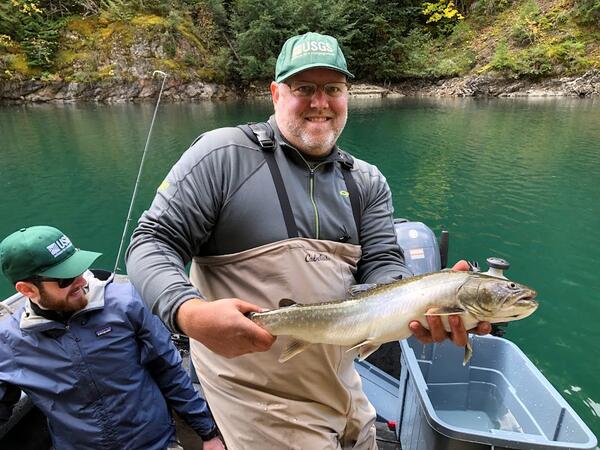
The WFRC has worked with Seattle City Light to investigate ecosystem conditions associated with three hydroelectric dams on the upper Skagit River in Whatcom County, northern Washington, asking how habitat availability and productivity may influence fish populations.
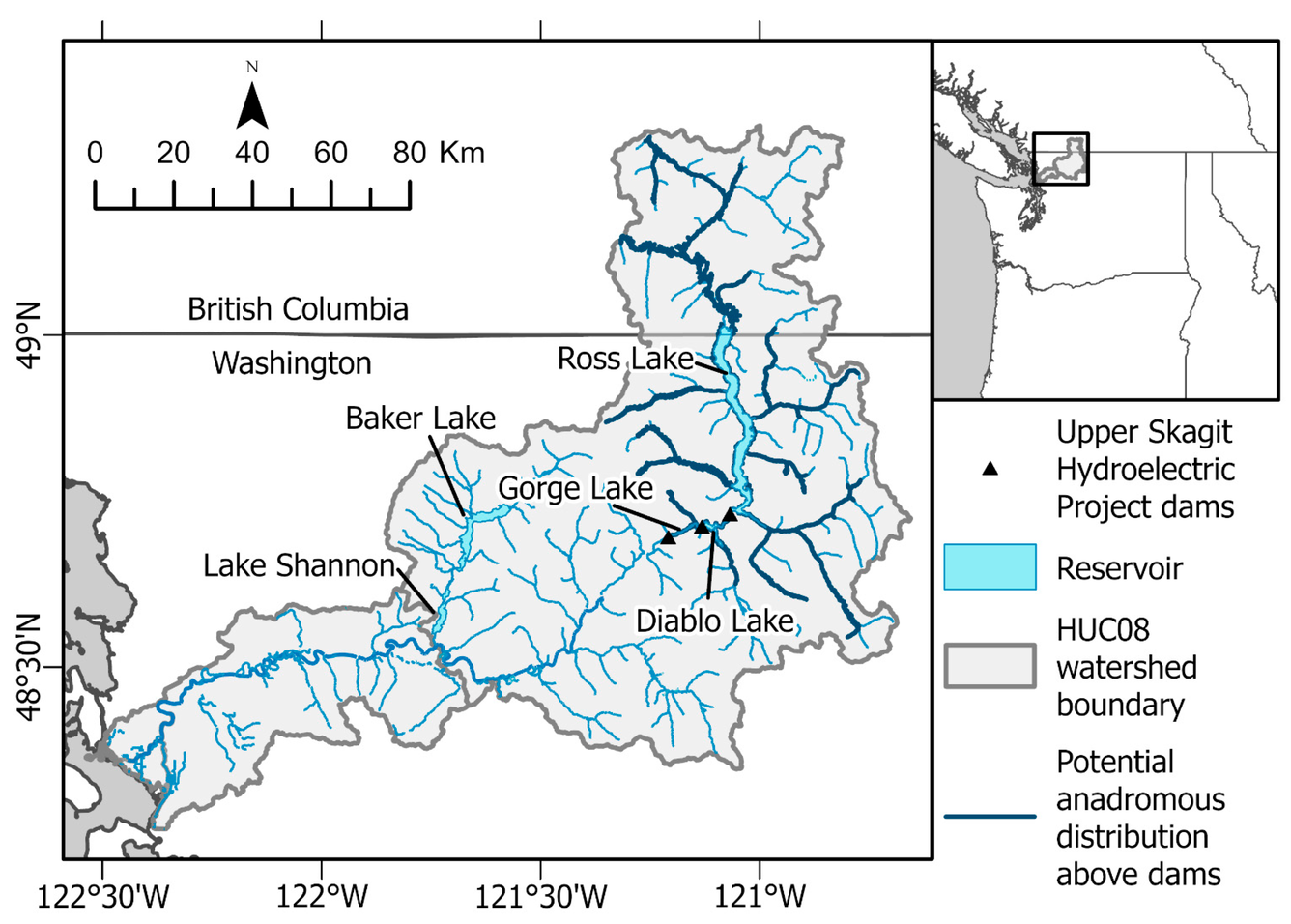
Since 2018, USGS Western Fisheries Research Center (WFRC) scientists have been partnering with Seattle City Light on river ecosystem science. Seattle City Light operates Ross, Diablo, and Gorge dams in the Upper Skagit River. Interest in exploring the opportunity for introducing ocean-going salmon, steelhead and bull trout above these dams as a means to enhance the recovery of these species has led to comprehensive research performed by WFRC. Studies have been focused on questions regarding how habitat, environmental conditions, and species interactions can influence the production of these and other salmonids in the dams’ reservoirs and their major tributaries.
In one Skagit study, WFRC scientists utilized intrinsic potential modeling to estimate the amount of physical habitat available upstream of the dams for anadromous coho salmon, Chinook salmon, and steelhead. Intrinsic potential models estimate the latent potential of stream reaches to provide favorable habitat characteristics for adult spawning and juvenile rearing. While the modeling identified a large amount of accessible habitat upstream of the dams (~470 river kilometers), much of this habitat was determined to be “low-quality" habitat for anadromous salmonids. For Chinook salmon, the only stream with significantly high-quality habitat was in the Canadian portion of the upper Skagit River (i.e., upstream from Ross Lake reservoir). For coho salmon, the models showed mostly low- and medium-quality habitat. The final fish examined, steelhead, had the most habitat rated as high quality, with 19 targeted tributaries showing greater than 1 km of high-quality habitat.
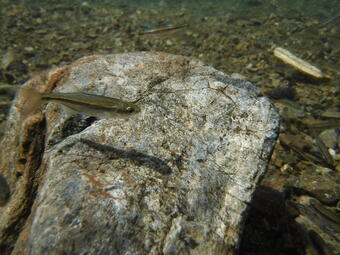
Given the amount of habitat favorable to steelhead found in the modeling exercise, results from a second study using bioenergetics simulations informed the growth potential of steelhead. Scientists compared potential growth rates of steelhead in tributaries to published growth rates of steelhead smolts downstream of the dams. By comparing these values, scientists sought to assess if growth potential above the dams was adequate to produce successful steelhead smolts, which could inform decisions about the potential for future introductions of salmon upstream from the dams. The researchers found that growth of rainbow trout (steelhead that stay in freshwater their entire lives versus migrating to the ocean) in the selected tributaries was low compared to steelhead smolts rearing downstream of the dams. Results further suggest rainbow trout growth is most likely limited by prey availability in the examined tributaries of the Upper Skagit.
A final study was conducted to evaluate factors that may influence the growth and survival of juvenile sockeye and Chinook salmon in Ross Lake reservoir, species that forage in lakes or reservoirs during their juvenile rearing phase. While scientists estimated that there was sufficient zooplankton available to support some smolt production, predation by native predators (rainbow and bull trout) could impose substantial mortality for lake-rearing juvenile salmon.
Through extensive research, WFRC scientists evaluated the salmonid growth potential of ecosystems above the Skagit River dams. Ultimately, they concluded that the combination of increased predation, limited food resources, and suboptimal habitat conditions may reduce the likelihood that introduced salmon and steelhead would thrive above the dams.