Celebrating an Aleutian Anniversary
A USGS-led expedition in the Aleutian Arc off Alaska will provide critical information on energy resources, underwater earthquakes and other hazards, seafloor habitats, and biological resources, including key fisheries, as well as potential seabed minerals. One USGS scientist celebrates a return to the Aleutians - 21 years later.
In 2004, I was early in my career and still figuring out what my lab was going to study, when I happened to read an article about cold-water corals. The article included a photo of a NOAA scientist, Bob Stone, holding up a red, branching coral that was almost as long as he was tall. My mind was blown! I hadn’t known cold-water corals even existed until that moment.
I cold emailed him (pun intended) and amazingly was invited to join his next research expedition! That is how I found myself in the Aleutian Arc on my first cold-water coral expedition and my first submersible dive, exactly 21 years ago this month.
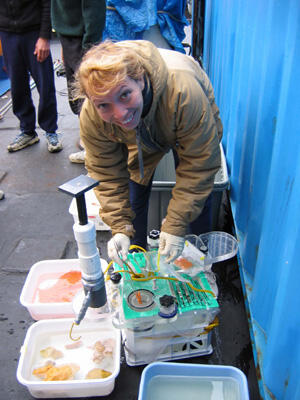
Image: USGS scientist Christina Kellogg aboard a research vessel in the Aleutian Islands in 2004.
We departed from the island of Adak and mainly worked around the Andreanof Islands. It turned out to be the start of something big. From then until now, about 75% of my research at USGS has been on cold-water (also known as deep-sea) corals, specifically identifying and studying the microbes associated with them.

In the same way that people have microbes in their guts and on their skin that help keep them healthy, so do corals. Each coral species has different microbes, so a basic first step to understanding their biology is to characterize their microbial communities. The microbial communities that thrive within coral tissues are critical for how these species survive in their environment. Studying deep-sea microbiomes also has applications for humans and can help us better understand antibiotic resistance and explore new drugs or treatments.

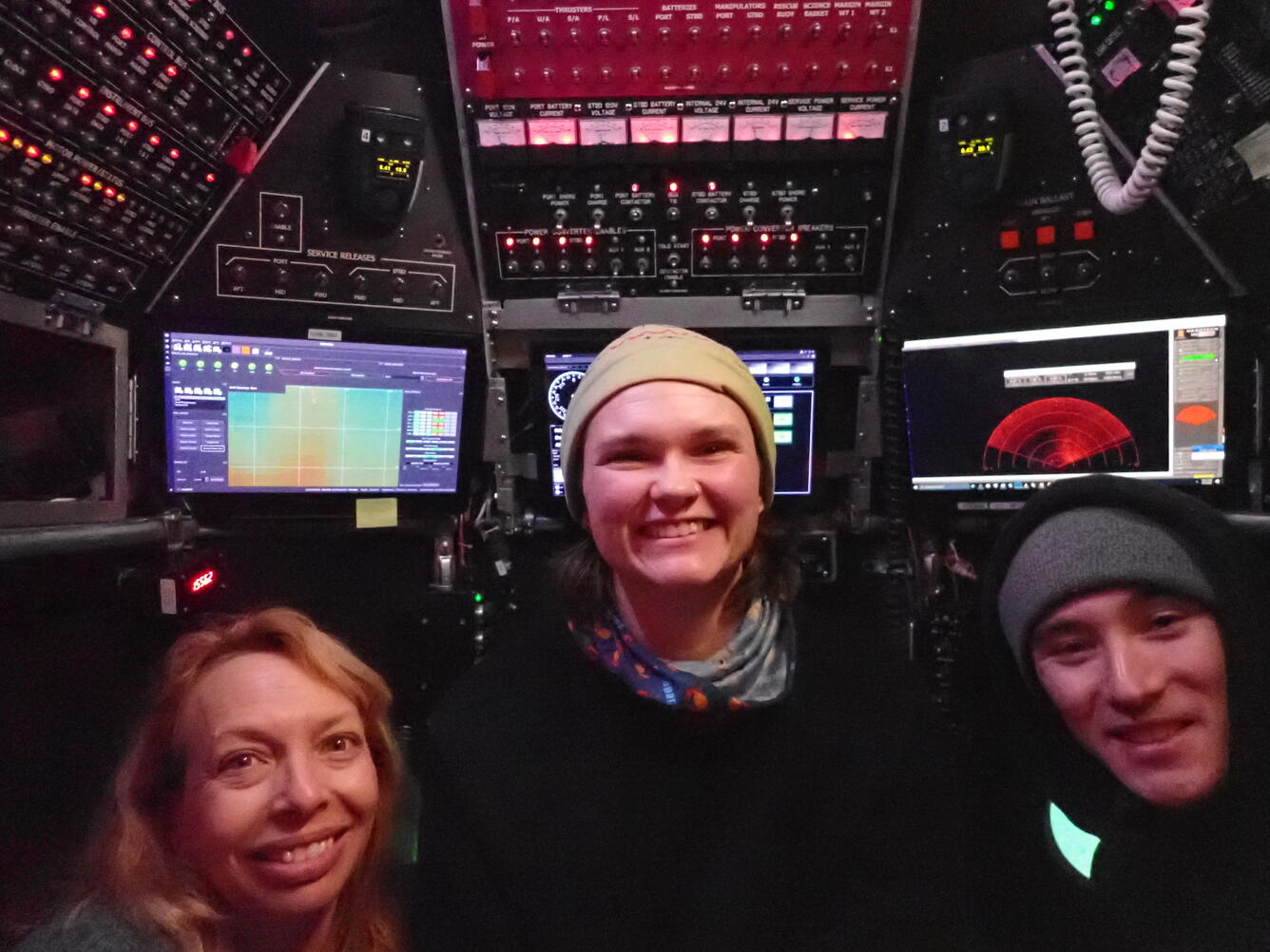
Coming back to the Aleutian Arc and being able to dive in the U.S. Navy's human occupied vehicle (HOV) Alvin (operated by the Woods Hole Oceanographic Institution) to study more of the unique corals in this area is a very big deal for me, and it was especially cool that my designated dive took place off the northern side of Adak Island, near where I had worked before. Except this time, I was able to go much deeper, 1,674 meters (just over a mile!) to be exact. My 2004 self could never have imagined how influential that first trip would be to my career, and the chance to bring it full circle by coming back 21 years later feels incredibly special.