



Environmental DNA Monitoring of Invasive Central American Boas in the U.S. Virgin Islands
The USGS, the National Park Service (NPS), and the U.S. Department of Agriculture (USDA) collaborated to survey for invasive Central American boas on St. Croix, U.S. Virgin Islands using environmental DNA (eDNA). Environmental DNA allows researchers to detect elusive species in challenging terrains without the need for direct observation; here eDNA was used to explore the spread of invasive boas within the Salt River Bay National Historical Park and Ecological Preserve (SARI).
The Science Issue and Relevance
Non-native species introductions are a major threat to island ecosystems, where invaders may prey on and compete with native species. Several Caribbean islands, including Aruba and two U.S. territories, the U.S. Virgin Islands (specifically, St. Croix) and Puerto Rico, have invasive populations of boa constrictors, which were likely introduced through the pet trade. Invasive boas appear to thrive on these islands due to their generalist and opportunistic predatory behavior, high reproductive output, and broad habitat tolerance. Since their establishment, invasive boas have been implicated in the declines of multiple native Caribbean bird and reptile populations.
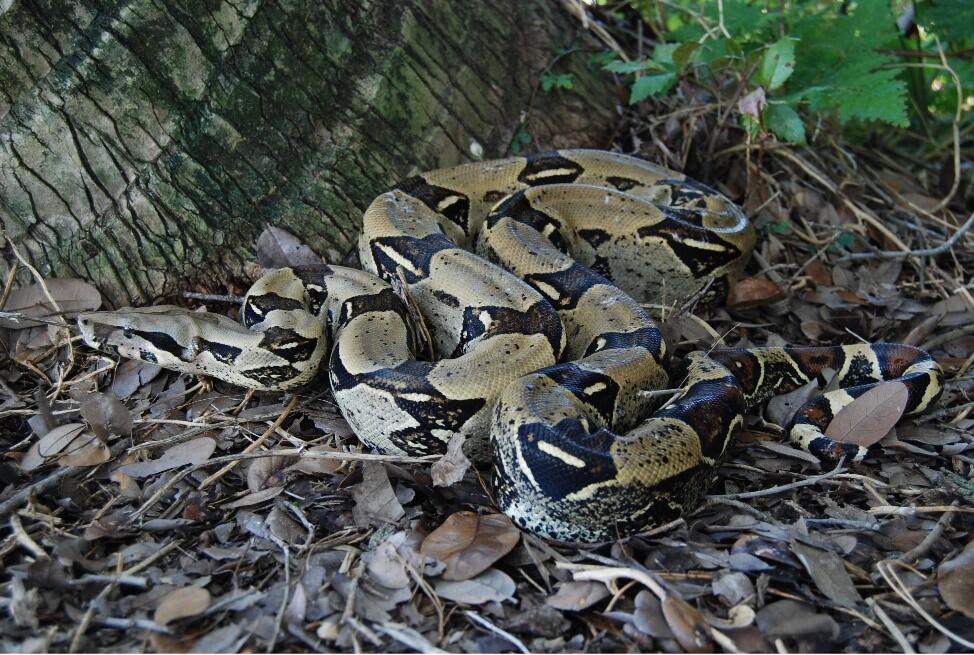
In St. Croix, Central American boas (Boa imperator) were first sighted in 2012 and now have an established population within the island’s western forests. However, because these boas are secretive, mostly nocturnal, and semi-arboreal, they are extremely difficult to locate using conventional methods such as visual surveys or traps. To address this issue and help determine Central American boa dispersal in the Salt River Bay National Historical Park and Ecological Preserve (SARI), researchers tested a previously developed environmental DNA (eDNA) assay (Hunter et al., 2015) designed to detect boa DNA in water samples. Environmental DNA is genetic material shed into the environment through skin, waste, or bodily fluids, and its use can aid or improve surveillance of elusive species in environments that may be difficult to access. This approach can be more sensitive than conventional methods, less disruptive to the environment and native species, and is scalable for long-term monitoring.
Methodology for Addressing the Issue
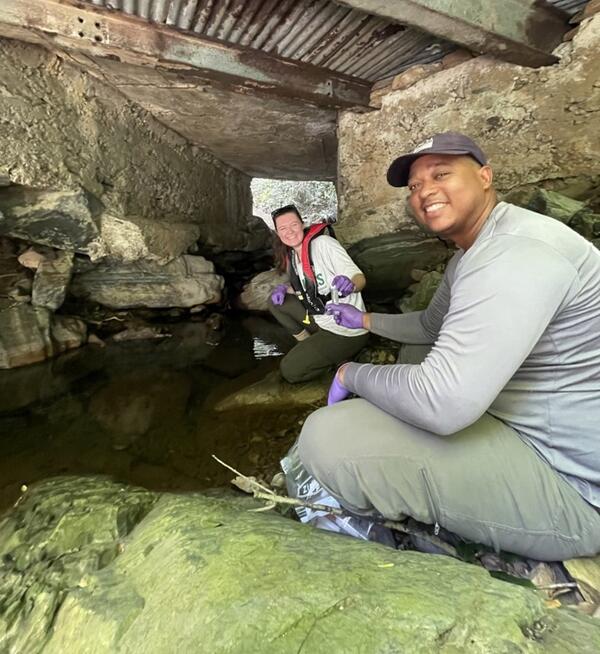
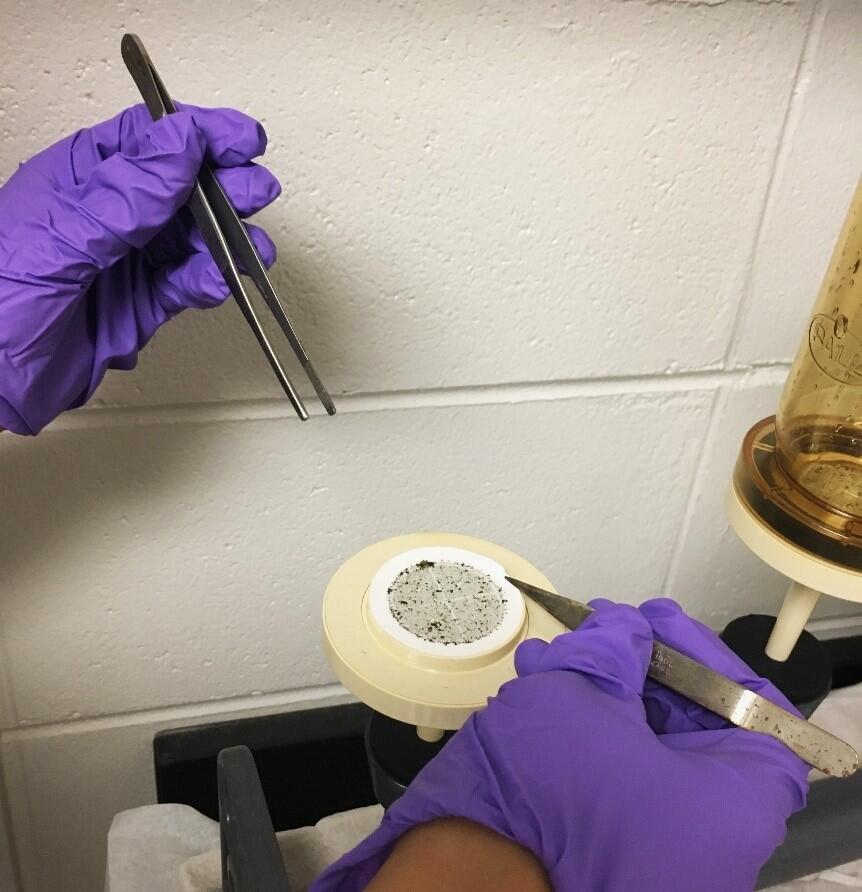
Researchers from the USGS, NPS, and USDA collected water samples from 22 sites across two regions of St. Croix: western forests where Central American boas are known to occur, and SARI, which is a protected area with international and archeological significance. The science team also tested water from a captive Central American boa’s enclosure to confirm the method worked under controlled conditions. Samples were filtered and processed to isolate eDNA, then analyzed via a highly sensitive technique called droplet digital polymerase chain reaction (ddPCR), which can detect a single copy of DNA.
Results and Next Steps
Successful detection of eDNA from the captive Central American boa enclosure confirmed the effectiveness of the assay. Low levels of boa eDNA were detected in both the western forests, where boas have been known to occur, and SARI, where they are unconfirmed, indicating a range expansion into this Ecological Preserve. Boas are challenging to detect using aquatic eDNA because of their semi-arboreal lifestyle and the fact that snakes generally tend to shed low amounts of DNA. Further, St. Croix’s hot, tropical environment can degrade eDNA more quickly than colder conditions. However, this study demonstrated that eDNA can be a valuable tool for early detection and monitoring of secretive invasive species.
To improve future survey efforts, exploring alternative sampling methods such as collecting eDNA from soil or tree bark swabs may be useful for detecting snake species that spend less time in water and in areas such as SARI that lack consistent water sources. Continued visual surveys and encouraging citizen science reports of invasive snake sightings would also assist with monitoring range expansion across the island and help to validate low concentration eDNA detections. Together, continued monitoring using a variety of strategies can inform removal efforts and help to protect St. Croix’s unique ecosystems from further harm.
The USGS, the National Park Service (NPS), and the U.S. Department of Agriculture (USDA) collaborated to survey for invasive Central American boas on St. Croix, U.S. Virgin Islands using environmental DNA (eDNA). Environmental DNA allows researchers to detect elusive species in challenging terrains without the need for direct observation; here eDNA was used to explore the spread of invasive boas within the Salt River Bay National Historical Park and Ecological Preserve (SARI).
The Science Issue and Relevance
Non-native species introductions are a major threat to island ecosystems, where invaders may prey on and compete with native species. Several Caribbean islands, including Aruba and two U.S. territories, the U.S. Virgin Islands (specifically, St. Croix) and Puerto Rico, have invasive populations of boa constrictors, which were likely introduced through the pet trade. Invasive boas appear to thrive on these islands due to their generalist and opportunistic predatory behavior, high reproductive output, and broad habitat tolerance. Since their establishment, invasive boas have been implicated in the declines of multiple native Caribbean bird and reptile populations.
In St. Croix, Central American boas (Boa imperator) were first sighted in 2012 and now have an established population within the island’s western forests. However, because these boas are secretive, mostly nocturnal, and semi-arboreal, they are extremely difficult to locate using conventional methods such as visual surveys or traps. To address this issue and help determine Central American boa dispersal in the Salt River Bay National Historical Park and Ecological Preserve (SARI), researchers tested a previously developed environmental DNA (eDNA) assay (Hunter et al., 2015) designed to detect boa DNA in water samples. Environmental DNA is genetic material shed into the environment through skin, waste, or bodily fluids, and its use can aid or improve surveillance of elusive species in environments that may be difficult to access. This approach can be more sensitive than conventional methods, less disruptive to the environment and native species, and is scalable for long-term monitoring.
Methodology for Addressing the Issue
Researchers from the USGS, NPS, and USDA collected water samples from 22 sites across two regions of St. Croix: western forests where Central American boas are known to occur, and SARI, which is a protected area with international and archeological significance. The science team also tested water from a captive Central American boa’s enclosure to confirm the method worked under controlled conditions. Samples were filtered and processed to isolate eDNA, then analyzed via a highly sensitive technique called droplet digital polymerase chain reaction (ddPCR), which can detect a single copy of DNA.
Results and Next Steps
Successful detection of eDNA from the captive Central American boa enclosure confirmed the effectiveness of the assay. Low levels of boa eDNA were detected in both the western forests, where boas have been known to occur, and SARI, where they are unconfirmed, indicating a range expansion into this Ecological Preserve. Boas are challenging to detect using aquatic eDNA because of their semi-arboreal lifestyle and the fact that snakes generally tend to shed low amounts of DNA. Further, St. Croix’s hot, tropical environment can degrade eDNA more quickly than colder conditions. However, this study demonstrated that eDNA can be a valuable tool for early detection and monitoring of secretive invasive species.
To improve future survey efforts, exploring alternative sampling methods such as collecting eDNA from soil or tree bark swabs may be useful for detecting snake species that spend less time in water and in areas such as SARI that lack consistent water sources. Continued visual surveys and encouraging citizen science reports of invasive snake sightings would also assist with monitoring range expansion across the island and help to validate low concentration eDNA detections. Together, continued monitoring using a variety of strategies can inform removal efforts and help to protect St. Croix’s unique ecosystems from further harm.