



Do earthquakes occur in Antarctica?
Earthquakes do occur in Antarctica, but not very often. There have been some big earthquakes--including one magnitude 8.1--in the Balleny Islands (between Antarctica and New Zealand). The boundary between the Scotia Plate and the Antarctic Plate just grazes the north tip of the Antarctic Peninsula (look "northwest" from the Pole toward South America). There is also a hint of a line of seismicity off the west coast of the Antarctic Peninsula and some activity in the Kerguelen Plateau (in the Indian Ocean "northeast" from the South Pole). The Kerguelen Plateau is within the Antarctic Plate but it is not part of the Antarctic Continent. As with the interior area of all tectonic plates, earthquakes can and do occur in Antarctica, but they are much less frequent than earthquakes on the plate boundaries.
Relative to other plates (such as Australia or North America), Antarctica has fewer seismic stations to record earthquakes in the interior. Even though there are 76 stations in Antarctica that report data to IRIS (Incorporated Research Institutions for Seismology), all but two of them are along the edge of the continent (as of April 2019). The Global Seismographic Network (GSN) has only 4 stations on Antarctica. In the absence of seismic stations throughout the continent, smaller earthquakes are much more likely to go undetected.
The interior of Antarctica also has icequakes which, although much smaller, are perhaps more frequent than earthquakes. Icequakes are similar to earthquakes but occur within the ice sheet itself instead of the land underneath the ice. Some polar observers have said they can hear the icequakes and see them on the South Pole seismograph station, but they are much too small to be seen on enough stations to obtain a location.
Learn more: Listening to the Earth at the South Pole

Related
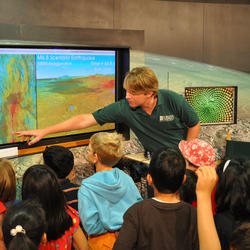
Where can I find earthquake educational materials? Where can I find earthquake educational materials?
Start with our Earthquake Hazards Education site. That includes: Earthquakes for Kids Cool Earthquake Facts Earthquake Science for Everyone Other good starting points include: State Geological Surveys for states in earthquake-prone regions The Great ShakeOut Earthquake Drills website SAGE (Seismological Facility for the Advancement of Geoscience), which is a non-profit consortium
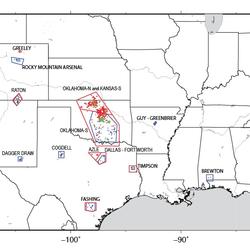
Can we cause earthquakes? Is there any way to prevent earthquakes? Can we cause earthquakes? Is there any way to prevent earthquakes?
Earthquakes induced by human activity have been documented at many locations in the United States and in many other countries around the world. Earthquakes can be induced by a wide range of causes including impoundment of reservoirs, surface and underground mining, withdrawal of fluids and gas from the subsurface, and injection of fluids into underground formations. While most induced earthquakes...
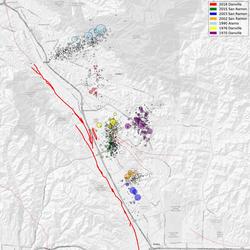
What is the difference between aftershocks and swarms? What is the difference between aftershocks and swarms?
Aftershocks are a sequence of earthquakes that happen after a larger mainshock on a fault. Aftershocks occur near the fault zone where the mainshock rupture occurred and are part of the "readjustment process” after the main slip on the fault. Aftershocks become less frequent with time, although they can continue for days, weeks, months, or even years for a very large mainshock. A swarm, on the...
Related
Where can I find earthquake educational materials? Where can I find earthquake educational materials?
Start with our Earthquake Hazards Education site. That includes: Earthquakes for Kids Cool Earthquake Facts Earthquake Science for Everyone Other good starting points include: State Geological Surveys for states in earthquake-prone regions The Great ShakeOut Earthquake Drills website SAGE (Seismological Facility for the Advancement of Geoscience), which is a non-profit consortium
Can we cause earthquakes? Is there any way to prevent earthquakes? Can we cause earthquakes? Is there any way to prevent earthquakes?
Earthquakes induced by human activity have been documented at many locations in the United States and in many other countries around the world. Earthquakes can be induced by a wide range of causes including impoundment of reservoirs, surface and underground mining, withdrawal of fluids and gas from the subsurface, and injection of fluids into underground formations. While most induced earthquakes...
What is the difference between aftershocks and swarms? What is the difference between aftershocks and swarms?
Aftershocks are a sequence of earthquakes that happen after a larger mainshock on a fault. Aftershocks occur near the fault zone where the mainshock rupture occurred and are part of the "readjustment process” after the main slip on the fault. Aftershocks become less frequent with time, although they can continue for days, weeks, months, or even years for a very large mainshock. A swarm, on the...