



GeoHEALTH—USGS Newsletter, August 2024
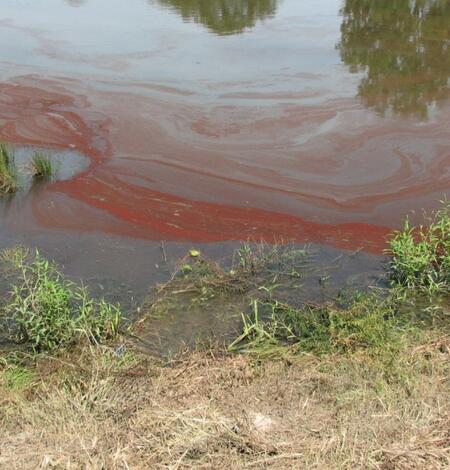
Toxin Producing Algae Across U.S. Landscapes—Are They Gaining a Foothold?
There are still many unknowns related to the occurrence and potential range of various types of algae in inland waters. To fill some of these gaps, scientists at the U.S. Geological Survey (USGS) recently published a review and synthesis of toxic algae in inland waters of the conterminous United States.

6PPDQ
6PPD-quinone is a compound used to make tires more durable and is also linked to toxicity for Coho Salmon and other aquatic species.
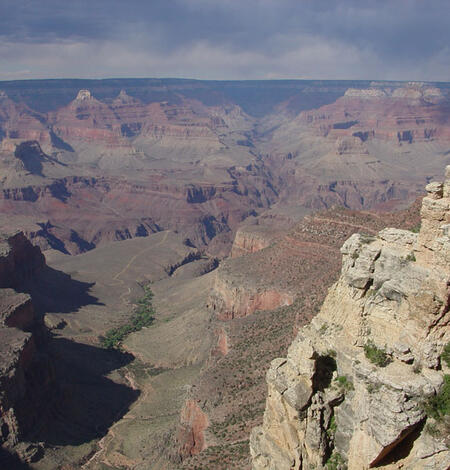
Human-Related Compounds in Water Sources in the Grand Canyon Help Identify Water Flow Pathways and Highlight Potential Water Quality Changes
U.S. Geological Survey (USGS) scientists investigated the movement of human-generated chemicals, such as pharmaceuticals and per- and polyfluorinated substances (PFAS), in groundwater along the South Rim of the Grand Canyon. This research led to a better understanding of the movement of wastewater into groundwater, of complex underground flow patterns, and of chemicals present in springs near...
Environmental Health Program's One Health Approach
Recognizes the interdependence of human and animal health and the health of ecosystems that they share.

U.S. Geological Survey Develops Per- and Polyfluoroalkyl Substances (PFAS) Sampling Guide
USGS scientist’s published a Per- and Polyfluoroalkyl Substances (PFAS) sampling guide for personnel involved with Natural Resource Damage Assessment and Restoration (NRDAR) activities. This guide introduces individuals involved in NRDAR efforts and other investigators to key concepts and considerations when sampling different environmental media for PFAS.

USGS Science Opportunities Related to the Nationally Relevant Study of Microplastics
USGS recently (2024) released a strategic vision document that identifies science gaps and prioritizes research relevant to the mission, expertise, and capabilities of the USGS. The intention is for USGS and stakeholders to use this as a starting part for planning, prioritizing, and designing microplastic research projects.
U.S. Geological Survey Science Opportunities Related to the Nationally Relevant Study of Harmful Algal Blooms and Algal Toxins
In 2024, the U.S. Geological Survey (USGS) released a strategic vision document identifying harmful algal bloom (HAB) and algal toxin science gaps, while prioritizing research relevant to the mission, expertise, and capabilities of the USGS. The intention is for USGS and stakeholders to use this document as a starting point for planning, prioritizing, and designing future HAB and algal toxin...
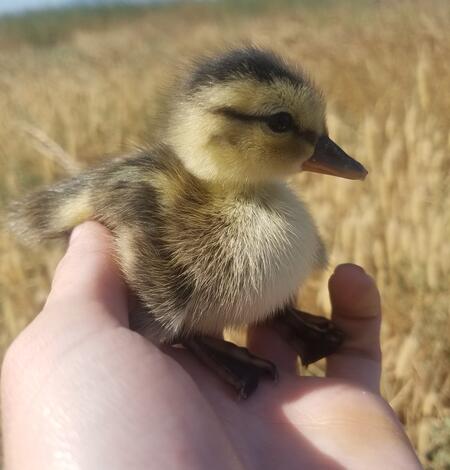
Estimating Methylmercury Injury to Birds—“The Bird Mercury Tool”
U.S. Geological Survey (USGS) scientists have developed a tool that can be used by practitioners to help interpret injury to birds caused by methylmercury contamination. This tool was developed from a comprehensive review of 168 studies and summarizing data on the effects of methylmercury on birds.

