



Paleomagnetic analysis is (super) cool with a cryogenic magnetometer
A cryogenic magnetometer may sound like something out of a scifi show, but it's actually an important tool for figuring out the eruption histories at volcanoes.
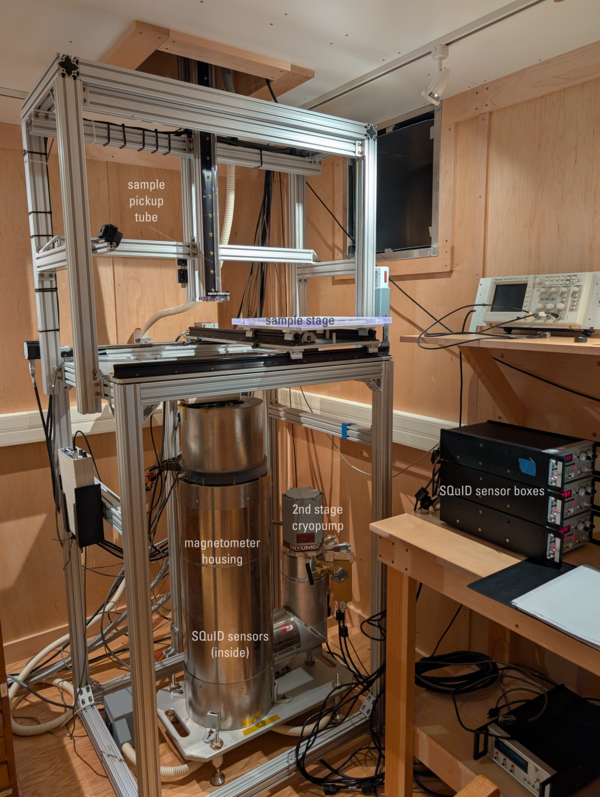
The amalgamation of 80-20 aluminum, cables, boxes, and silver cylinders shown in this photo is the heart of CalVO’s Paleomagnetics Laboratory: A cryogenic magnetometer with an attached sample handling system. "Cryogenic" refers to the behavior of material at very low temperatures, and a magnetometer measures the magnetic signatures of rock samples. A cryogenic magnetometer, therefore, operates at very low temperatures to take measurements of the magnetic field in rock samples, as part of the study the eruptive timescales of volcanoes. The direction and intensity of the Earth's magnetic field is recorded by certain minerals in volcanic rocks. By comparing the magnetic signature of a rock of unknown age to our records of the Earth's magnetic field, scientists can determine the age of the rock. Since the Earth's magnetic field moves around, the history of a volcanic eruption can be illustrated by the changing or even unchanging magnetic record within rock samples. If the magnetic signals all look the same, it implies the eruption was brief, since the magnetic field did not change much.
To analyze a rock sample in a cryogenic magnetometer, 1-inch-diameter cylinders of rock are picked up off the sample stage by a thin-walled quartz glass tube which has a very low magnetic signature. The sample is lowered into the magnetometer housing, down to the three cryopump-cooled SQuID sensors. Not of the cephalopod variety, these sensors are fully known as Superconducting Quantum Interference Detectors. They take advantage of material behavior at the ultra-low temperatures to make precise measurements of the magnetic field recorded within samples. The wood housing of the cryogenic magnetometer is another instrument, in a way: It is a shielded room where Earth’s magnetic field is damped to less than 1% of its typical strength. This setup allows the magnetic direction recorded in samples to be better measured without interference from Earth’s field. If you look closely at the screws in the walls, you may notice they are yellow brass, a non-magnetic material.
The paleomagnetic techniques employed at CalVO's Paleomagnetics Laboratory are an important part of building eruption histories, especially when other techniques (such as isotopic dating) don't work well. That's why paleomagnetics can definitely seem like magic!