



Photo & Video Chronology – August 25, 2025 – Sampling episode 31 at the summit of Kīlauea
By Hawaiian Volcano Observatory
August 25, 2025
On August 25, 2025, USGS Hawaiian Volcano Observatory field crews sampled lava and tephra from episode 31 during a morning monitoring overflight of Kīlauea summit. Episode 31 of the ongoing Halemaʻumaʻu eruption began at 2:04 p.m. HST on August 22 and ended at 2:52 a.m. HST on August 23 after nearly 13 hours of continuous fountaining.
Media
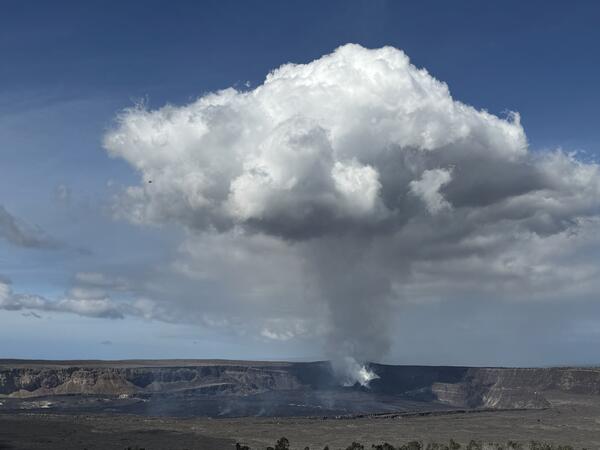
A helicopter can be seen in the upper left portion of the photo, with USGS Hawaiian Volcano Observatory geologists onboard conducting a photogrammetric survey of Halema‘uma‘u crater floor following the episode 31 lava fountaining on August 22-23, 2025. The passive outgassing plume originates from the vent complex that has been active in the current eruption. USGS photo by M. Patrick.
Sources/Usage: Public Domain. View Media Details
Media
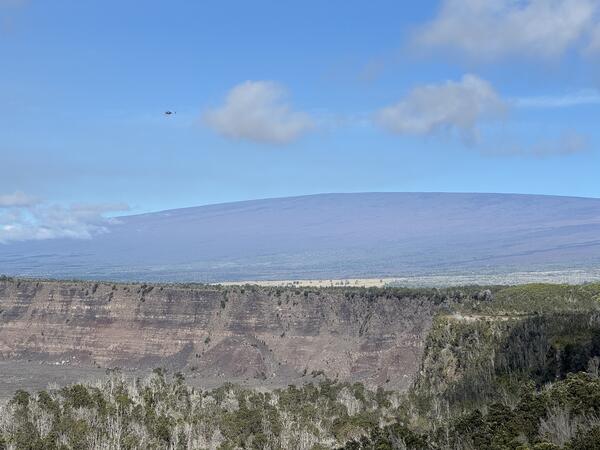
A helicopter carries USGS Hawaiian Volcano Observatory geologists over Wahinekapu (Steaming Bluff) as it flies over Kīlauea's summit caldera to conduct a photo survey following the episode 31 lava fountaining. Mauna Loa can be seen in the distance. USGS photo by M. Patrick.
Sources/Usage: Public Domain. View Media Details
Media
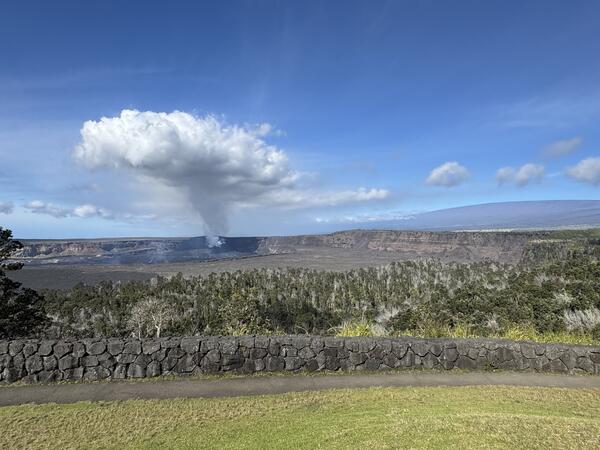
Clear weather provided good conditions for a helicopter overflight of Kīlauea summit the morning of August 25, 2025. The overflight allowed USGS Hawaiian Volcano Observatory geologists to conduct a photogrammetric survey of the crater floor following the episode 31 lava fountaining late last week, as well as to collect lava samples. The passive outgassing plume rises from the vent complex that has been active in the western end of the crater. USGS photo by M. Patrick.
Sources/Usage: Public Domain. View Media Details
Media
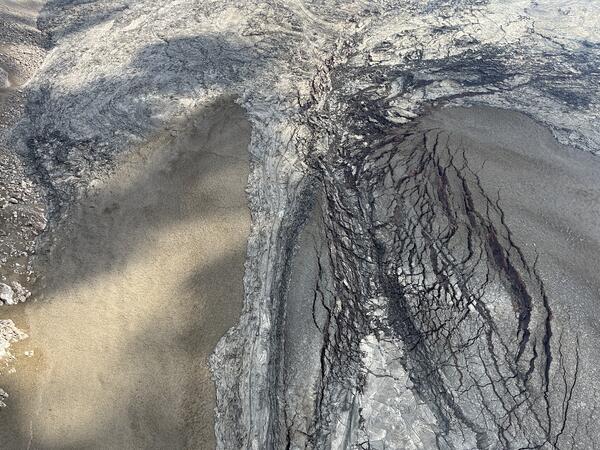
During a Kīlauea monitoring overflight on August 25, 2025, USGS Hawaiian Volcano Observatory field crews documented the proximal channel that fed lava flows from the north vent to the floor of Halema‘uma‘u during episode 31. This image, looking to the north (the north vent is just out of sight to the bottom of the photo), shows the proximal Pāhoehoe channel flanked by lighter brown tephra deposits to the left and right. USGS photo by K. Lynn.
Sources/Usage: Public Domain. View Media Details
Media
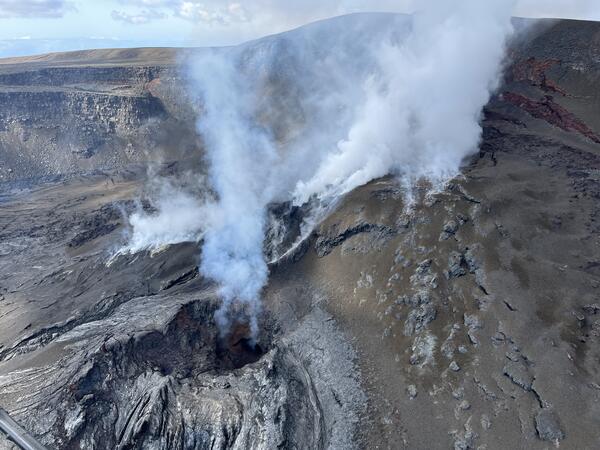
During a Kīlauea summit monitoring overflight on August 25, 2025, USGS Hawaiian Volcano Observatory field crews documented the geometry of the north vent that fountained predominantly during episode 31. The conduit is at a high angle into the southwest wall of the north vent. USGS photo by K. Lynn.
Sources/Usage: Public Domain. View Media Details
Media
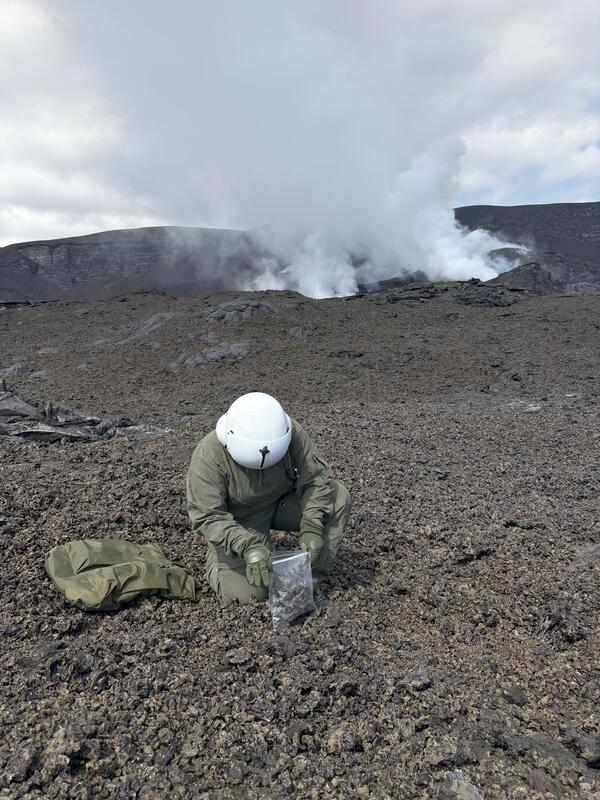
On August 25, 2025, USGS Hawaiian Volcano Observatory field crews sampled lava and tephra from episode 31 during a morning monitoring overflight of Kīlauea summit. Samples from the episode will be later analyzed in the lab to track changes in the chemistry of erupted material and help scientists understand the processes driving the 2024-2025 episodic eruption. USGS photo by P. Dotray.
Sources/Usage: Public Domain. View Media Details