



Photo & Video Chronology — March 21, 2025 — Observing the effects of episode 14, Kīlauea summit eruption
By Hawaiian Volcano Observatory
March 24, 2025
Episode 14 of the ongoing Halemaʻumaʻu eruption of Kīlauea within Hawaiʻi Volcanoes National Park started at 9:26 a.m. HST on March 19, and ended at 1:49 p.m. HST on March 20. The episode lasted over 28 hours with the last 7 hours consisting of fountains up to 600 feet (180 meters) high predominantly from the south vent.
Media
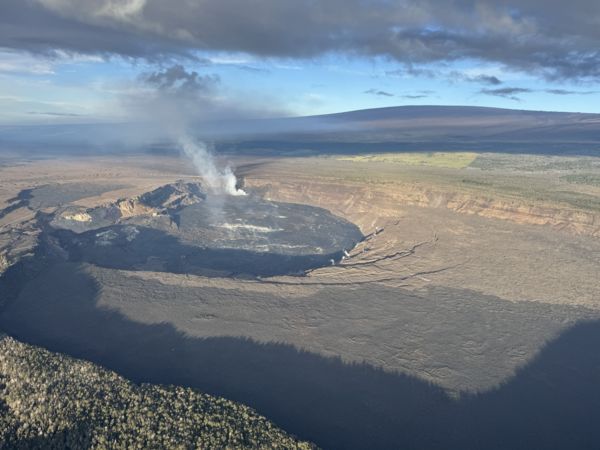
An early morning overflight on March 21 allowed HVO geologists to conduct a new photo survey of the crater floor to measure the volume of erupted material from the latest fountaining episode. Fountaining ended yesterday, March 20, and this morning only a degassing plume was exiting the vents. USGS photo by M. Patrick.
Sources/Usage: Public Domain. View Media Details
Media
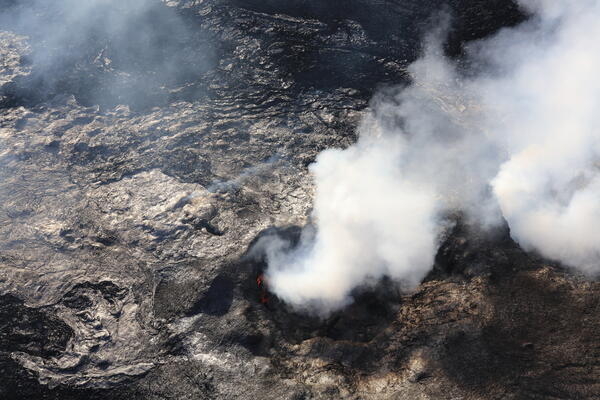
The vent craters within Halema‘uma‘u were mostly obscured by the thick degassing plume the morning of March 21, but there were fleeting views of incandescence in the north crater. This photo shows what appeared to be a small collapse of the crater walls exposing hot material deposited from yesterday's fountaining, as opposed to fresh lava in the crater. A small amount of incandescence could be seen within the conduit, but it was unclear how active this surface was. USGS photo by N. Deligne.
Sources/Usage: Public Domain. View Media Details
Media
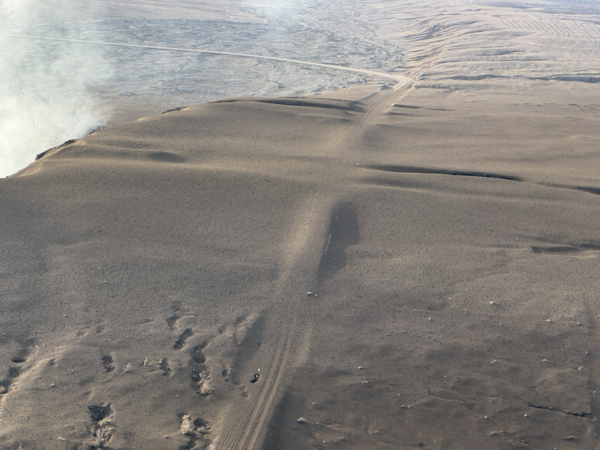
The recent fountaining episodes at the summit of Kīlauea have covered the closed portion of Crater Rim Drive in Hawai‘i Volcanoes National Park with a significant amount of tephra. Tephra is the term for volcanic fragments that the travel through the air before being deposited on the ground. The lava fountaining yesterday, March 20, covered up tire tracks from vehicles used by USGS Hawaiian Volcano Observatory geologists to access and monitor the eruption site. The deposition of this new material underscores the hazardous nature of this area, which is typically downwind of the erupting vents. USGS photo by M. Patrick.
Sources/Usage: Public Domain. View Media Details
Media
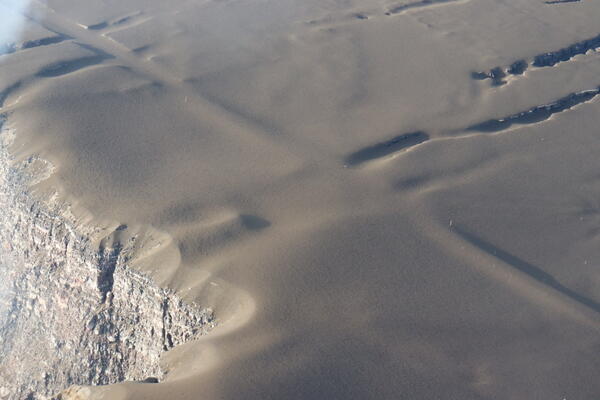
Another view of the tephra covering Crater Rim Drive, at the summit of Kīlauea volcano. The tephra has also partially filled in some of the Southwest Rift Zone cracks that run perpendicular to the roadway. USGS photo by A. Flinders.
Sources/Usage: Public Domain. View Media Details
Media
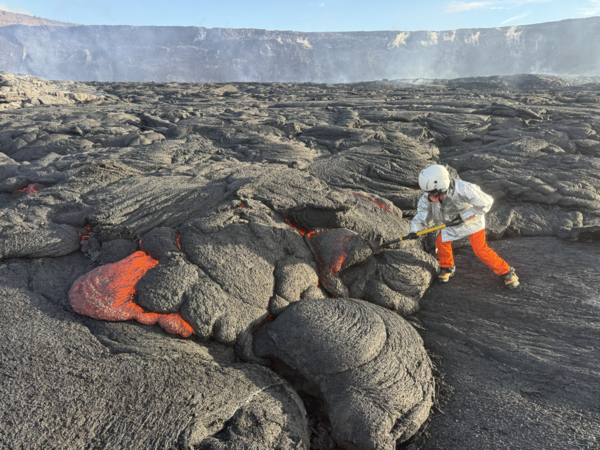
On March 21, USGS Hawaiian Volcano Observatory geologists sampled a small lobe of active lava in the eastern portion of Halema‘uma‘u crater, which represented residual lava oozing out from beneath the solidified crater floor. These ooze-outs have been common following fountaining episodes. Chemical analyses of these samples will help us to understand the processes occurring beneath the surface, as the magma travels upwards to erupt. All sampling in this hazardous area is down with permission from Hawai‘i Volcanoes National Park and informs hazard assessment of the ongoing eruption. USGS photo by M. Patrick.
Sources/Usage: Public Domain. View Media Details