



GameBirds Data Release: Providing scientists with valuable data year after year
The U.S. Geological Survey (USGS) Eastern Ecological Science Center’s (EESC) Bird Banding Laboratory (BBL) releases the North American Bird Banding Program’s GameBirds dataset every summer, marking the culmination of the annual waterfowl data cycle.
The North American Bird Banding Program (NABBP)—a partnership between the BBL and Canada’s Bird Banding Office—collects, curates, manages, and disseminates essential bird banding data for researchers and managers of waterfowl and other gamebirds across the continent. The NABBP’s updated Gamebirds dataset is a vital tool used by the U.S. Fish and Wildlife Service, Flyway Councils, state and provincial agencies, and researchers to set hunting regulations, manage waterfowl populations, and better understand the environmental drivers of migratory bird population dynamics.
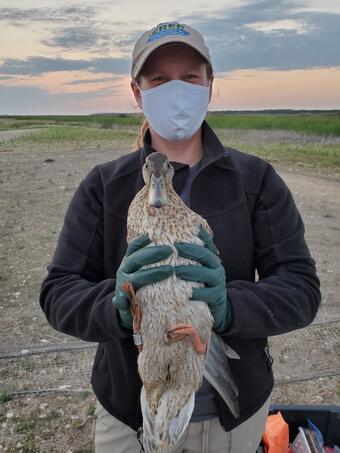
Waterfowl Management – Preserving Birds on the Landscape for Science and Heritage
Management of gamebirds, and particularly waterfowl, in North America presents unique challenges, including the continent’s vast spatial scale, diverse habitats and ecosystems, and the wide range of species involved. Managers then must rely on a diverse set of tools to address complex ecological and regulatory challenges. One of the most powerful tools is bird banding and recovery data, a collaborative effort uniting scientists, researchers, and members of the public through the NABBP. The NABBP database houses over 85 million banding records and upwards of 5.5 million encounter records from as early as 1920. Although the BBL was originally conceived with waterfowl management in mind, the NABBP dataset now includes banding records for more than 1,000 species of birds, including songbirds, hummingbirds, raptors, shorebirds, and more.
Banding data, and especially the GameBirds dataset, are essential to effective waterfowl management and sustaining healthy populations through science-informed decision making. The detailed information collected by banders at the time of capture (such as age, sex, weight, molt patterns, presence of injuries or disease, etc.), paired with hunter-reported recoveries, provide critical insights into when, where, and how many birds of which species are harvested annually. Once data are cleaned and compiled into the annual GameBirds dataset by the NABBP, gamebird managers apply a suite of analytical tools to the dataset to forecast population trends, set science-based harvest limits, minimize risk of overharvest and safeguard vulnerable species. Through the GameBirds dataset, the NABBP brings together scientists, managers and hunters to ensure sustainable harvest of migratory game birds and healthy bird populations that will enable the waterfowl hunting tradition to be enjoyed by many generations to come. And, thanks to successful research, conservation and management, waterfowl populations are up 50% since the 1970s.
The Annual Cycle of Birds and Data Management
Every year, waterfowl embark on a seasonal journey, moving across the landscape to meet their needs. In spring, birds begin their northward migration to their summer breeding grounds. In the fall, they reverse course and head south for warmer habitats. Those that survive the challenges of winter, including the cold temperatures, scarce resources and hunting pressure, will return north again to repeat the cycle.
Just like the ducks and geese, staff at the BBL go through their own annual cycle.
- During the spring, the BBL is busy issuing new banding permits, modifying existing permits, and fulfilling band orders for bird banders getting ready for spring and summer banding seasons.
- In the summer, permitted banders head out across the country to band gamebirds on breeding grounds and submit their banding data to the BBL. The BBL collects and curates the banding data for around 330,000 gamebirds each year.
- From late-August through March, hunting season is in full flight and encounter records of banded birds are flying into the lab. BBL staff review reports of more than 89,000 gamebirds each year, including nearly 62,000 harvested waterfowl.
- Through the spring and early summer, BBL staff work diligently to curate and quality-check encounter data received during the previous year. By the end of July, their efforts culminate in the annual GameBirds dataset, a vital resource that drives informed, science-based waterfowl management across North America.
- As waterfowl return to breeding grounds, the cycle continues for the birds and the BBL, just as it has since the establishment of the BBL in 1920.
You Too Can Contribute to Waterfowl Conservation!
When you see or harvest a banded gamebird, be sure to report it at reportband.gov. Your report becomes part of the next GameBirds dataset – directly supporting future conservation efforts and helping guide science-based management decisions and conservation actions by U.S. Fish and Wildlife Service, Migratory Bird Flyway Councils, state and provincial fish and wildlife agencies, and additional partners across North America.
The U.S. Geological Survey (USGS) Eastern Ecological Science Center’s (EESC) Bird Banding Laboratory (BBL) releases the North American Bird Banding Program’s GameBirds dataset every summer, marking the culmination of the annual waterfowl data cycle.
The North American Bird Banding Program (NABBP)—a partnership between the BBL and Canada’s Bird Banding Office—collects, curates, manages, and disseminates essential bird banding data for researchers and managers of waterfowl and other gamebirds across the continent. The NABBP’s updated Gamebirds dataset is a vital tool used by the U.S. Fish and Wildlife Service, Flyway Councils, state and provincial agencies, and researchers to set hunting regulations, manage waterfowl populations, and better understand the environmental drivers of migratory bird population dynamics.
Waterfowl Management – Preserving Birds on the Landscape for Science and Heritage
Management of gamebirds, and particularly waterfowl, in North America presents unique challenges, including the continent’s vast spatial scale, diverse habitats and ecosystems, and the wide range of species involved. Managers then must rely on a diverse set of tools to address complex ecological and regulatory challenges. One of the most powerful tools is bird banding and recovery data, a collaborative effort uniting scientists, researchers, and members of the public through the NABBP. The NABBP database houses over 85 million banding records and upwards of 5.5 million encounter records from as early as 1920. Although the BBL was originally conceived with waterfowl management in mind, the NABBP dataset now includes banding records for more than 1,000 species of birds, including songbirds, hummingbirds, raptors, shorebirds, and more.
Banding data, and especially the GameBirds dataset, are essential to effective waterfowl management and sustaining healthy populations through science-informed decision making. The detailed information collected by banders at the time of capture (such as age, sex, weight, molt patterns, presence of injuries or disease, etc.), paired with hunter-reported recoveries, provide critical insights into when, where, and how many birds of which species are harvested annually. Once data are cleaned and compiled into the annual GameBirds dataset by the NABBP, gamebird managers apply a suite of analytical tools to the dataset to forecast population trends, set science-based harvest limits, minimize risk of overharvest and safeguard vulnerable species. Through the GameBirds dataset, the NABBP brings together scientists, managers and hunters to ensure sustainable harvest of migratory game birds and healthy bird populations that will enable the waterfowl hunting tradition to be enjoyed by many generations to come. And, thanks to successful research, conservation and management, waterfowl populations are up 50% since the 1970s.
The Annual Cycle of Birds and Data Management
Every year, waterfowl embark on a seasonal journey, moving across the landscape to meet their needs. In spring, birds begin their northward migration to their summer breeding grounds. In the fall, they reverse course and head south for warmer habitats. Those that survive the challenges of winter, including the cold temperatures, scarce resources and hunting pressure, will return north again to repeat the cycle.
Just like the ducks and geese, staff at the BBL go through their own annual cycle.
- During the spring, the BBL is busy issuing new banding permits, modifying existing permits, and fulfilling band orders for bird banders getting ready for spring and summer banding seasons.
- In the summer, permitted banders head out across the country to band gamebirds on breeding grounds and submit their banding data to the BBL. The BBL collects and curates the banding data for around 330,000 gamebirds each year.
- From late-August through March, hunting season is in full flight and encounter records of banded birds are flying into the lab. BBL staff review reports of more than 89,000 gamebirds each year, including nearly 62,000 harvested waterfowl.
- Through the spring and early summer, BBL staff work diligently to curate and quality-check encounter data received during the previous year. By the end of July, their efforts culminate in the annual GameBirds dataset, a vital resource that drives informed, science-based waterfowl management across North America.
- As waterfowl return to breeding grounds, the cycle continues for the birds and the BBL, just as it has since the establishment of the BBL in 1920.
You Too Can Contribute to Waterfowl Conservation!
When you see or harvest a banded gamebird, be sure to report it at reportband.gov. Your report becomes part of the next GameBirds dataset – directly supporting future conservation efforts and helping guide science-based management decisions and conservation actions by U.S. Fish and Wildlife Service, Migratory Bird Flyway Councils, state and provincial fish and wildlife agencies, and additional partners across North America.