



External factors relating to the social and ecological aspects of chronic wasting disease (CWD)


Detailed Description
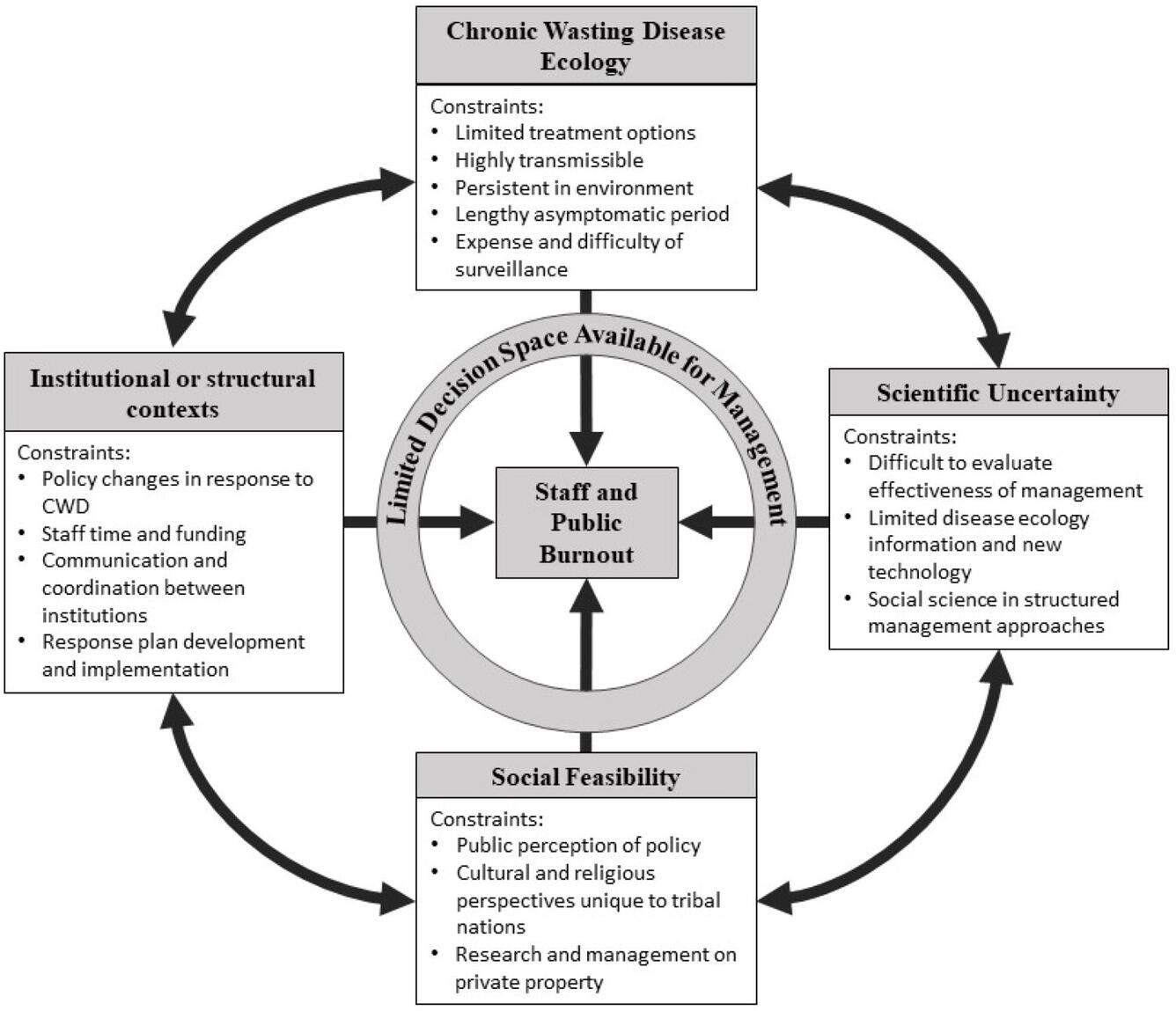
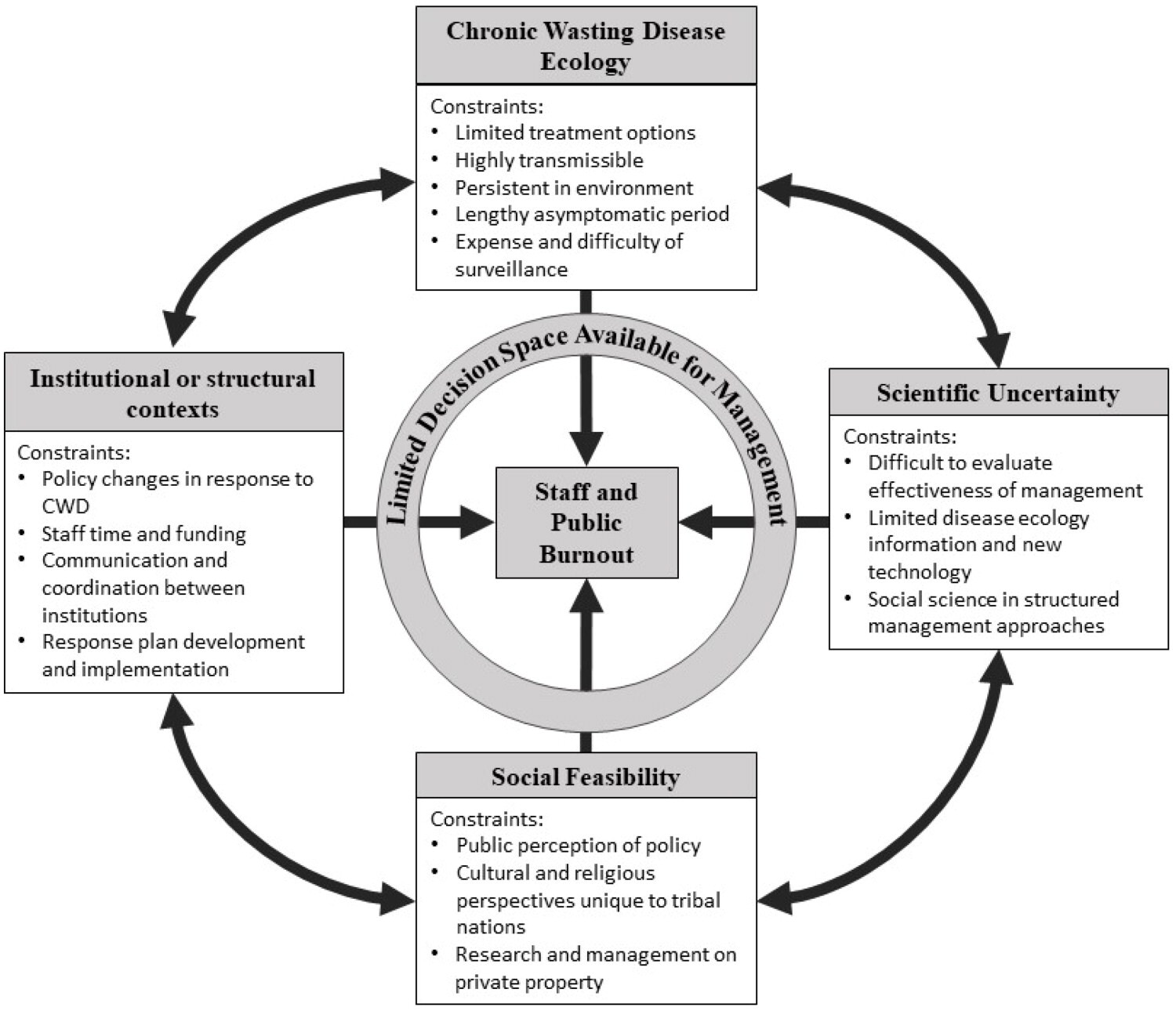
A conceptual model describing identified relationships in the decision space framework. The identified themes and subthemes representing the external factors of the decision space framework (Clifford et al. 2022) and how it appears to interact with the ecology of chronic wasting disease and contributes to perceived burnout among study participants.
At the center, is Staff and Public Burnout, and how the Limited Decision Support Available for Management is affected by external constraints such as:
Chronic Wasting Disease Ecology
- Limited treatment options
- Highly transmissible
- Persistent in environment
- Lengthy asymptomatic period
- Expense and difficulty of surveillance
Scientific Uncertainty
- Difficult to evaluate effectiveness of management
- Limited disease ecology information and new technology
- Social science in structured management approaches
Social Feasibility
- Public perception of policy
- Cultural and religious perspectives unique to Tribal nations
- Research and management on private property
Institutional or Structural Contexts
- Policy changes in response to CWD
- Staff time and funding
- Communication and coordination between institutions
- Response plan development and implementation
Figure published in:
Sources/Usage
Related

Chronic wasting disease and cervid health—2025 highlights
USGS scientists are advancing surveillance, diagnostics, ecological modeling, and decision-support tools to help wildlife managers respond to Chronic Wasting Disease across North America.
Related
Chronic wasting disease and cervid health—2025 highlights
USGS scientists are advancing surveillance, diagnostics, ecological modeling, and decision-support tools to help wildlife managers respond to Chronic Wasting Disease across North America.