



Chronic wasting disease and cervid health—2025 highlights
USGS scientists are advancing surveillance, diagnostics, ecological modeling, and decision-support tools to help wildlife managers respond to Chronic Wasting Disease across North America.
What is chronic wasting disease?
Chronic Wasting Disease is a fatal disease that affects deer, elk, and moose. It spreads through direct contact and the environment, and there is no cure or vaccine.
Protecting food, culture, and wildlife
CWD remains one of the most significant and complex wildlife disease challenges facing natural resource managers, intersecting wildlife health, food security, hunting traditions, and rural economies. Healthy cervid populations have supported hunting, wildlife viewing, and local economies for over a century, functioning much like a stable natural resource.
Big‑game hunting is the most common form of hunting in the United States, with 80 percent of hunters participating according to the 2022 USFWS survey. More than 11.5 million big‑game hunters spend an average of 12 days in the field across eight trips each year, underscoring how strongly communities and economies depend on healthy cervid populations.
Additionally, deer, elk, and moose are an important source of protein sustenance for many Native American tribes and serve as a vital part of their culture. The USGS is working with individual Tribal Nations as well as organizations such as the Native American Fish and Wildlife Society to support early detection and an effective response to CWD.

Science to sustain wildlife and the economies that depend on them
Aligning with Administration priorities, the USGS provides science to support the health of wildlife that are sought for subsistence (S.O. 3447). USGS conducts science to detect, understand, and manage CWD as directed by Congress. Through field investigations, laboratory research, modeling, and decision-support tools, USGS science informs state partners vested in CWD surveillance or management. USGS found that in 2020, states spent nearly \$30 million on chronic wasting disease, with states that already had CWD investing more than eight times as much as states without known cases.
USGS Science Strategy for CWD & Cervid Health (2024–2028)
DOI SECRETARIAL ORDER 3447
IMPROVING THE SAFETY AND SECURITY OF BIOLOGICAL RESEARCH
Why is the USGS still studying CWD in 2025?
CWD can persist in the environment
CWD isn’t spread only by sick animals – it can also linger in the environment. The USGS is studying how infections prions can stick to soil and plants, remaining active long after an infected animal has passed through the area.
Learn more:
Can animal movement predict where CWD will show up next?
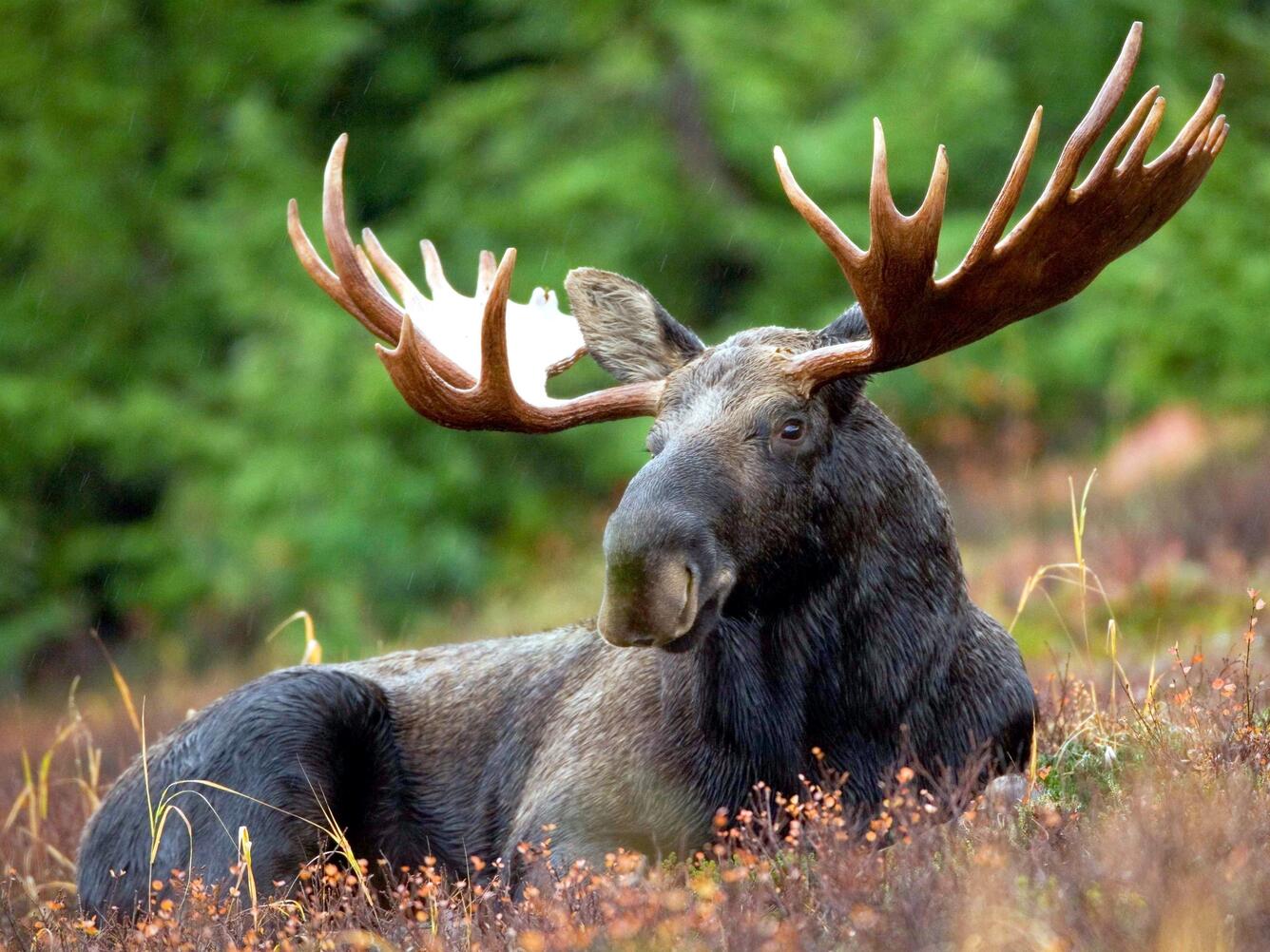
Cervids don’t recognize state boundaries and neither do diseases. Some mule deer migrate long distances each season, sometimes more than 200 miles, which makes it easier for the disease to spread across counties, states, Tribal lands, and entire regions—even before animals show signs of illness. Using GPS collars and long-term surveillance data, USGS scientists are tracking how deer and elk move across landscapes and how those movements may help CWD spread.

How do scientists detect CWD before animals show symptoms?
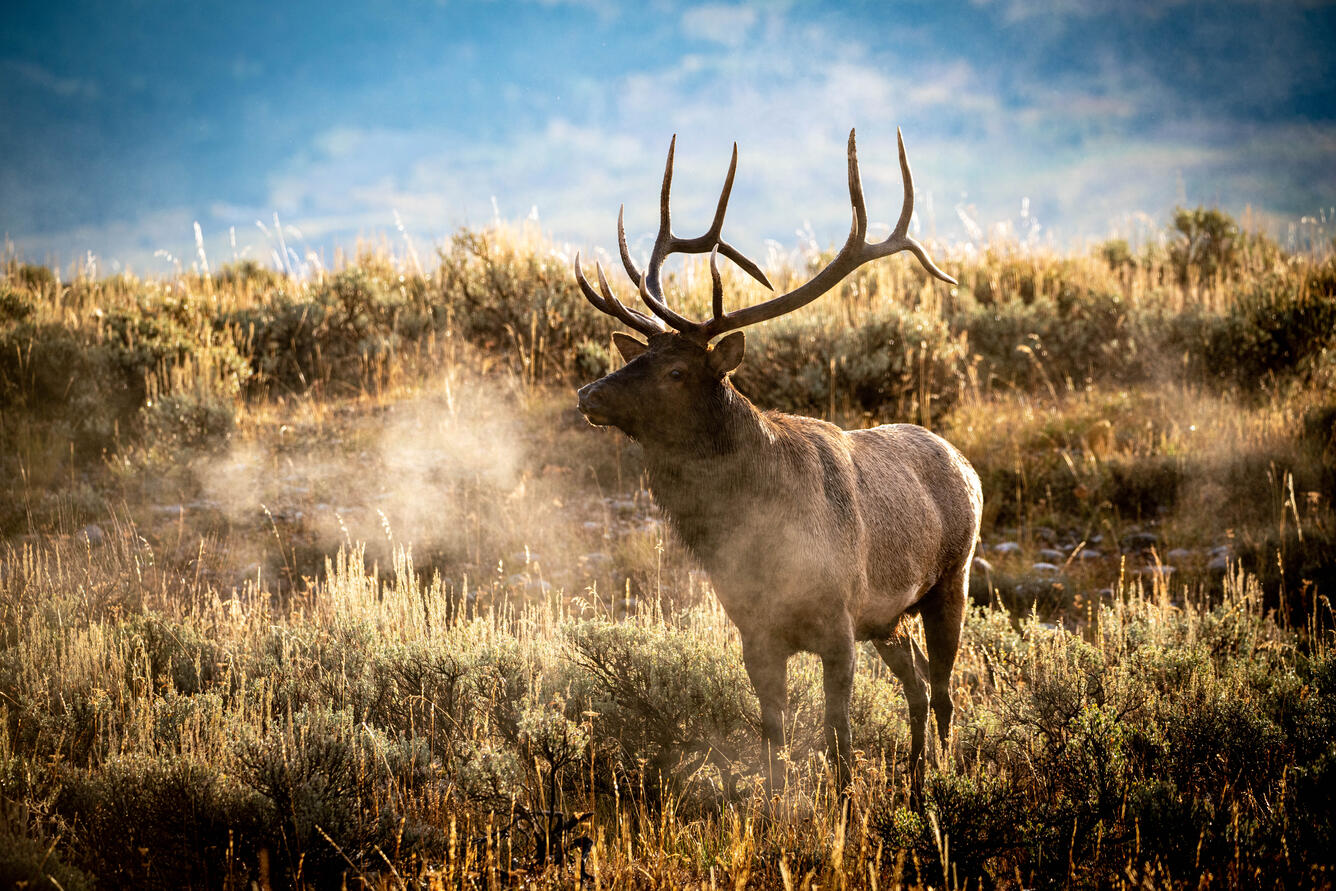
CWD can be present long before animals show signs of illness. USGS scientists are working to optimize early detection tools that can reveal disease presence sooner and across larger areas. Earlier detection means better planning, lower costs, and fewer long-term impacts on wildlife populations and hunting traditions.
Learn more:

Four impactful CWD and cervid health science accomplishments in 2025
How do human activities influence CWD?
How can managers detect CWD earlier?

How do different CWD strains and natural differences in deer genetics influence how the disease spreads?

What are the ecological and population-level impacts of CWD?

2025 CWD publication highlights
1. People, partnerships, and CWD:
2. Cervid distribution and management
3. Animal movement and transmission risk
4. Advances in diagnostics and modeling improve early detection and targeted action
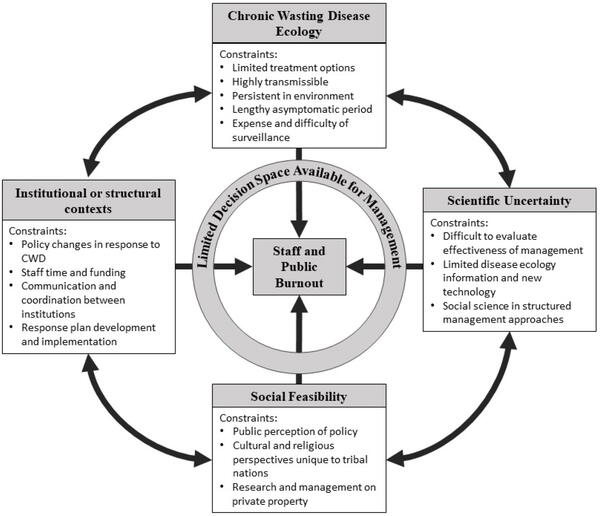
This diagram shows how different factors, from workplace pressures to environmental challenges, fit together in a framework that helps explain how people make decisions about managing chronic wasting disease (CWD). It also highlights how these outside pressures can interact with the ecology of CWD and contribute to feelings of burnout among those working on the issue. (Source: Between a rock and a hard place: Experiences of the chronic wasting disease management community)
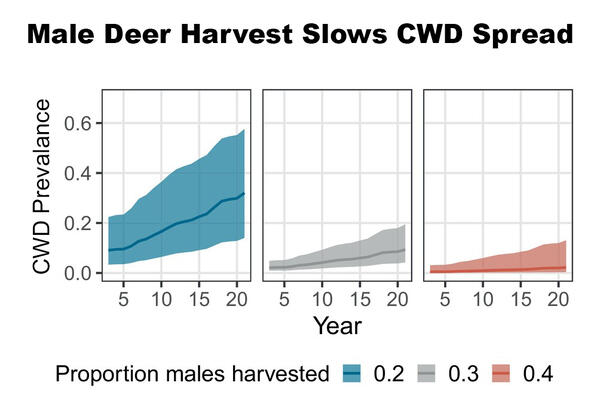
This figure shows how harvesting more male deer could influence chronic wasting disease (CWD) over time. The colored lines represent different harvest levels—low (blue), medium (gray), and high (red). Each line shows the predicted average level of CWD in a herd, and the shaded areas show the uncertainty around those predictions.Overall, herds with higher harvest rates are expected to see slower growth of the disease. This suggests that increasing male deer harvest could be one tool to help reduce the spread of CWD. (Source: The effectiveness of harvest for limiting wildlife disease: Insights from 20 years of chronic wasting disease in Wyoming)
USGS scientists are advancing surveillance, diagnostics, ecological modeling, and decision-support tools to help wildlife managers respond to Chronic Wasting Disease across North America.
What is chronic wasting disease?
Chronic Wasting Disease is a fatal disease that affects deer, elk, and moose. It spreads through direct contact and the environment, and there is no cure or vaccine.
Protecting food, culture, and wildlife
CWD remains one of the most significant and complex wildlife disease challenges facing natural resource managers, intersecting wildlife health, food security, hunting traditions, and rural economies. Healthy cervid populations have supported hunting, wildlife viewing, and local economies for over a century, functioning much like a stable natural resource.
Big‑game hunting is the most common form of hunting in the United States, with 80 percent of hunters participating according to the 2022 USFWS survey. More than 11.5 million big‑game hunters spend an average of 12 days in the field across eight trips each year, underscoring how strongly communities and economies depend on healthy cervid populations.
Additionally, deer, elk, and moose are an important source of protein sustenance for many Native American tribes and serve as a vital part of their culture. The USGS is working with individual Tribal Nations as well as organizations such as the Native American Fish and Wildlife Society to support early detection and an effective response to CWD.
Science to sustain wildlife and the economies that depend on them
Aligning with Administration priorities, the USGS provides science to support the health of wildlife that are sought for subsistence (S.O. 3447). USGS conducts science to detect, understand, and manage CWD as directed by Congress. Through field investigations, laboratory research, modeling, and decision-support tools, USGS science informs state partners vested in CWD surveillance or management. USGS found that in 2020, states spent nearly \$30 million on chronic wasting disease, with states that already had CWD investing more than eight times as much as states without known cases.
USGS Science Strategy for CWD & Cervid Health (2024–2028)
DOI SECRETARIAL ORDER 3447
IMPROVING THE SAFETY AND SECURITY OF BIOLOGICAL RESEARCH
Why is the USGS still studying CWD in 2025?
CWD can persist in the environment
CWD isn’t spread only by sick animals – it can also linger in the environment. The USGS is studying how infections prions can stick to soil and plants, remaining active long after an infected animal has passed through the area.
Learn more:
Can animal movement predict where CWD will show up next?
Cervids don’t recognize state boundaries and neither do diseases. Some mule deer migrate long distances each season, sometimes more than 200 miles, which makes it easier for the disease to spread across counties, states, Tribal lands, and entire regions—even before animals show signs of illness. Using GPS collars and long-term surveillance data, USGS scientists are tracking how deer and elk move across landscapes and how those movements may help CWD spread.
How do scientists detect CWD before animals show symptoms?
CWD can be present long before animals show signs of illness. USGS scientists are working to optimize early detection tools that can reveal disease presence sooner and across larger areas. Earlier detection means better planning, lower costs, and fewer long-term impacts on wildlife populations and hunting traditions.
Learn more:
Four impactful CWD and cervid health science accomplishments in 2025
How do human activities influence CWD?
How can managers detect CWD earlier?
How do different CWD strains and natural differences in deer genetics influence how the disease spreads?
What are the ecological and population-level impacts of CWD?
2025 CWD publication highlights
1. People, partnerships, and CWD:
2. Cervid distribution and management
3. Animal movement and transmission risk
4. Advances in diagnostics and modeling improve early detection and targeted action
This diagram shows how different factors, from workplace pressures to environmental challenges, fit together in a framework that helps explain how people make decisions about managing chronic wasting disease (CWD). It also highlights how these outside pressures can interact with the ecology of CWD and contribute to feelings of burnout among those working on the issue. (Source: Between a rock and a hard place: Experiences of the chronic wasting disease management community)
This figure shows how harvesting more male deer could influence chronic wasting disease (CWD) over time. The colored lines represent different harvest levels—low (blue), medium (gray), and high (red). Each line shows the predicted average level of CWD in a herd, and the shaded areas show the uncertainty around those predictions.Overall, herds with higher harvest rates are expected to see slower growth of the disease. This suggests that increasing male deer harvest could be one tool to help reduce the spread of CWD. (Source: The effectiveness of harvest for limiting wildlife disease: Insights from 20 years of chronic wasting disease in Wyoming)