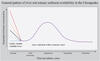
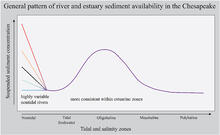
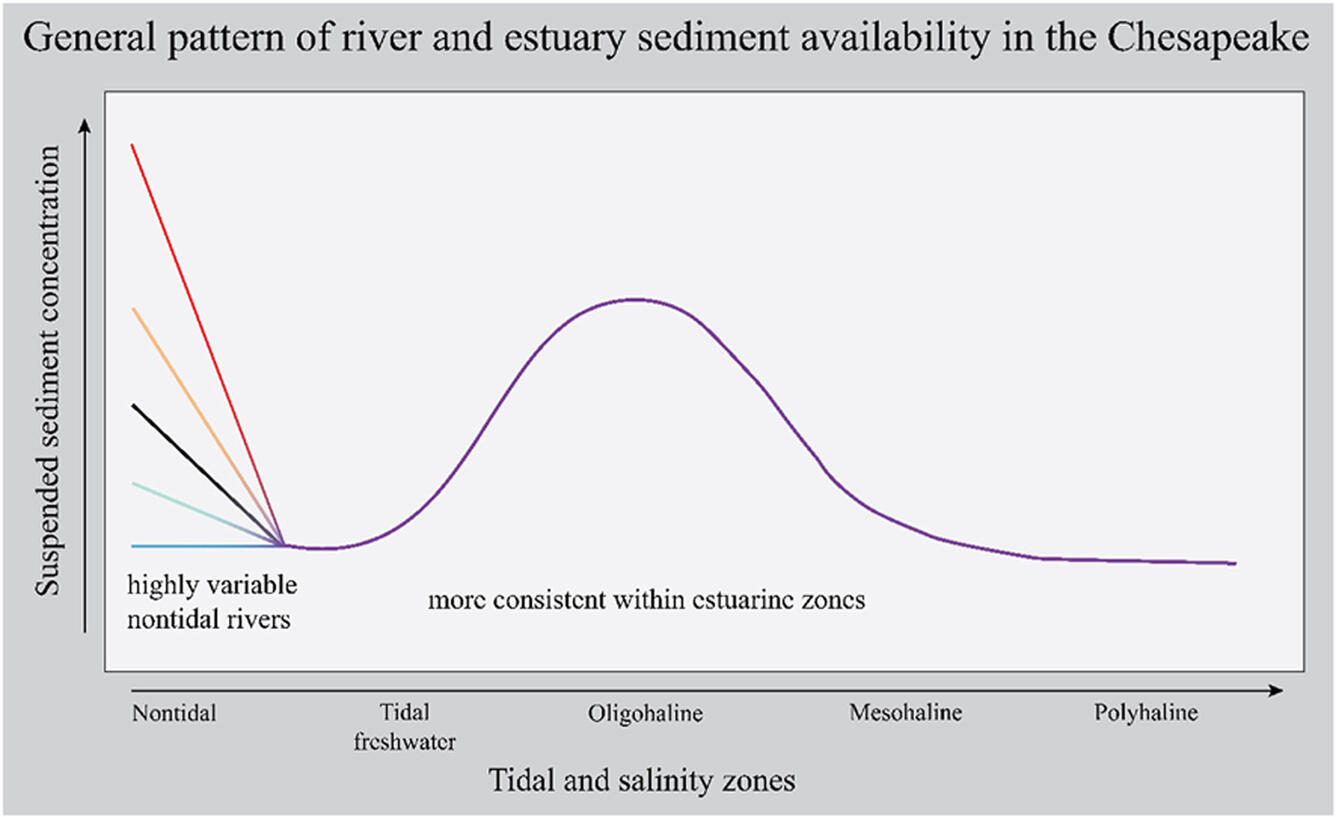
General pattern of suspended-sediment concentrations measured in Chesapeake Bay nontidal rivers and four tidal salinity zones
By Chesapeake Bay Activities
July 2026 (approx.)
Detailed Description
General pattern of suspended-sediment concentrations measured in Chesapeake Bay nontidal rivers and four tidal salinity zones
Sources/Usage
Public Domain.
Related
Changes in suspended sediment concentration along tidal rivers of the Chesapeake Bay: The tidal freshwater “sediment shadow” Changes in suspended sediment concentration along tidal rivers of the Chesapeake Bay: The tidal freshwater “sediment shadow”
Transport of terrigenic sediment from nontidal watersheds into estuaries has important impacts on coastal habitat quality, pollutant transport, and resilience to sea-level rise. However, relatively little is known about changes in suspended sediment as nontidal rivers encounter tide, transition into tidal rivers through the tidal freshwater zone (TFZ), and enter saline portions of...
Authors
Gregory E. Noe, Rebecca Murphy, Ken Krauss
The “sediment shadow” in Chesapeake Bay’s tidal freshwater rivers has important implications for restoration
Chesapeake Bay restoration efforts are focused on reducing nitrogen, phosphorus, and sediment loads to the estuary. A new synthesis of existing long-term records of suspended-sediment concentrations suggests that only a limited amount of watershed sediment is currently transported by rivers past the tidal freshwater zone and into saltier waters of the Chesapeake Bay.
Related
Changes in suspended sediment concentration along tidal rivers of the Chesapeake Bay: The tidal freshwater “sediment shadow” Changes in suspended sediment concentration along tidal rivers of the Chesapeake Bay: The tidal freshwater “sediment shadow”
Transport of terrigenic sediment from nontidal watersheds into estuaries has important impacts on coastal habitat quality, pollutant transport, and resilience to sea-level rise. However, relatively little is known about changes in suspended sediment as nontidal rivers encounter tide, transition into tidal rivers through the tidal freshwater zone (TFZ), and enter saline portions of...
Authors
Gregory E. Noe, Rebecca Murphy, Ken Krauss
The “sediment shadow” in Chesapeake Bay’s tidal freshwater rivers has important implications for restoration
Chesapeake Bay restoration efforts are focused on reducing nitrogen, phosphorus, and sediment loads to the estuary. A new synthesis of existing long-term records of suspended-sediment concentrations suggests that only a limited amount of watershed sediment is currently transported by rivers past the tidal freshwater zone and into saltier waters of the Chesapeake Bay.