



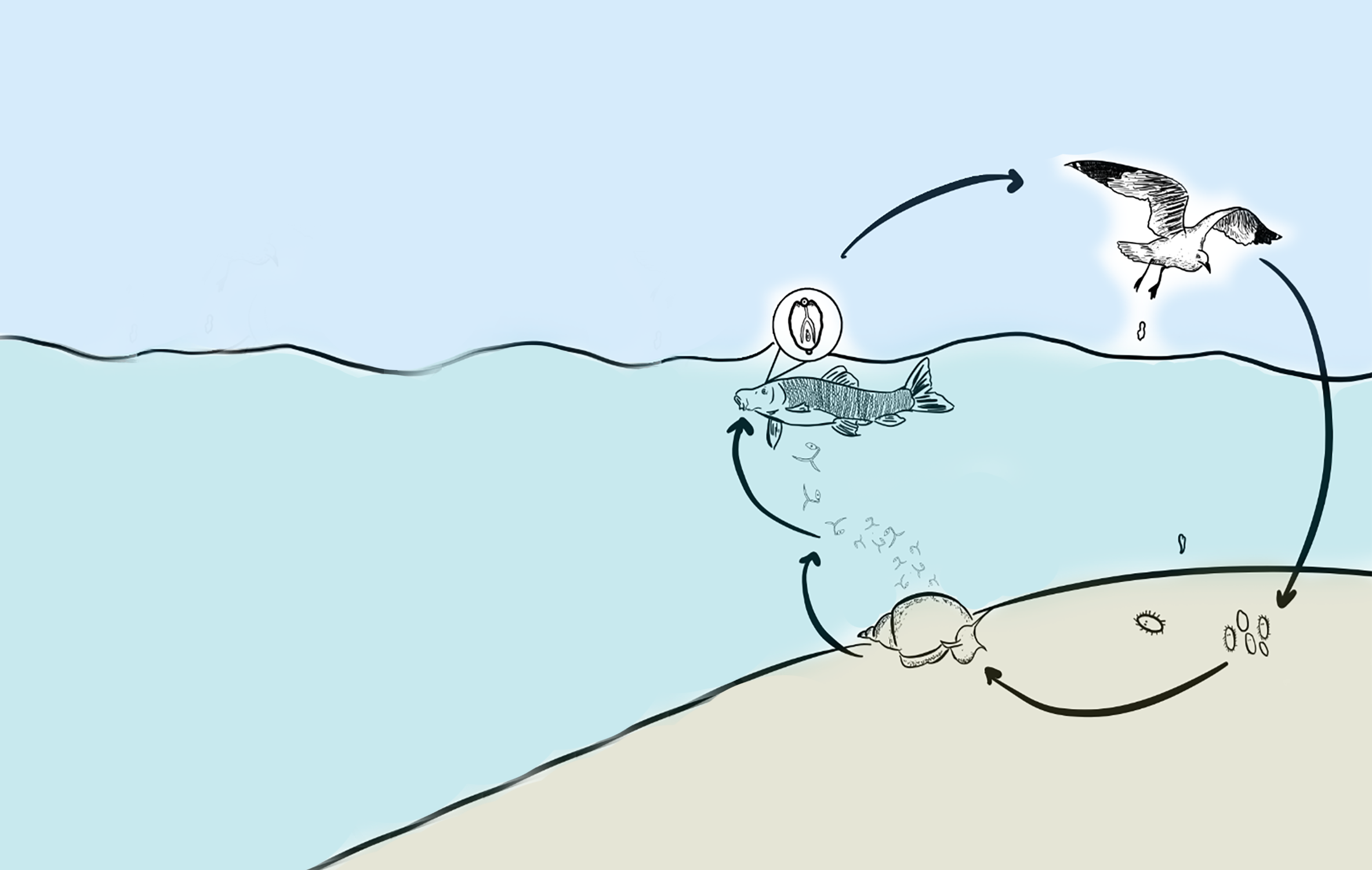
Life Cycle of Parasite Diplostomum gavium


Detailed Description
This is an infographic of the life cycle of the parasite, Diplostomum gavium. This parasite affects the Sucker fish in the Upper Klamath Lake. Upper Klamath Lake is home to large colonies of birds and an abundance of snails and fish, making it a haven for trematodes who are reliant on all three for their life cycle. Birds host adult flukes in their intestines. Parasite eggs are shed when birds poop, and after hatching, free-swimming parasites go on to infect snails. Following a period of incubation, snails will shed large numbers of free-swimming parasites (cercariae), which then infect fish. Infected fish develop a variety of ailments depending on the fluke species, such as neurological signs, impaired vision, and muscle damage. As these fish become easier prey for water-faring birds the parasite completes its life cycle by moving from fish back to birds. Evolutionary selection has favored parasites that can increase chances of a bird eating their fish host, leading to this suite of ailments in the fish.
Sources/Usage
Public Domain.