



Mercury, cortisol, and thyroid regulation in elephant seals

Detailed Description
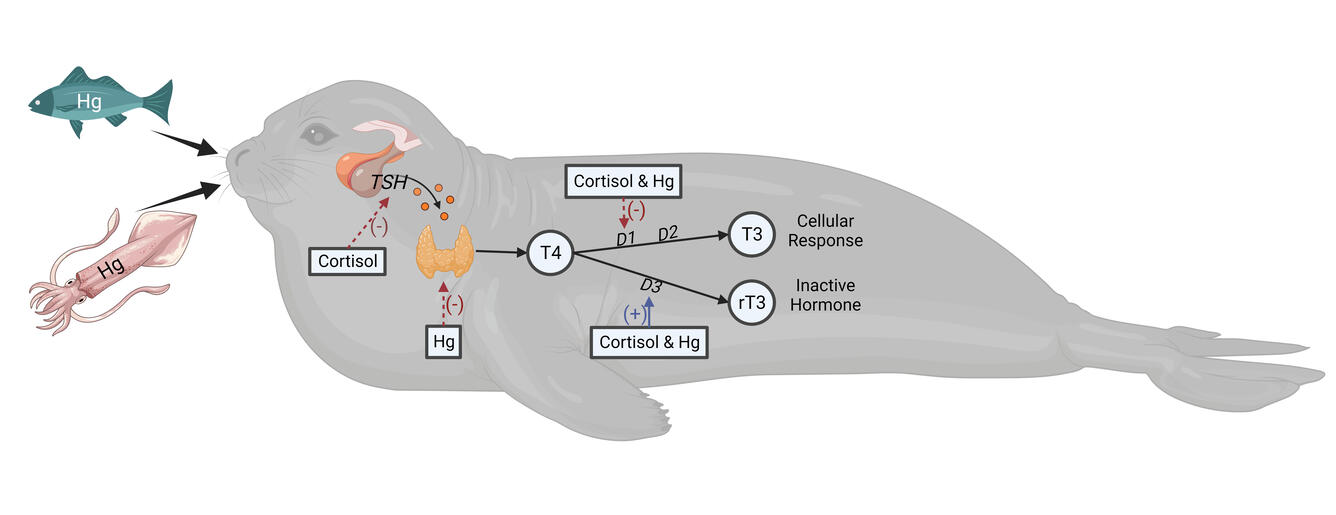
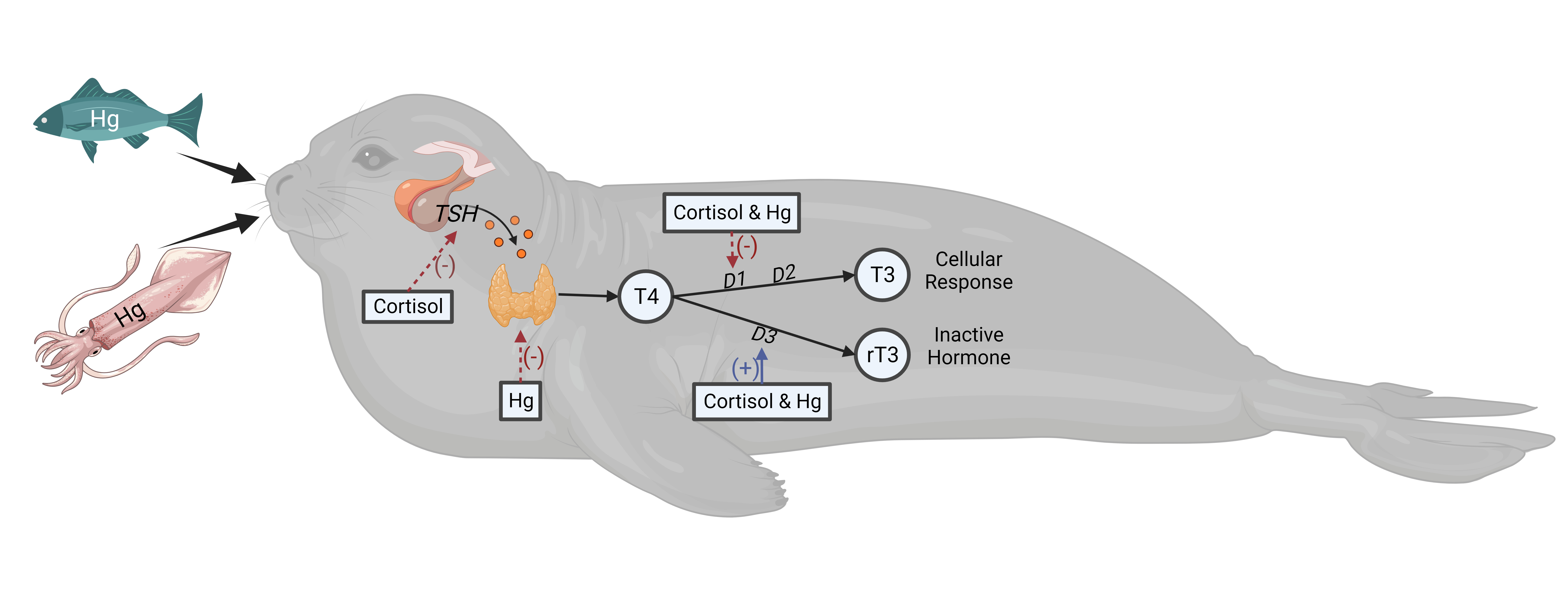
Concentrations of three different thyroid hormones (T4, T3, and rT3) were related to mercury and cortisol concentrations in adult female northern elephant seals (Mirounga angustirostris) in both synergistic and additive manners. This diagram outlines the potential physiological pathways through which the concentration of each thyroid hormone may be influenced by mercury (Hg) and cortisol through separate regulatory pathways (T4) or the same regulatory pathway (T3 and rT3). Thyroxine (T4) is the primary thyroid hormone in mammals and can decrease when the secretion of thyroid stimulating hormone (TSH) is suppressed by cortisol. Through a different regulatory pathway, Hg may decrease T4 through inhibition of thyroperoxidase (TPO) and Na-iodide symporter NIS) activity, which are required for synthesis of T4. Cortisol and Hg may act within similar physiological pathways to alter deiodinase enzyme activity (D1, D3). Cortisol and Hg may cause a decrease in tT3 by causing a decrease in the conversion of T4 to T3. In addition, cortisol and Hg may increase type 3 deiodinase (D3) which causes an increase in the inactive thyroid hormone rT3.
Sources/Usage
Public Domain.