



Sample run


Detailed Description
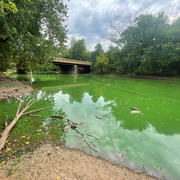
Scientists Brad Bjorklund and Erika Bernal prepare to deploy continuous water-quality sensors at Deal Lake, NJ.
Sources/Usage
Public Domain.
Related
Harmful Algal Blooms Studies in New Jersey Waters
Harmful Algal Blooms (HABs) in lakes, ponds, and rivers adversely affect water resources worldwide. Under the right conditions, cyanobacteria can produce cyanotoxins that can pose health risks to both animals and humans which makes them a major environmental and public health concern. More studies to examine the occurrence and persistence of HABs and their potential transport are needed to better...

Monitoring Harmful Algal Blooms in a Coastal System to Identify the Factors that Affect HAB Production and the Downstream Transport of Cyanobacteria and Associated Cyanotoxins from Freshwater to Marine Environments
Across the nation, Cyanobacterial harmful algal blooms (HABs) in freshwater coastal lakes and ponds have become a major environmental and public health concern. Under the right conditions, cyanobacteria can produce cyanotoxins that can pose health risks to both animals and humans (U.S. Environmental Protection Agency (USEPA), 2020) and have been shown to have severe impacts on water quality...
Related
Harmful Algal Blooms Studies in New Jersey Waters
Harmful Algal Blooms (HABs) in lakes, ponds, and rivers adversely affect water resources worldwide. Under the right conditions, cyanobacteria can produce cyanotoxins that can pose health risks to both animals and humans which makes them a major environmental and public health concern. More studies to examine the occurrence and persistence of HABs and their potential transport are needed to better...
Monitoring Harmful Algal Blooms in a Coastal System to Identify the Factors that Affect HAB Production and the Downstream Transport of Cyanobacteria and Associated Cyanotoxins from Freshwater to Marine Environments
Across the nation, Cyanobacterial harmful algal blooms (HABs) in freshwater coastal lakes and ponds have become a major environmental and public health concern. Under the right conditions, cyanobacteria can produce cyanotoxins that can pose health risks to both animals and humans (U.S. Environmental Protection Agency (USEPA), 2020) and have been shown to have severe impacts on water quality...