



sirBoyleCover.jpg


Detailed Description
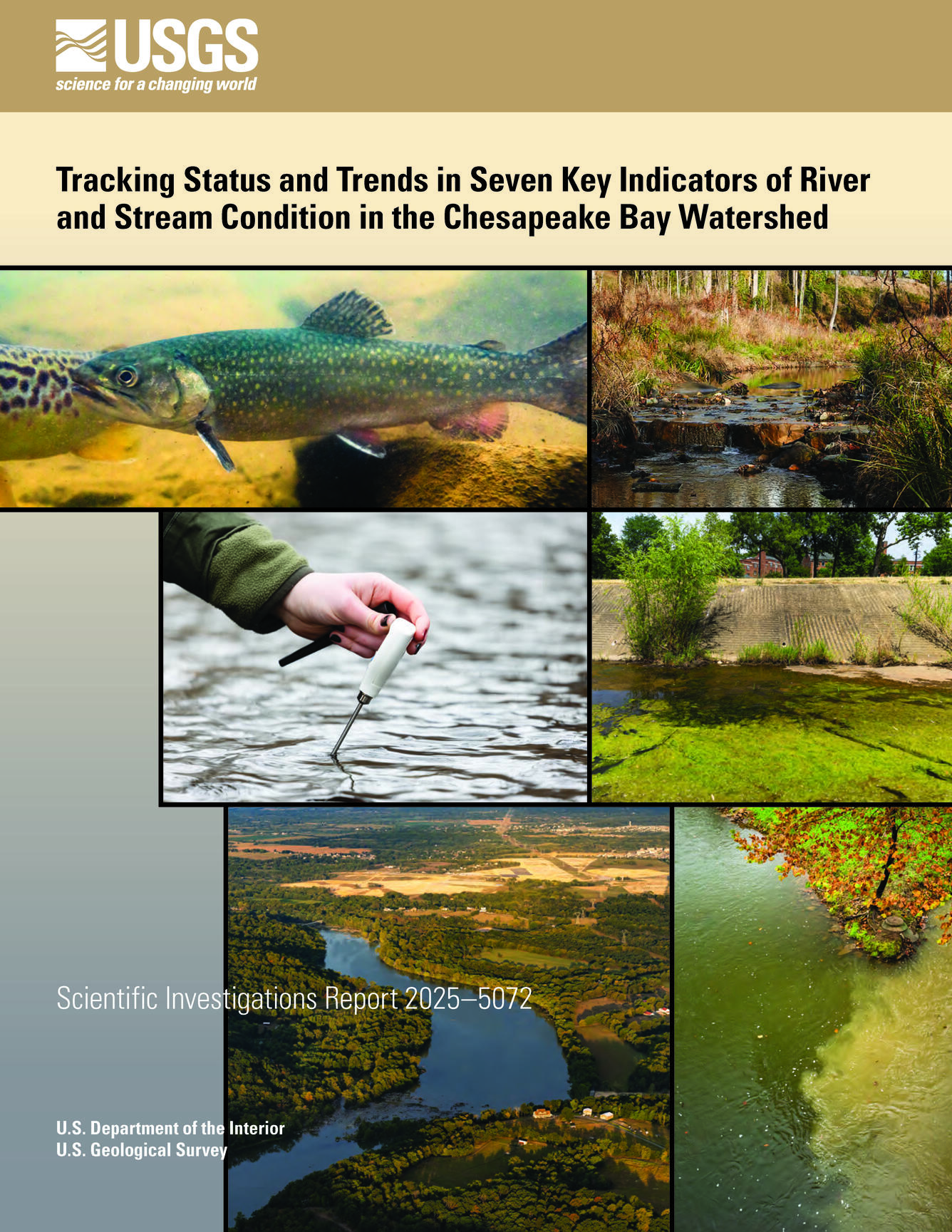
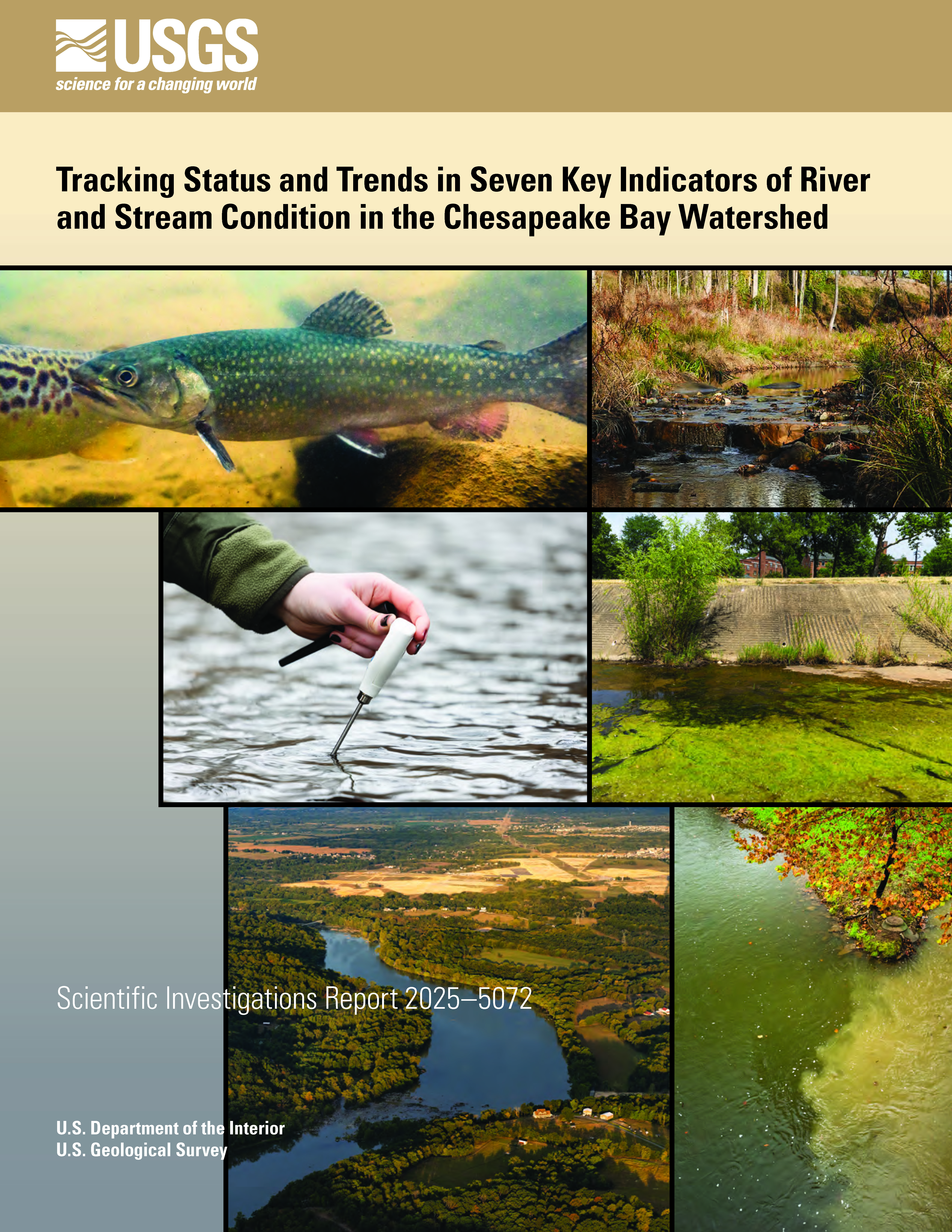
This is the cover image to the published SIR 2025-5072, titled Tracking Status and Trends in Seven Key Indicators of River and Stream Condition in the Chesapeake Bay Watershed.
Abstract:
Freshwater streams and rivers are recognized as vital habitats within the Chesapeake Bay watershed, which has been undergoing extensive restoration efforts for more than 30 years. Resource managers need to understand stream and river condition and how these conditions are changing over time to determine whether regional long-term restoration and conservation goals are being met. The objective of this report was to document the spatial and temporal variability of conditions for seven indicators of river and stream health across the nontidal Chesapeake Bay watershed. The framework for the U.S. Geological Survey’s Nontidal Network (NTN), a network of more than 100 nutrient and suspended sediment monitoring locations, was extended to assess conditions for six additional indicators of stream health: temperature, salinity, toxic contaminants, streamflow, hydromorphology, and biological aquatic communities. For each indicator, the latest available data from multiple sources were compiled and harmonized, and key metrics were identified to describe indicator conditions across space and time. A status condition was defined for each indicator to describe overall spatial variability in recent condition, and trend analyses were used to describe changes in each indicator metric over time. The analysis revealed clear differences in spatial and temporal data coverage across the seven indicators, so individual indicator trend analyses were not constrained to a common time interval. However, a status snapshot was conducted across all indicators for the 2015–17 period to simultaneously explore spatial variability across all indicators. The status snapshot highlighted general degraded conditions across multiple indicators in large metropolitan regions, such as the Baltimore–Washington, D.C., metropolitan area. Regression analysis between indicator status metrics and major land cover for the sites suggest urbanization as a potential driver of degraded conditions for many of the indicator metrics, including total phosphorus, salinity, temperature, high-flow frequency, and metrics of habitat and biological assemblage quality. A final analysis exploring the spatial representation of each indicator network showed that some indicator monitoring networks did not cover certain settings, such as small watersheds. These results provided an initial assessment of stream health status and trends and will continue to be leveraged to describe conditions across the Chesapeake Bay watershed to help inform local and regional management decisions. These results also highlighted the need for improved coordination among monitoring organizations to support long-term multi-indicator monitoring and assessment.
Sources/Usage
Public Domain.
This is the cover image to a published SIR that is publicly available.