



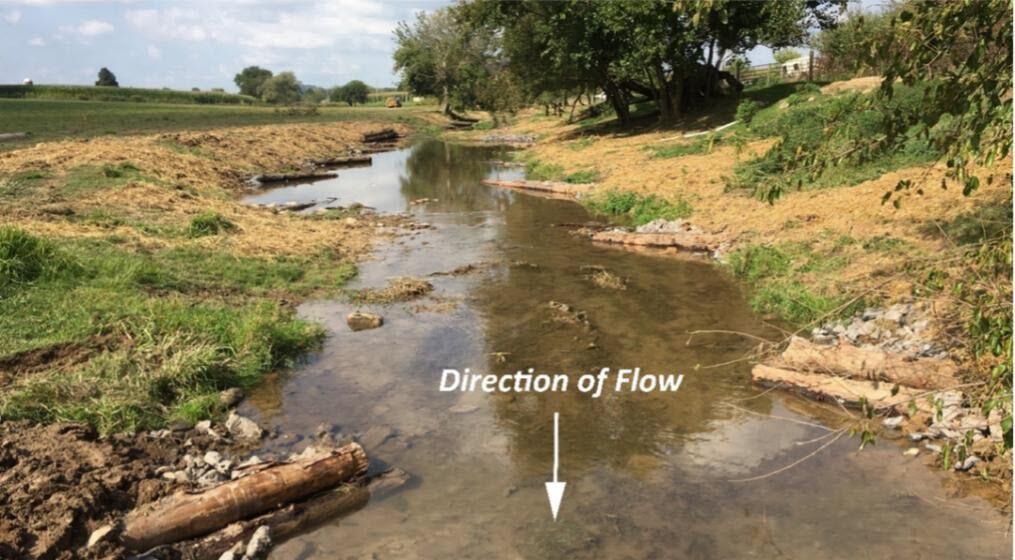
Soft engineering stream-restoration practices in Turtle Creek that stabilize and protect the streambanks and direct flow to the center of the channel
By Chesapeake Bay Activities
June 2026 (approx.)

Detailed Description
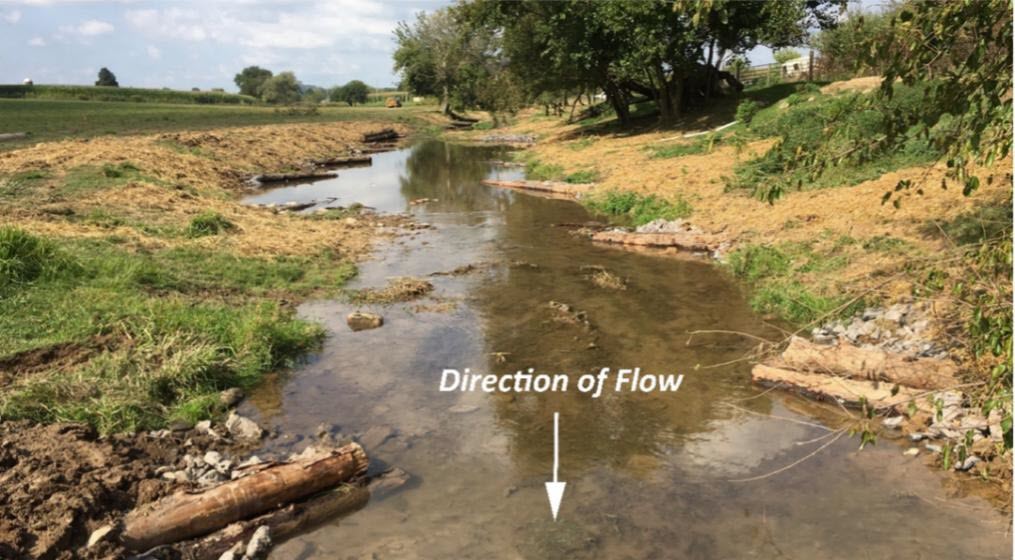
An example of soft engineering stream-restoration practices in Turtle Creek that stabilize and protect the streambanks and direct flow to the center of the channel.
Sources/Usage
Public Domain.
Photo by Jason Fellon, Pennsylvania Department of Environmental Protection
Related
Evaluating the Effects of Stream-Restoration Practices in an Impaired Agricultural System
Stream-restoration practices are widely used throughout the Chesapeake Bay watershed to improve stream health and function, but research into their effectiveness is limited in agricultural settings. A study in Turtle Creek, Pennsylvania, suggests that stream-restoration practices can significantly reduce streambank erosion and enhance floodplain deposition, changes that can reduce in-stream...
Related
Evaluating the Effects of Stream-Restoration Practices in an Impaired Agricultural System
Stream-restoration practices are widely used throughout the Chesapeake Bay watershed to improve stream health and function, but research into their effectiveness is limited in agricultural settings. A study in Turtle Creek, Pennsylvania, suggests that stream-restoration practices can significantly reduce streambank erosion and enhance floodplain deposition, changes that can reduce in-stream...