



About the DOI Mine Waste Mapping Plan
USGS has a long history as a leader in mine waste science. Now, USGS is leading a plan for the Department of the Interior to map, inventory, and identify opportunities to recover critical minerals from mine waste.
Mine Wastes and Critical Minerals
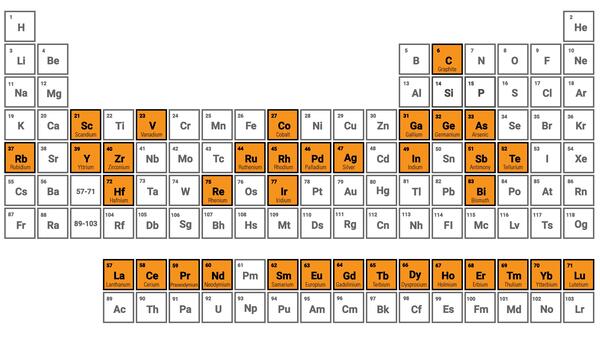
Mine waste at legacy and active mines is a potential source of critical minerals and other commodities.
Recovering minerals from mine wastes can also support clean up efforts of mine sites. With thousands of mine waste sites across America from over 200 years of mining, there is real potential to secure domestically sourced critical minerals and strengthen the Nation’s mineral supply chains.
The Department of the Interior (DOI), through the USGS, published the 2025 List of Critical Minerals in November 2025. The List includes 35 (of 60) critical minerals produced primarily as byproducts or coproducts of the extraction of other primary minerals during the mining process. For some of these byproduct critical minerals, reprocessing mine waste material may be the most direct path
to strengthen supply chains.
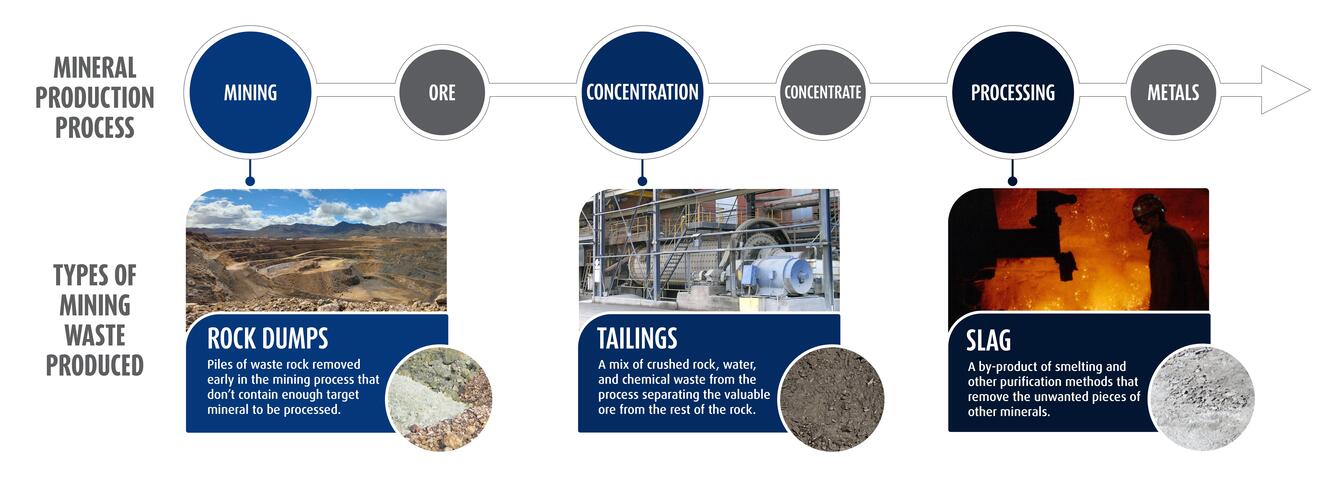
Mine waste is produced at every stage of mineral production.
USGS Leadership
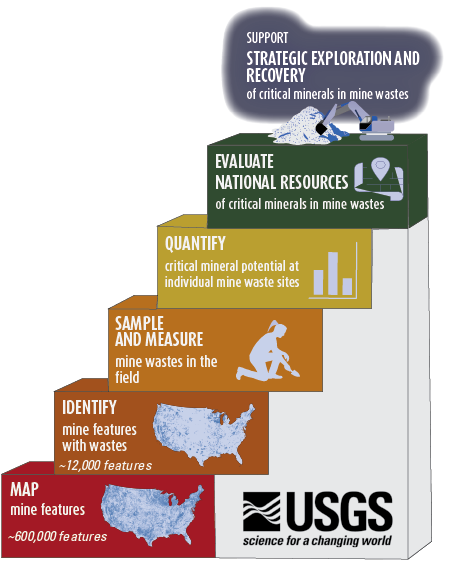
The U.S. Geological Survey (USGS) is leading the Nation’s efforts to identify and quantify where and how much mine waste contains what types of mineral resources, evaluate the potential to reuse waste as a resource, and provide the science needed to identify the costs, benefits and risks of recovering critical minerals from mine waste.
A Partnership Effort
This plan builds on numerous partnerships, including with the Federal Mining Dialogue’s federal mine waste managers, the State geological surveys, the Department of War, the Department of Energy, the National Aeronautics and Space Administration, the U.S. Environmental Protection Agency, the U.S. Department of Agriculture’s U.S. Forest Service, the Interstate Mining Compact Commission and its member states, State, Tribal, and industry partners, and the National Science and Technology Council’s federal interagency Critical Minerals Subcommittee.
Progress
The National Mine Waste Inventory
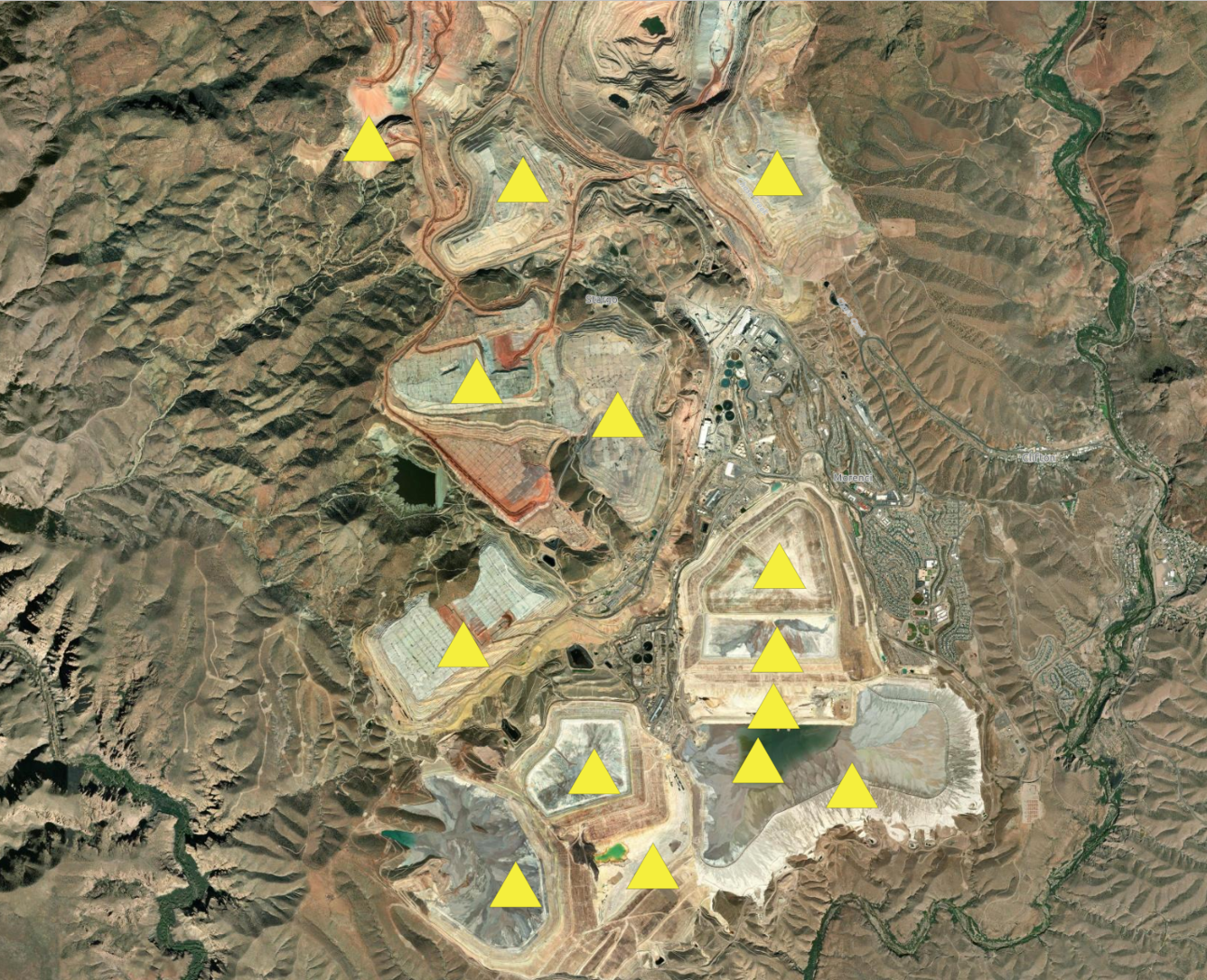
In support of the plan, the USGS developed a first-of-its-kind National Mine Waste Inventory by working with Federal, State, and Tribal governments and private industry to map the location and extent of mine waste sites with potential to contain critical minerals.
By leveraging data included in the USGS database of mine-related features, this effort presents an opportunity to advance the Nation toward a unified system of public data on mine sites and mine waste resource potential.
Stay tuned for more.
Explore More
The USGS leads the Nation in minerals and mine waste science. Explore some of USGS’ related work here.
The Mineral Resources Program
About Critical Minerals
USGS Mineral Deposit Database
2025 List of Critical Minerals
USGS has a long history as a leader in mine waste science. Now, USGS is leading a plan for the Department of the Interior to map, inventory, and identify opportunities to recover critical minerals from mine waste.
Mine Wastes and Critical Minerals
Mine waste at legacy and active mines is a potential source of critical minerals and other commodities.
Recovering minerals from mine wastes can also support clean up efforts of mine sites. With thousands of mine waste sites across America from over 200 years of mining, there is real potential to secure domestically sourced critical minerals and strengthen the Nation’s mineral supply chains.
The Department of the Interior (DOI), through the USGS, published the 2025 List of Critical Minerals in November 2025. The List includes 35 (of 60) critical minerals produced primarily as byproducts or coproducts of the extraction of other primary minerals during the mining process. For some of these byproduct critical minerals, reprocessing mine waste material may be the most direct path
to strengthen supply chains.
Mine waste is produced at every stage of mineral production.
USGS Leadership
The U.S. Geological Survey (USGS) is leading the Nation’s efforts to identify and quantify where and how much mine waste contains what types of mineral resources, evaluate the potential to reuse waste as a resource, and provide the science needed to identify the costs, benefits and risks of recovering critical minerals from mine waste.
A Partnership Effort
This plan builds on numerous partnerships, including with the Federal Mining Dialogue’s federal mine waste managers, the State geological surveys, the Department of War, the Department of Energy, the National Aeronautics and Space Administration, the U.S. Environmental Protection Agency, the U.S. Department of Agriculture’s U.S. Forest Service, the Interstate Mining Compact Commission and its member states, State, Tribal, and industry partners, and the National Science and Technology Council’s federal interagency Critical Minerals Subcommittee.
Progress
The National Mine Waste Inventory
In support of the plan, the USGS developed a first-of-its-kind National Mine Waste Inventory by working with Federal, State, and Tribal governments and private industry to map the location and extent of mine waste sites with potential to contain critical minerals.
By leveraging data included in the USGS database of mine-related features, this effort presents an opportunity to advance the Nation toward a unified system of public data on mine sites and mine waste resource potential.
Stay tuned for more.
Explore More
The USGS leads the Nation in minerals and mine waste science. Explore some of USGS’ related work here.