



Building America: USGS and the Nation's Construction Materials
Through mapping and science, the USGS is helping find mineral materials needed for construction across the Nation.
What do the buildings we live and work in, the roads and bridges that connect us, and the infrastructure we get water and electricity from have in common? The bulk of each of them are built from mineral materials like sand, gravel, rock, stone and clay.
Use the scroller to reveal key 'ingredients' of some common construction materials.

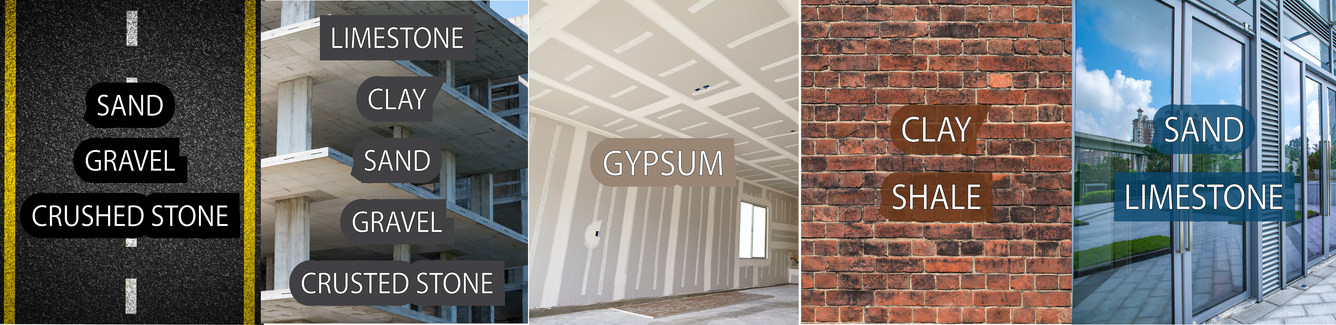
We provide mapping and science to find and evaluate sources for construction materials.
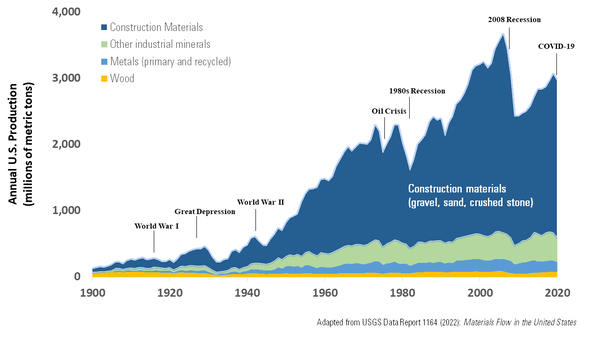
These materials are essential to the Nation’s infrastructure and economy. In fact, over 80% of the minerals mined in the United States each year are construction materials, primarily aggregate (sand, gravel, and crushed rock) and limestone (used for cement), generating hundreds of millions of dollars to state economies (Mineral Commodity Summaries 2026).
Yet, supplying them locally has become more difficult. In many states, the local quarries and mines that have traditionally provided these materials can no longer meet needs - and high-quality maps to find new sources are often outdated or don’t exist.
Explore some examples of our science.
Mapping for tomorrow's materials
Rebuilding resilience after devastation
Supporting solid foundations
MAPPING FOR TOMORROW'S MATERIALS
We are mapping the United States, collecting data essential for finding materials needed for construction today - and identifying materials for innovative, novel construction materials key to the future.
We are updating geologic maps that are out of date, helping industry and land managers find sources for quality construction materials, and providing options to resolve land use conflicts, minimize environmental impacts and reduce costs.
We are also conducting airborne geophysical surveys that are faster and less expensive than traditional drilling and trenching, and provide 3D information on the spatial and depth extent of resources.

Main image: An example of geophysical data overlaying a landscape in Idaho.

REBUILDING RESILIENCE AFTER DEVASTATION
In 2022, Hurricanes Fiona and Ian damaged and destroyed infrastructure across Puerto Rico and Florida.
Through our Earth Mapping Resources Initiative, and in partnership with local universities and state agencies we used geophysical surveys and other techniques to map construction materials in both locations. The data are also helping to identify potential post-hurricane hazards like landslides.
Our mapping and assessments are guiding post-disaster infrastructure investments, accelerating rebuilding, and informing recovery planning.
Main image: Buildings in Puerto Rico damaged by Hurricane Fiona.

SUPPORTING SOLID FOUNDATIONS
Avoiding the wrong materials for infrastructure is just as important as finding the right materials. There are at least a dozen groups of minerals that, when present in aggregates, can reduce the strength longevity of concrete.
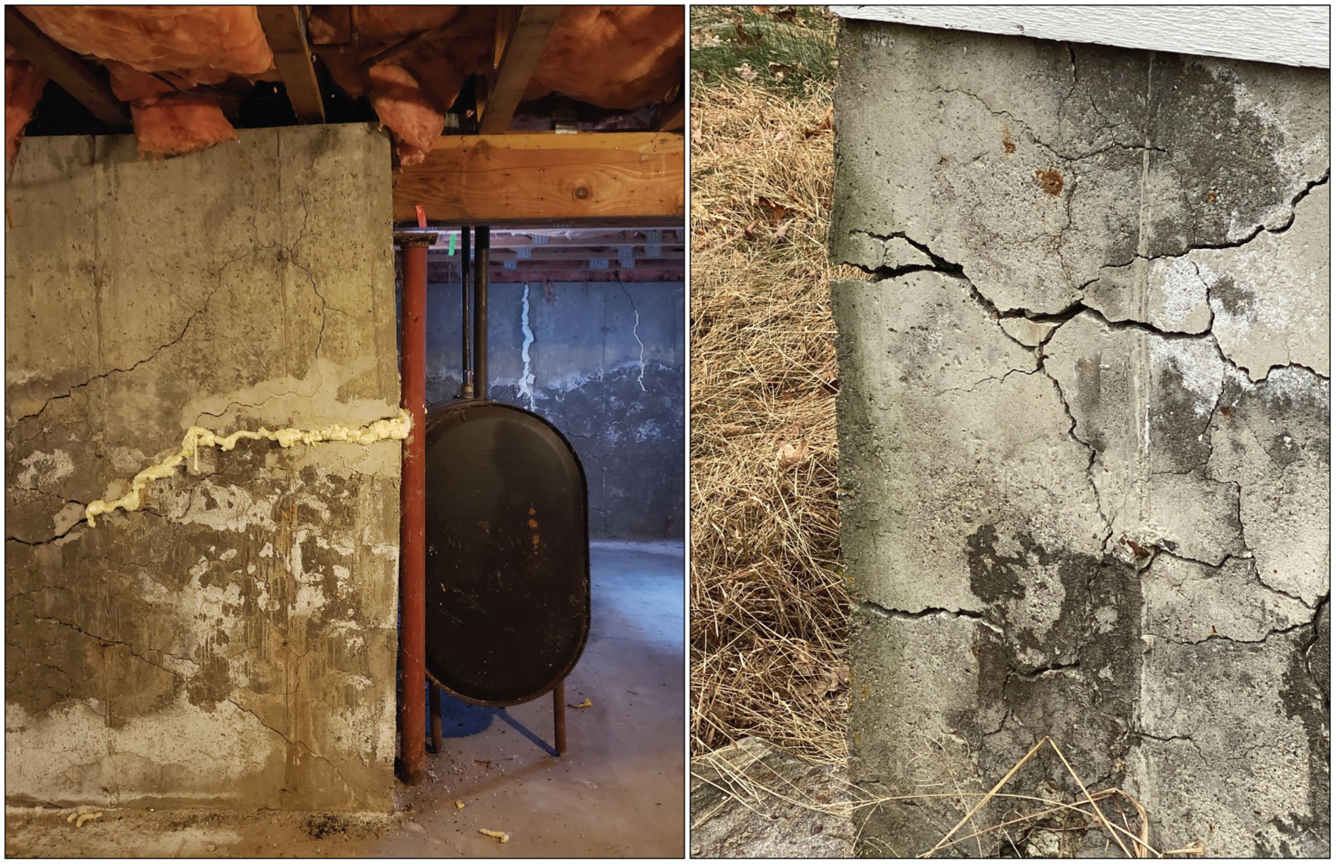
One example is pyrrhotite – a mineral that can cause concrete to crack and crumble. In Connecticut alone, at least 1600 homes contain pyrrhotite and estimated repair costs can top \$150,000 for homeowners (GAO-20-649).
In 2020, we published the first national map of known pyrrhotite occurrences in existing quarries, helping to prevent these materials from being used for certain kinds of infrastructure.

Main image: Cracks in the basement (left) and foundation (right) of a house condemned due to pyrrhotite damage.
Through mapping and science, the USGS is helping find mineral materials needed for construction across the Nation.
What do the buildings we live and work in, the roads and bridges that connect us, and the infrastructure we get water and electricity from have in common? The bulk of each of them are built from mineral materials like sand, gravel, rock, stone and clay.
Use the scroller to reveal key 'ingredients' of some common construction materials.
We provide mapping and science to find and evaluate sources for construction materials.
These materials are essential to the Nation’s infrastructure and economy. In fact, over 80% of the minerals mined in the United States each year are construction materials, primarily aggregate (sand, gravel, and crushed rock) and limestone (used for cement), generating hundreds of millions of dollars to state economies (Mineral Commodity Summaries 2026).
Yet, supplying them locally has become more difficult. In many states, the local quarries and mines that have traditionally provided these materials can no longer meet needs - and high-quality maps to find new sources are often outdated or don’t exist.
Explore some examples of our science.
Mapping for tomorrow's materials
Rebuilding resilience after devastation
Supporting solid foundations
MAPPING FOR TOMORROW'S MATERIALS
We are mapping the United States, collecting data essential for finding materials needed for construction today - and identifying materials for innovative, novel construction materials key to the future.
We are updating geologic maps that are out of date, helping industry and land managers find sources for quality construction materials, and providing options to resolve land use conflicts, minimize environmental impacts and reduce costs.
We are also conducting airborne geophysical surveys that are faster and less expensive than traditional drilling and trenching, and provide 3D information on the spatial and depth extent of resources.
Main image: An example of geophysical data overlaying a landscape in Idaho.
REBUILDING RESILIENCE AFTER DEVASTATION
In 2022, Hurricanes Fiona and Ian damaged and destroyed infrastructure across Puerto Rico and Florida.
Through our Earth Mapping Resources Initiative, and in partnership with local universities and state agencies we used geophysical surveys and other techniques to map construction materials in both locations. The data are also helping to identify potential post-hurricane hazards like landslides.
Our mapping and assessments are guiding post-disaster infrastructure investments, accelerating rebuilding, and informing recovery planning.
Main image: Buildings in Puerto Rico damaged by Hurricane Fiona.
SUPPORTING SOLID FOUNDATIONS
Avoiding the wrong materials for infrastructure is just as important as finding the right materials. There are at least a dozen groups of minerals that, when present in aggregates, can reduce the strength longevity of concrete.
One example is pyrrhotite – a mineral that can cause concrete to crack and crumble. In Connecticut alone, at least 1600 homes contain pyrrhotite and estimated repair costs can top \$150,000 for homeowners (GAO-20-649).
In 2020, we published the first national map of known pyrrhotite occurrences in existing quarries, helping to prevent these materials from being used for certain kinds of infrastructure.
Main image: Cracks in the basement (left) and foundation (right) of a house condemned due to pyrrhotite damage.