



Could Gas Hydrates Help Meet Future Energy Needs? New Alaska Research Offers Important Insights
A new Virtual Special Issue in Energy & Fuels documents results from the world's longest gas hydrate production test on Alaska’s North Slope.
The U.S. Geological Survey, U.S. Department of Energy, and the Japan Organization for Metals and Energy Security have reached a major milestone in gas hydrate research with the publication of a new Virtual Special Issue in Energy & Fuels. The collection documents results from the world's longest gas hydrate production test on Alaska’s North Slope, a critical step in determining the energy resource potential of gas hydrates.
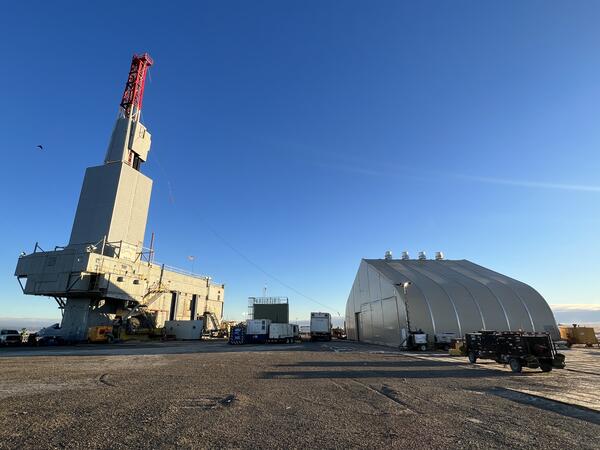
Gas hydrates are naturally occurring ice-like solids that form in cold, high-pressure environments such as Arctic permafrost and deep marine sediments. Although unfamiliar to many people, they are one of the largest natural sources of methane on Earth. Methane is the main component of the natural gas used to heat homes and generate electricity.
For over three decades, the USGS has partnered with the DOE to study gas hydrates—learning more about how and where they form, their environmental impact as they break down, their influence on seafloor instability, and their potential as an energy resource.
One fundamental question scientists seek to answer is: Can the methane stored in gas hydrates be produced safely and reliably as a future energy resource?
To help answer this question, DOE, the Japan Organization for Metals and Energy Security known as JOGMEC, and USGS formed the Collaborative Gas Hydrate R&D Project in Alaska in 2014. Together, they conducted a groundbreaking 315-day gas hydrate production test—the longest-ever—to evaluate whether methane can be stably and safely produced from Alaska’s permafrost reservoirs.
In late October 2026, the project scientists published a Virtual Special Issue in Energy & Fuels titled, “Recent Advances on Gas Hydrates Scientific Drilling in Alaska: An Update from Production Testing Operations during 2023/2024 (Part I).” The collection brings together 22 scientific papers (16 of which have USGS first authors or coauthors), as well as 5 accompanying USGS data releases.
The results provide one of the most comprehensive examinations to date of the geology, engineering, monitoring, and reservoir behavior associated with gas hydrate production—an important first step in understanding their energy resource potential.
The Landmark Production Test
Gas hydrates in nature only remain stable at high pressure and low temperatures. In previous projects, scientists proved that by intentionally lowering the pressure in the hydrate-bearing reservoir—a process known as depressurization—methane can be extracted from gas hydrates. However, these previous tests were generally too short to evaluate reservoir changes, production system performance, and hydrate-bearing sediment’s response to prolonged gas extraction.
To fill those knowledge gaps, project partners established a dedicated gas hydrate production test site within Alaska's Prudhoe Bay region—home to extensive gas hydrate deposits which contain estimated 54 trillion cubic feet of technically recoverable methane over the entire Alaska North Slope.
Over several years, researchers drilled a series of wells to characterize the reservoir, collect pressure cores, gather advanced logging data, and install an extensive network of monitoring instruments. In 2022, they established the HYDRATE 02 Geo Data Well to provide the geologic and reservoir information needed to evaluate gas hydrate production performance. Building on earlier Alaska gas hydrate investigations, the well provided a critical link between decades of resource characterization studies and the long-term production test.
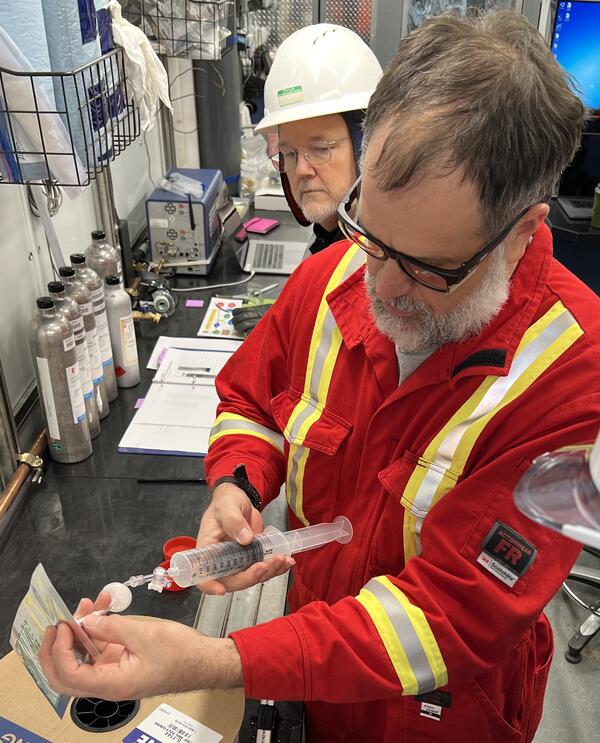
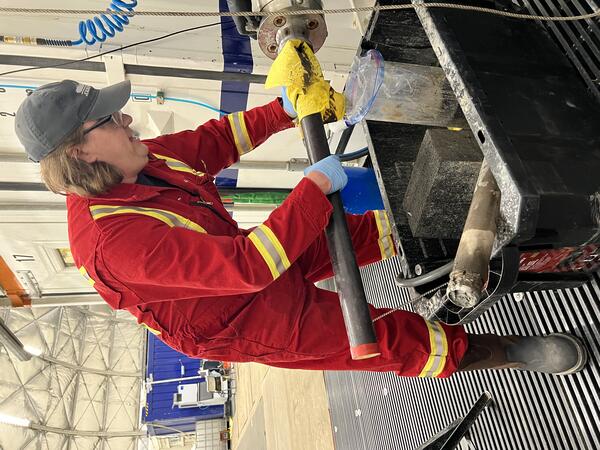
The HYDRATE 02 well yielded an extensive collection of drilling, logging, coring, and monitoring data. Researchers recovered 24 pressure cores from hydrate-bearing reservoirs and collected high-quality geologic and petrophysical measurements that confirmed the presence of gas hydrates and helped characterize reservoir properties. Following drilling operations, the well was converted into a dedicated monitoring well equipped with sensors that tracked temperature, pressure, strain, and other subsurface changes throughout the production test.
The effort culminated in a long-term production test that began in September 2023 and continued through July 2024, followed by additional monitoring as the reservoir gradually returned to its natural state. The goal was not to demonstrate commercial production, but to gain a deeper scientific understanding of how gas hydrate reservoirs behave under sustained production conditions.
The project generated one of the most extensive gas hydrate datasets ever collected. Researchers observed sustained gas production, documented changes in reservoir pressure and temperature, monitored geomechanical responses, and gathered critical information about how hydrate-bearing reservoirs behave during long-term operations. The testing also revealed technical challenges that will help guide future research and engineering efforts.
These findings form the foundation of the new Energy & Fuels Virtual Special Issue.
Inside the Virtual Special Issue
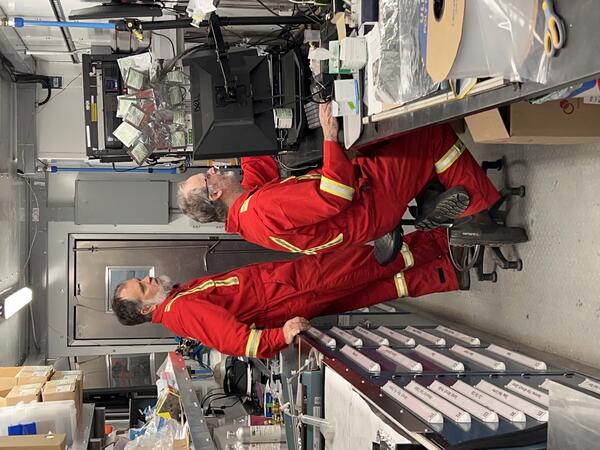
The Virtual Special Issue includes papers describing project planning, drilling operations, reservoir monitoring, production testing, geologic characterization, core analyses, geophysical investigations, petrophysical studies, and geomechanical evaluations. Together, the papers provide a comprehensive overview of what was learned before, during, and after the production test.
Several papers focus on operational aspects of the test, including well construction, monitoring systems, and production activities. Others examine physical characteristics of the hydrate-bearing reservoir using pressure cores, well logs, seismic data, laboratory analyses, and advanced imaging techniques.
Papers examining the production test describe how the reservoir was depressurized, including more than two months of stable operating conditions that allowed continuous data collection. During that period, researchers observed sustained gas production from one of two production test wells established at the site and tracked changes in pressure and temperature throughout the reservoir, providing new insights into how gas hydrates dissociate and respond during production.
Additional studies examine the reservoir's geomechanical response, helping scientists better understand how hydrate-bearing sediments behave during long-term operations. The collection also documents engineering and operational challenges encountered during the test, including issues associated with sediment production, providing valuable lessons for future field programs.
"With eight USGS first authored papers, and an additional eight USGS coauthored papers, this scientific volume showcases the benefits of the Survey’s multidisciplinary Gas Hydrates Project working across Programs, Mission Areas and collaborating with researchers from the U.S. and Japan. It’s exciting to see these scientific and operational lessons learned being used to plan the next phase of the gas hydrate production test effort announced recently by the DOE."
- William Waite, Chief, USGS Gas Hydrates Project
A second installment of the Virtual Special Issue is planned and will further explore reservoir characterization and simulation-based interpretations of the production test results.
Strong Partnerships Enable Valuable Science
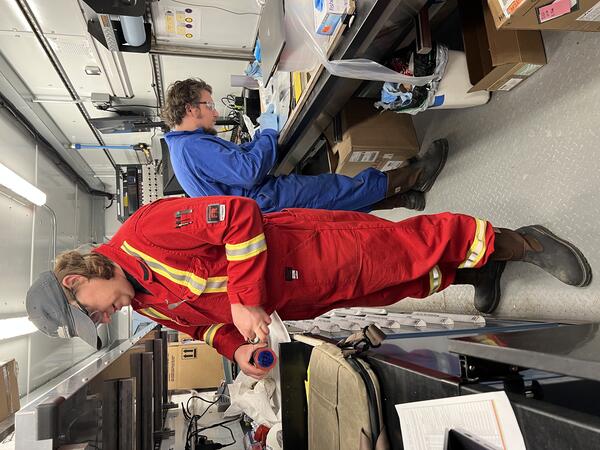
The accomplishments of the Alaska gas hydrate project thus far were made possible by the longstanding partnership built between the DOE, JOGMEC, and the USGS. While each organization has unique expertise and perspectives, they share a common goal: improving our understanding of gas hydrates and their potential as an energy resource. Together, they have been investigating gas hydrates since the 1990s, contributing to major international drilling and production testing programs in Canada and Japan before bringing their collective experience to Alaska. Over time, these efforts have established a strong foundation of scientific trust, shared expertise, and a common commitment to advancing gas hydrate research.
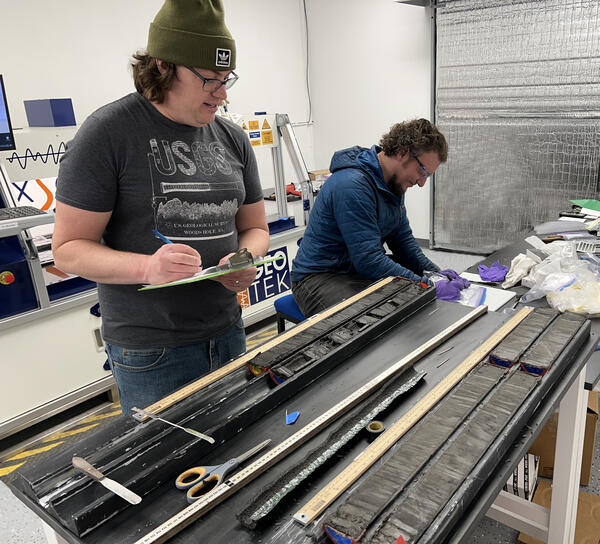
Within the USGS, the work draws on expertise from scientists across the bureau, led by the Central Energy Resources Science Center in Denver and the Woods Hole Coastal and Marine Science Center in Massachusetts. Understanding gas hydrates requires expertise spanning energy resources, geology, geophysics, geochemistry, engineering, and marine systems. The integration of energy resource science and coastal and marine research has been critical to advancing knowledge of this complex resource.
The project also relied on contributions from a broad network of federal and state agencies, universities, industry and Alaska Native organizations. Their combined scientific, technical, operational, and logistical support enabled one of the most ambitious gas hydrate field programs ever undertaken and helped make this milestone possible.
“This Virtual Special Issue represents the hard work, dedication, and shared vision of an incredible team. I’m sincerely grateful to my USGS colleagues and partners at the U.S. Department of Energy and the Japan Organization for Metals and Energy Security, and the many collaborators in Alaska and around the world who made this achievement possible. I especially want to thank the Arctic Slope Regional Corporation and the Alaska Department of Natural Resources for their valued partnership and support. Together, we are helping build the knowledge needed to realize the potential of gas hydrates as an emerging energy resource for the nation and the world.”
-Tim Collett, USGS Gas Hydrates Project
Looking Ahead
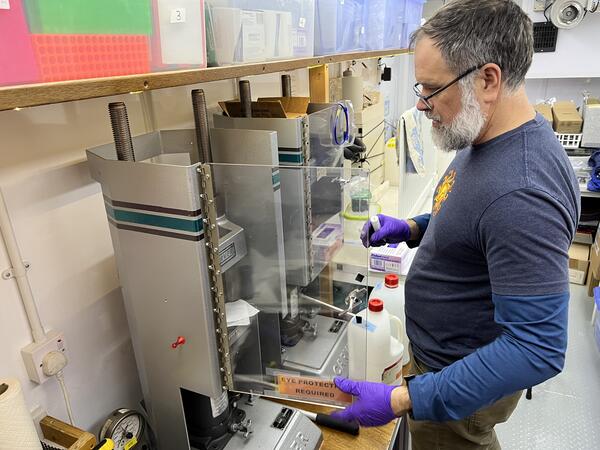
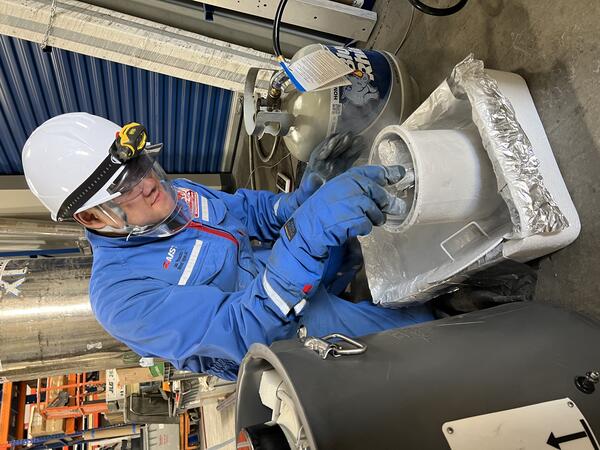
Scientists continue to analyze the samples and data collected during the geoscience drilling and production phases of the Alaska gas hydrate project, and partners are using those findings to help design the next phase of gas hydrate research in Alaska.
As the team continues to explore one of the world's largest stores of methane, the findings reported in the Virtual Special Issue represent an important milestone, advancing both the science of gas hydrates and the knowledge needed to evaluate their future resource potential.
Related

Gas Hydrates

U.S. Geological Survey Gas Hydrates Project
Related
Gas Hydrates