An official website of the United States government
Here's how you know
Official websites use .gov
A .gov website belongs to an official government organization in the United States.
Secure .gov websites use HTTPS
A lock () or https:// means you’ve safely connected to the .gov website. Share sensitive information only on official, secure websites.

Due to a lapse in appropriations, the majority of USGS websites may not be up to date and may not reflect current conditions. Websites displaying real-time data, such as Earthquake, Volcano, LANDSAT and Water information needed for public health and safety will be updated with limited support. Additionally, USGS will not be able to respond to inquiries until appropriations are enacted. For more information, please see www.doi.gov/shutdown.
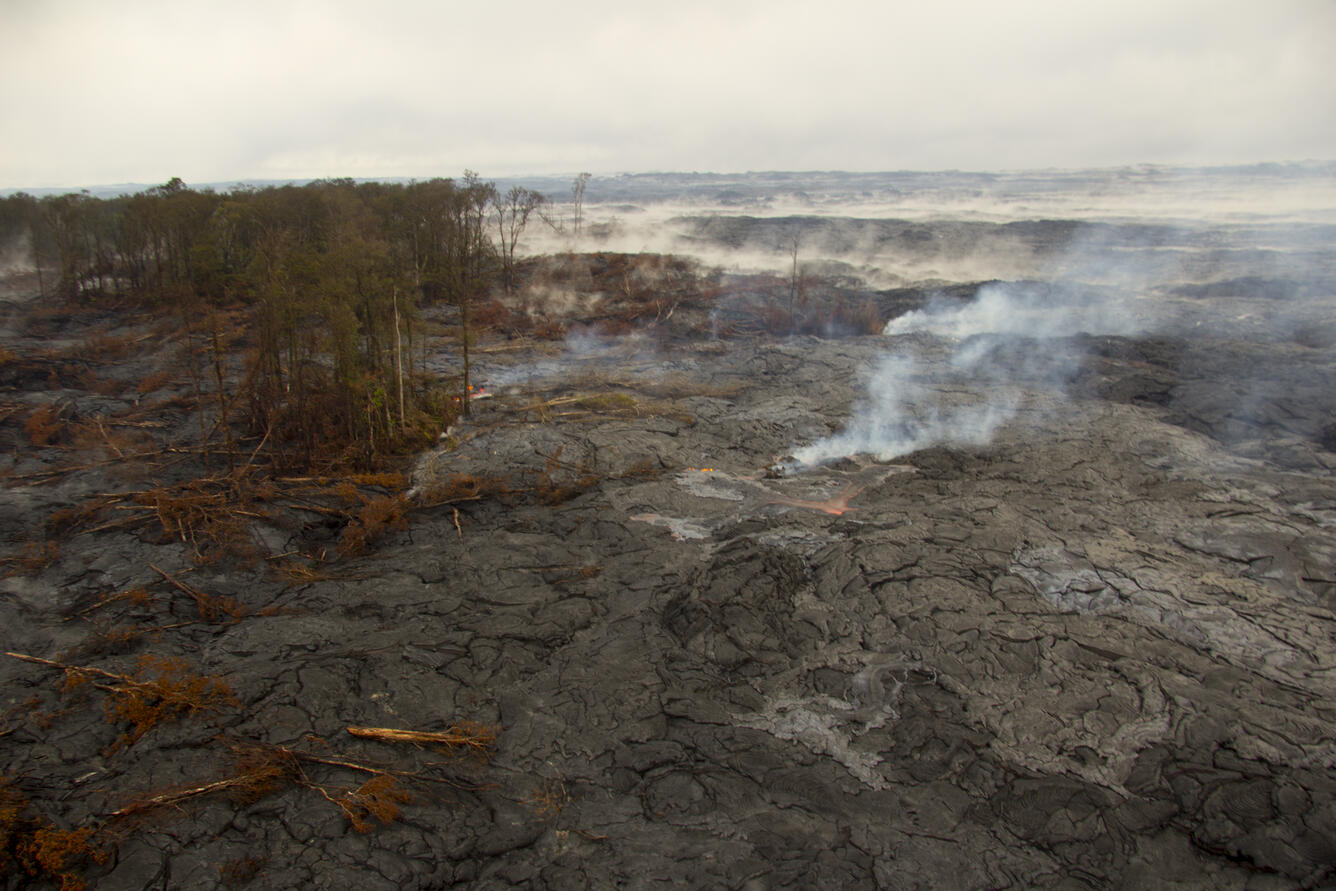
Surface breakouts remain scattered northeast of Pu‘u ‘Ō‘ō, with a slight retreat in the reach of active breakouts since the last overflight on March 25. Today, the farthest active lava was 5.7 km (3.5 miles) from the vent on Pu‘u ‘Ō‘ō. Much of the activity was at the forest boundary, burning trees and creating numerous smoke plumes.
Views were hampered today by sporadic downpours. Once the rain passed, areas of active breakouts were evident by the larger steam plumes coming from the surface (for example, at the top center of the photograph).
One benefit of passing showers today at Kīlauea's summit was a double rainbow. Halema‘uma‘u Crater is at the right side of the photo, and the gas plume from the active lava lake can be seen drifting towards the southwest. At the far right edge of the image, visitors take in the view at Jaggar Overlook.